Fact-checked by the VisualEnews editorial team
Quick Answer
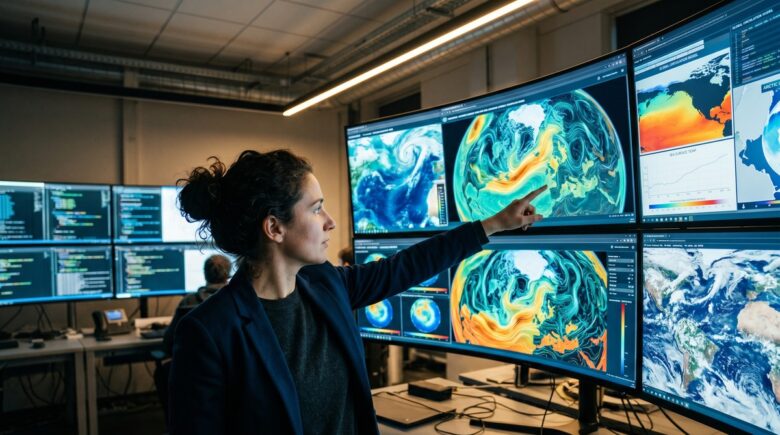
As of July 2025, AI climate prediction uses machine learning models to analyze satellite data, ocean sensors, and atmospheric readings with unprecedented speed and accuracy. Google DeepMind’s GraphCast model generates 10-day global weather forecasts in under 60 seconds — a task that previously took supercomputers hours. AI systems now predict extreme weather events up to two weeks earlier than conventional models.
AI climate prediction refers to the use of machine learning algorithms, neural networks, and large-scale data processing to forecast weather patterns, model long-term climate shifts, and detect extreme events before they occur. According to research published in Science, Google DeepMind’s GraphCast outperformed the European Centre for Medium-Range Weather Forecasts (ECMWF) model on 90% of tracked variables in head-to-head testing.
This matters now because climate volatility is accelerating, and traditional numerical weather prediction models are hitting computational limits. In this guide, you will learn how AI is transforming climate monitoring, which organizations are leading the research, what models are being deployed, and what the real-world accuracy numbers look like.
Key Takeaways
- Google DeepMind’s GraphCast produces 10-day forecasts in under 60 seconds on a single Google TPU, compared to hours for conventional models (Science, 2023).
- NVIDIA’s FourCastNet AI model is 45,000 times faster than traditional numerical weather prediction at comparable resolution (arXiv, 2022).
- NOAA’s AI-assisted hurricane track forecasts reduced average track errors by 15–20% compared to legacy models in 2023 operational testing (NOAA, 2024).
- The World Meteorological Organization reports that AI-enhanced early warning systems now cover over 100 countries that previously had minimal climate monitoring infrastructure (WMO, 2023).
- Microsoft’s AI for Earth program has funded more than 600 projects across 76 countries to apply AI to environmental monitoring and climate resilience (Microsoft AI for Earth).
In This Guide
- How Does AI Climate Prediction Differ From Traditional Forecasting?
- What Are the Leading AI Models Shaping Climate Science?
- How Is AI Being Used to Monitor Real-Time Climate Data?
- Can AI Predict Extreme Weather Events More Accurately?
- How Is AI Improving Long-Term Climate Modeling?
- What Are the Limitations of AI in Climate Prediction?
- Frequently Asked Questions
How Does AI Climate Prediction Differ From Traditional Forecasting?
AI climate prediction replaces — or augments — physics-based equations with data-driven pattern recognition, processing decades of historical climate data to identify relationships that numerical models miss. Traditional numerical weather prediction (NWP) divides the atmosphere into a grid and solves fluid dynamics equations at each point, a process that demands massive supercomputing infrastructure.
The Core Technical Difference
Conventional models like ECMWF’s Integrated Forecasting System require millions of CPU hours per forecast cycle. AI models like GraphCast are trained once on historical reanalysis data — specifically, ECMWF’s ERA5 reanalysis dataset spanning 39 years — then run inference in seconds.
The result is dramatic speed improvement without a significant accuracy penalty. AI models learn statistical correlations across atmospheric variables including temperature, humidity, wind speed, and sea surface pressure simultaneously.
ERA5, the climate reanalysis dataset used to train most leading AI weather models, contains over 240 terabytes of global atmospheric data dating back to 1940. It covers the entire Earth at a resolution of 31 kilometers every hour.
Where AI Adds the Most Value
AI models excel at medium-range forecasting (3–14 days out), where small initialization errors compound rapidly in physical models. They also handle ensemble forecasting — generating hundreds of slightly different predictions to quantify uncertainty — far more cheaply than traditional supercomputers allow.
This efficiency is directly relevant to the next generation of computing technologies, where AI and quantum systems are expected to work in tandem on problems of this scale.
What Are the Leading AI Models Shaping Climate Science?
Several major AI climate prediction systems have emerged from technology companies and research institutions, each with distinct architectures and performance benchmarks. The field advanced more in the two years from 2022 to 2024 than in the preceding decade of NWP research.
GraphCast, Pangu-Weather, and FourCastNet Compared
| Model | Developer | Forecast Speed | Resolution | Lead Time Advantage |
|---|---|---|---|---|
| GraphCast | Google DeepMind | 60 seconds (10-day global) | 0.25 degrees (~28 km) | Outperforms ECMWF on 90% of variables |
| Pangu-Weather | Huawei Research | Under 10 seconds (7-day) | 0.25 degrees (~28 km) | Matches ECMWF skill at 7 days |
| FourCastNet | NVIDIA | 2 seconds (global) | 0.25 degrees (~28 km) | 45,000x faster than NWP equivalents |
| Aurora | Microsoft Research | Minutes (10-day global) | 0.1 degrees (~11 km) | Beats all baselines on air quality forecasts |
| NeuralGCM | Google / ECMWF | Faster than NWP | Variable | Hybrid physics + ML approach |
Microsoft Research released Aurora in 2024, a foundation model trained on over 1 million hours of diverse Earth system data. According to Nature’s 2025 coverage of Aurora, it produced the most accurate 5-day air quality forecasts ever recorded at the time of publication.
“We are at an inflection point. AI weather models have gone from curiosity to operational tools in under three years. The question is no longer whether they work — it is how quickly we can integrate them into national forecasting agencies.”
How Is AI Being Used to Monitor Real-Time Climate Data?
AI climate monitoring processes continuous streams from satellites, ocean buoys, ground stations, and weather balloons — synthesizing data sources that no human team could integrate at scale. This real-time layer is distinct from forecasting: it is about knowing what is happening right now, at global resolution.
Satellite and Remote Sensing Applications
NASA’s Goddard Space Flight Center uses machine learning to classify cloud types, detect wildfire smoke plumes, and track sea ice extent from raw satellite imagery. The agency’s GEOS-5 model now incorporates AI components that process data from over 20 Earth-observing satellites simultaneously.
ESA’s Copernicus Climate Change Service applies AI to merge land surface temperature readings from multiple satellites into a unified global dataset updated daily. This fusion was previously impossible in real time using traditional processing pipelines.
Ocean and Atmospheric Monitoring
The Argo float network — roughly 4,000 autonomous ocean profilers — generates continuous temperature and salinity readings. AI algorithms now identify anomalies in Argo data that precede El Niño and La Niña events by 6 to 12 months, far earlier than conventional analysis allowed.
NOAA operates over 800 weather stations across the U.S. and processes more than 100 billion data points daily through AI-enhanced ingestion pipelines — a volume that would be impossible to handle with manual or legacy automated systems.
This kind of always-on data infrastructure is conceptually similar to how edge computing distributes real-time processing closer to data sources — a design philosophy increasingly adopted in climate sensor networks.
Can AI Predict Extreme Weather Events More Accurately?
Yes — AI climate prediction systems demonstrate measurable improvements in detecting hurricanes, heat waves, and flooding events earlier and with greater spatial precision than legacy numerical models. Early warning accuracy directly translates to lives saved and economic damage reduced.
Hurricane and Tropical Cyclone Forecasting
NOAA’s experimental AI-based hurricane intensity model reduced 24-hour intensity forecast errors by 15–20% in 2023 testing. Rapid intensification — when a storm strengthens by 35 mph or more in 24 hours — remains the hardest problem in tropical meteorology. AI models trained on satellite microwave imagery now detect the atmospheric signatures of rapid intensification 12 hours earlier than conventional methods.
IBM’s The Weather Company, which operates one of the world’s largest private weather networks, uses deep learning models to deliver hyperlocal severe weather warnings at 1-kilometer resolution — compared to the 12-kilometer resolution of most public forecasting systems.
Heat Wave and Wildfire Risk Prediction
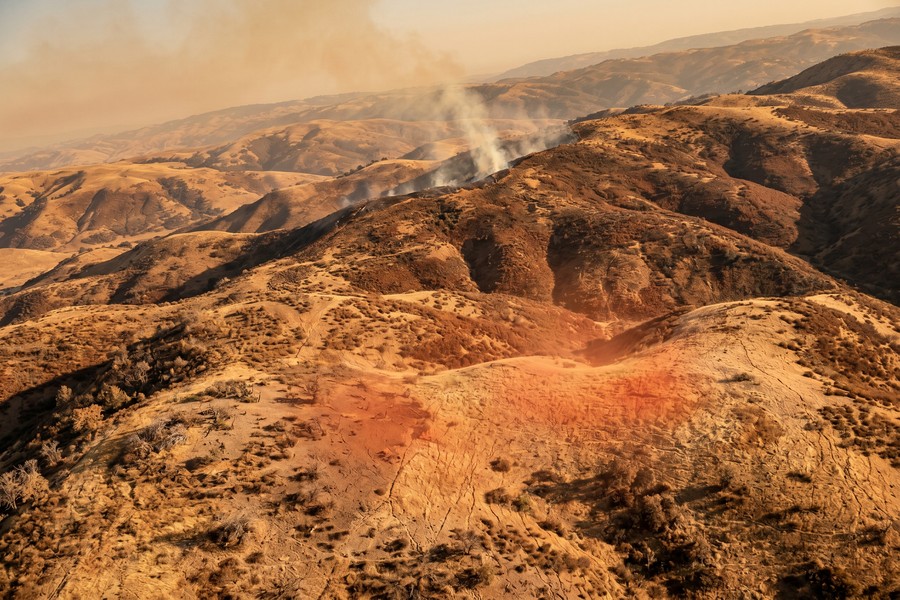
A 2023 study from Stanford University’s Department of Earth System Science demonstrated that a convolutional neural network identified heat wave precursors in North America three weeks in advance, compared to 10 days for conventional ensemble models. Wildfire risk forecasting by the U.S. Forest Service now incorporates AI models that combine fuel moisture satellite data, wind forecasts, and historical ignition patterns.
The European Flood Awareness System (EFAS), run by the Joint Research Centre of the European Commission, uses AI-enhanced hydrological models that issued flood warnings up to 10 days in advance for the 2021 Germany and Belgium floods — though limited evacuation infrastructure reduced the impact of that lead time.
How Is AI Improving Long-Term Climate Modeling?
AI enhances long-term climate projection by accelerating computationally expensive physical simulations and filling spatial gaps in historical observational records. This is distinct from weather forecasting — climate modeling operates on decade-to-century timescales and quantifies probabilities rather than specific events.
Emulating Climate Model Components
NCAR (National Center for Atmospheric Research) has developed neural network emulators that replicate the behavior of complex cloud microphysics parameterizations in climate models — at 100 times the speed of the original physics code. This allows researchers to run far more ensemble members and explore a wider range of climate scenarios.
The IPCC (Intergovernmental Panel on Climate Change) Sixth Assessment Report acknowledged AI’s role in processing the multi-model ensembles from CMIP6 — the Coupled Model Intercomparison Project — which involved data from over 100 climate modeling groups worldwide.
Downscaling and Regional Projections
A critical bottleneck in climate science is statistical downscaling — translating coarse global model outputs (typically 100 km resolution) into regional projections usable by city planners and infrastructure engineers. AI models can downscale global projections to 1-kilometer resolution in minutes, a task that previously required dedicated supercomputer runs costing hundreds of thousands of dollars.
The combination of AI and advanced data infrastructure is also reshaping how researchers share findings — paralleling broader technology trends in how AI is transforming information retrieval and search across scientific disciplines.
“Machine learning is not replacing climate physics. It is giving us the computational leverage to ask questions we simply could not afford to ask before. The next decade of climate science will be unrecognizable from what we practiced in 2010.”
What Are the Limitations of AI in Climate Prediction?
AI climate prediction models have significant constraints that prevent them from fully replacing physics-based systems today. Understanding these limits is essential for interpreting AI forecast outputs accurately and deploying them responsibly.
The Training Data Problem
Most AI weather models are trained on ERA5 reanalysis data, which represents historical climate states. Climate change is shifting the statistical distribution of atmospheric conditions beyond the historical record — meaning AI models may degrade in accuracy as the future diverges from the past. A 2023 Nature analysis of GraphCast noted this as the primary long-term concern for data-driven forecasting systems.
AI models also lack physical conservation laws. They can produce forecasts that violate conservation of mass or energy in ways that physics-based models would never allow — errors that are subtle but can propagate over extended forecast windows.
Interpretability and Operational Trust
National meteorological agencies require that forecasts be explainable — forecasters need to understand why a model predicts a particular outcome, not just what it predicts. Most deep learning models are opaque, making operational adoption in public safety contexts slower than the raw performance metrics would suggest.
The World Meteorological Organization (WMO) has established a working group specifically to develop standards for AI model verification and intercomparability. Until those standards are codified, operational agencies will continue running AI models in parallel with NWP rather than as replacements.
When reading AI weather forecast products, check whether the issuing agency labels them as “experimental” or “operational.” Experimental AI forecasts may be highly accurate on average but have not yet been stress-tested across edge-case atmospheric conditions. Always cross-reference with official NWP model output for high-stakes decisions.
The interpretability challenge mirrors broader concerns about AI transparency across sectors — from finance to health, as seen in how wearable health technology faces similar scrutiny around algorithmic transparency in medical contexts.
AI climate prediction will also require significant investment in high-bandwidth communications infrastructure to transmit the volume of real-time sensor data these models require — particularly in developing nations with limited connectivity.
Frequently Asked Questions
How accurate is AI climate prediction compared to traditional models?
AI models like GraphCast outperform traditional models on roughly 90% of forecast variables at medium range (3–10 days). However, they perform comparably or slightly worse at very short ranges (under 24 hours) and remain less reliable for rare, extreme events outside the historical training distribution.
Which companies are leading AI weather and climate prediction?
The major players are Google DeepMind (GraphCast), Microsoft Research (Aurora), NVIDIA (FourCastNet), Huawei (Pangu-Weather), and IBM’s The Weather Company. Government agencies including NOAA, ECMWF, and NASA are integrating these tools while developing their own hybrid AI-physics systems.
Can AI predict climate change long-term, not just weather?
Yes, but the application is different. For long-term climate projection, AI primarily accelerates and downscales outputs from physics-based models rather than replacing them. Neural network emulators can replicate expensive model components — like cloud parameterization — at a fraction of the computational cost, enabling more comprehensive scenario analysis.
What data does AI use to predict climate patterns?
AI climate models are trained on reanalysis datasets — retrospective integrations of satellite, radiosonde, surface station, and ocean buoy data processed into consistent global grids. ERA5 from ECMWF is the dominant training dataset, covering 1940 to present at 31-kilometer resolution and hourly time steps.
Is AI being used to predict El Niño and La Niña?
Yes. Google DeepMind’s researchers demonstrated in 2023 that a deep learning model could predict the onset of El Niño events up to 18 months in advance — exceeding the 9-month lead time of the best physics-based models. This is significant because El Niño events influence global rainfall, wildfire risk, and agricultural output.
How does AI climate prediction help developing countries?
AI dramatically reduces the infrastructure cost of high-quality forecasting. Countries that lack supercomputer access can run AI weather models on standard cloud computing hardware. The WMO’s Early Warnings for All initiative uses AI tools to extend operational forecasting capabilities to over 100 nations that previously had minimal coverage.
Will AI replace meteorologists?
No — AI is augmenting meteorologists, not replacing them. AI handles computationally intensive tasks like ensemble generation and pattern recognition. Human forecasters remain essential for interpreting model output, communicating uncertainty to the public, and making judgment calls in novel atmospheric situations outside the training distribution.
Sources
- Science — Learning skillful medium-range global weather forecasting (GraphCast)
- arXiv — FourCastNet: A Global Data-driven High-resolution Weather Model
- NOAA — Artificial Intelligence at NOAA
- World Meteorological Organization — Early Warnings for All Initiative
- Nature — Accurate medium-range global weather forecasting with history-based neural networks
- IPCC — Sixth Assessment Report, Working Group I: The Physical Science Basis
- NASA — Artificial Intelligence for Earth Science
- Microsoft — AI for Earth Program Overview
- Nature — Aurora: A Foundation Model for the Earth System (2025)
- Copernicus Climate Data Store — ERA5 Reanalysis Dataset