
Fact-checked by the VisualeNews editorial team
Quick Answer
Zero based budgeting is a method where every dollar of income is assigned a specific job each month, so your income minus expenses equals exactly zero. As of July 2025, households using this approach report saving an average of $200–$500 more per month than with traditional budgeting methods.
Zero based budgeting works by giving every dollar a designated purpose before the month begins, eliminating untracked spending entirely. As of July 2025, the method has seen a surge in adoption, with budgeting app YNAB reporting over 3 million active users who save an average of $600 in their first two months. Unlike the 50/30/20 rule, zero-based budgeting demands full accountability for every line item.
According to the Federal Reserve’s 2024 Report on the Economic Well-Being of U.S. Households, 37% of American adults could not cover a $400 emergency expense without borrowing. Separate research from the National Foundation for Credit Counseling (NFCC, 2024) found that fewer than 40% of Americans maintain a monthly written budget of any kind. These gaps point directly to a structural problem that zero-based budgeting is designed to solve.
This guide walks you through every step of building a zero-based budget from scratch — including how to calculate your income, categorize expenses, handle irregular costs, and adjust your plan each month. Whether you earn a salary or deal with irregular income, you will find a concrete, repeatable system here.
Key Takeaways
- Zero based budgeting requires assigning every dollar of income to a category so that income minus all allocations equals exactly $0 — leaving no untracked money (YNAB, 2024).
- YNAB users save an average of $600 in their first two months and more than $6,000 in their first year according to YNAB’s published methodology data (YNAB, 2024).
- 37% of U.S. adults could not cover a $400 emergency expense without debt (Federal Reserve, 2024), a problem zero-based budgeting directly addresses by building savings into every budget cycle.
- The average American household wastes an estimated $1,497 per year on unused subscriptions and recurring charges (C+R Research, 2022), all of which a zero-based budget forces you to confront.
- Zero based budgeting originated as a corporate finance tool developed by Peter Pyhrr at Texas Instruments in 1970 before being popularized for personal finance by Dave Ramsey and later digital budgeting platforms (Harvard Business Review, 2023).
- Studies show that people who write down a specific financial plan are 42% more likely to achieve their goals than those who do not (Dominican University goal-setting research, Dr. Gail Matthews, 2015).
In This Guide
- What Is Zero Based Budgeting and How Does It Work?
- How Does Zero Based Budgeting Compare to Other Budgeting Methods?
- Who Benefits Most From Zero Based Budgeting?
- How Do You Build a Zero-Based Budget Step by Step?
- How Should You Categorize Income and Expenses?
- How Do You Handle Irregular or Unexpected Expenses?
- What Tools and Apps Work Best for Zero Based Budgeting?
- What Are the Most Common Zero Based Budgeting Mistakes?
- Your Action Plan
- Frequently Asked Questions
What Is Zero Based Budgeting and How Does It Work?
Zero based budgeting is a personal finance system where you allocate every dollar of your monthly income to a specific category — expenses, savings, debt repayment, or investments — until the remaining balance is exactly zero. This does not mean spending everything you earn; it means every dollar has a job, including dollars assigned to savings accounts.
The core formula is simple: Income minus all allocations = $0. If your monthly take-home pay is $4,500, you must account for all $4,500 across your budget categories before the month starts. Any unallocated dollar is a dollar that will likely be spent without intention.
The Origins of Zero-Based Budgeting
The method was first formalized by Peter Pyhrr, an accountant at Texas Instruments, in a 1970 Harvard Business Review article. Pyhrr applied it to corporate budgeting, where each department had to justify its full budget from a “zero base” each year rather than receiving automatic increases. U.S. President Jimmy Carter later adopted it for federal government budgeting in Georgia.
Personal finance educator Dave Ramsey adapted the framework for household budgets through his Financial Peace University program, which has reached over 10 million families since its launch. Today, apps like YNAB (You Need A Budget) and EveryDollar have automated much of the process.
The term “zero-based” refers to building your budget from zero each month — not carrying forward last month’s assumptions. Every category is re-evaluated fresh, which forces conscious spending decisions rather than spending on autopilot.
Why Zero Means Power, Not Deprivation
A common misconception is that a zero-dollar balance means having no money left. In reality, a well-structured zero-based budget allocates generously to savings, fun money, and discretionary spending. The difference is that those amounts are chosen deliberately, not stumbled upon at the end of the month.
This is why the method pairs well with broader financial literacy work. If you have ever felt that unexpected categories — not coffee — are what actually break a budget, zero-based budgeting provides the structure to find and fix those leaks.
How Does Zero Based Budgeting Compare to Other Budgeting Methods?
Zero based budgeting differs from other methods primarily in its level of specificity and the direction of control — you decide where money goes before the month starts, rather than tracking where it went after. This proactive stance is its defining feature.
Zero-Based vs. 50/30/20 Budget
The 50/30/20 rule, popularized by Senator Elizabeth Warren in her book “All Your Worth” (2005), divides income into three buckets: 50% for needs, 30% for wants, and 20% for savings or debt. It is simpler but less precise. A household earning $5,000 per month would allocate a broad $1,500 to “wants” — with no guidance on how that $1,500 is actually spent.
Zero based budgeting breaks that same $1,500 into specific line items: $200 for dining out, $100 for streaming and subscriptions, $300 for clothing, and so on. That specificity is what drives behavioral change.
| Method | Control Level | Time Required | Best For | Average Monthly Savings |
|---|---|---|---|---|
| Zero Based Budgeting | Very High | 2–4 hrs/month | Debt payoff, savings goals | $200–$500+ |
| 50/30/20 Rule | Moderate | 30–60 min/month | Beginners, simple earners | $100–$250 |
| Pay-Yourself-First | Low–Moderate | 15–30 min/month | Savers, investors | Varies widely |
| Envelope System | High (cash only) | 2–3 hrs/month | Overspenders on discretionary | $150–$400 |
| No Budget (tracking only) | Very Low | Minimal | High earners with no debt | $0–$100 |
The pay-yourself-first method automates savings before you spend but leaves the remaining income unassigned. The envelope system enforces spending limits using physical cash. Zero based budgeting combines the precision of envelopes with the full-income coverage that pay-yourself-first lacks.
YNAB users reduce their spending on non-essential categories by an average of $488 per month after 90 days on the platform, according to YNAB’s internal user data published in 2024.
Which Method Wins for Debt Payoff?
For households carrying high-interest debt, zero based budgeting consistently outperforms less structured approaches. Because it requires explicit allocation of every dollar, it forces a direct trade-off: every dollar spent on dining out is a dollar not applied to a credit card balance. This transparency accelerates payoff timelines.
If you are dealing with debt and need a broader framework first, the guide on practical money management systems for budgeting and debt offers useful context before you build your zero-based plan.
Who Benefits Most From Zero Based Budgeting?
Zero based budgeting delivers the strongest results for people with specific financial pain points: those paying off debt, building an emergency fund from scratch, or earning a fixed monthly income. It is less naturally suited — though still adaptable — to highly variable income earners without modification.
Ideal Candidates
Research from the NFCC (National Foundation for Credit Counseling) shows that consumers with a written monthly budget are significantly more likely to avoid overdraft fees, pay bills on time, and build emergency savings. People who feel their money “disappears” before the month ends are the most likely to benefit immediately.
Those working toward long-term financial stability will find zero based budgeting particularly effective because it builds the habit of intentional allocation — a skill that compounds over years.
When Zero-Based Budgeting Is Harder
Freelancers, gig workers, and anyone with an unpredictable paycheck face a real challenge: how do you allocate income before you know how much you will earn? The standard solution is to budget based on your lowest projected monthly income from the past 6–12 months. Any income above that floor gets allocated in a second pass. This adaptation is explored in depth in the section on handling irregular expenses below.
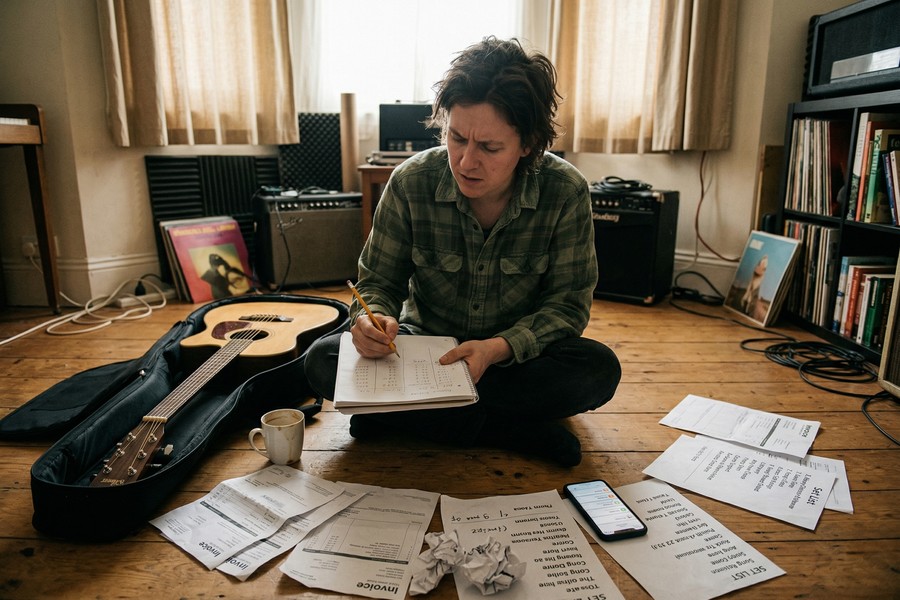
“The single most powerful feature of zero-based budgeting isn’t the math — it’s the moment of confrontation. When you have to write down that you’re spending $340 a month on restaurants, you can’t pretend it isn’t happening anymore.”
How Do You Build a Zero-Based Budget Step by Step?
Building a zero-based budget takes five core steps: calculate your total monthly income, list all fixed expenses, estimate all variable expenses, assign remaining dollars to savings and debt goals, and adjust until the balance reaches exactly zero. The entire initial setup takes most people between 90 minutes and three hours.
Step 1: Calculate Your True Monthly Income
Start with your net income — the amount that actually lands in your bank account after taxes, Social Security, Medicare, and any pre-tax deductions. Do not use your gross salary, which overstates available funds. If you receive biweekly paychecks, multiply one paycheck by 26, then divide by 12 to get a true monthly average.
Include all income sources: primary job, side income, freelance payments, rental income, child support, and government benefits. For variable income, use the lowest month from the past six months as your baseline.
Step 2: List All Fixed Expenses First
Fixed expenses are amounts that do not change month to month: rent or mortgage, car payment, minimum debt payments, insurance premiums, and fixed subscription fees. List every one with its exact dollar amount. According to the Bureau of Labor Statistics Consumer Expenditure Survey (2023), the average U.S. household spends 33.3% of its pre-tax income on housing alone — making this the most critical category to track accurately.
Step 3: Estimate Variable Expenses
Variable expenses fluctuate monthly: groceries, utilities, gasoline, dining out, entertainment, clothing, and personal care. Review the last three months of bank and credit card statements to find realistic averages. Underestimating these categories is the most common reason a zero-based budget fails in its first month.
When estimating groceries, round up by 10–15% to account for price increases and impulse purchases. The USDA’s monthly official food cost benchmarks by household size provide a useful external check on your estimates.
Step 4: Allocate to Savings and Debt Goals
After listing all expenses, assign every remaining dollar to financial goals: emergency fund, retirement contributions, vacation savings, or extra debt payments. These are not optional — they are budget categories just like rent. Dave Ramsey’s Baby Steps framework, for example, prescribes a specific $1,000 starter emergency fund as the first savings priority before attacking debt.
Step 5: Balance to Zero
Add up all your allocations. If the total is less than your income, add more to savings or debt payoff categories. If you are over budget, reduce discretionary categories. Keep adjusting until income minus all allocations equals exactly $0. This balancing act is the defining feature of the method — and typically takes 2–3 monthly cycles before it feels natural.
How Should You Categorize Income and Expenses?
Effective zero based budgeting depends on using enough categories to track spending meaningfully — but not so many that the system becomes unmanageable. Most financial planners recommend starting with 15–25 categories and adjusting over time based on where you actually spend money.
Standard Budget Category Framework
| Category Group | Subcategories | Typical % of Budget | Notes |
|---|---|---|---|
| Housing | Rent/mortgage, utilities, repairs | 25–35% | Keep under 30% when possible |
| Transportation | Car payment, insurance, gas, maintenance | 10–15% | Include annual registration fees monthly |
| Food | Groceries, dining out, work lunches | 10–15% | Separate grocery from restaurant lines |
| Savings | Emergency fund, retirement, sinking funds | 15–20% | Pay this “bill” before discretionary spending |
| Debt Repayment | Credit cards, student loans, medical | 5–15% | Above-minimum payments go here |
| Personal | Clothing, haircuts, gym, subscriptions | 5–10% | Subscriptions are a major leak category |
| Health | Prescriptions, copays, dental, vision | 3–8% | Use a sinking fund for large annual costs |
| Fun/Discretionary | Entertainment, hobbies, travel | 5–10% | Zero-based does not mean no fun money |
Sinking Funds: The Key to Non-Monthly Expenses
A sinking fund is a savings category for predictable but non-monthly expenses: car registration, holiday gifts, annual insurance premiums, or back-to-school costs. Divide the annual total by 12 and allocate that amount each month. For example, if you spend $600 on holiday gifts each December, budget $50 every month throughout the year.
Failing to account for sinking fund categories is one of the primary reasons zero-based budgets appear to fail in certain months. The expense was not a surprise — it was simply not planned for. If you consistently struggle with these hidden costs, the deeper analysis in what actually breaks a budget offers useful perspective.
The average American household has 2.4 streaming subscriptions they have forgotten about, contributing to an estimated $1,497 per year in unused or underused recurring charges, according to a 2022 survey by C+R Research.
How Do You Handle Irregular or Unexpected Expenses?
Irregular expenses are the most common reason people abandon a zero-based budget after one or two months. The solution is a two-part system: sinking funds for predictable irregular costs and a dedicated “buffer” or “true expenses” category for genuinely unpredictable ones.
The “Buffer Month” Strategy
One of the most effective adaptations for zero based budgeting is working one month ahead. This means saving one full month’s income as a buffer, so every month you are budgeting with last month’s paycheck — not anticipating next week’s deposit. This approach eliminates the anxiety of timing income against bills. YNAB calls this principle “Age Your Money,” and their data shows users who achieve a 30-day money age report dramatically lower financial stress.
Handling Variable Income
For anyone with variable or freelance income, the standard approach is to build a base budget around the lowest income month in the past year. When higher-income months arrive, follow a pre-written priority list for the extra dollars: first to three to six months of emergency savings, then to debt payoff, then to discretionary categories. This prevents lifestyle inflation from absorbing income windfalls.
The challenge of budgeting without a predictable paycheck is covered in detail in the guide on why traditional financial advice fails irregular income earners — a useful companion to this framework.
Do not use a credit card as your “irregular expense fund.” Every unexpected charge put on a revolving credit card without a repayment plan increases your average daily balance and costs you interest. The average credit card APR reached 21.59% in Q1 2025 according to the Federal Reserve’s consumer credit data — making debt-funded emergencies extremely costly.
The Emergency Fund as Non-Negotiable
Every zero-based budget must include an emergency fund contribution until the fund reaches three to six months of essential expenses. According to the FDIC’s 2023 National Survey of Unbanked and Underbanked Households, households without emergency savings are three times more likely to turn to high-cost credit products when unexpected expenses arise. An emergency fund is not a luxury — it is the structural foundation that makes a budget durable.

What Tools and Apps Work Best for Zero Based Budgeting?
The best tool for zero based budgeting is the one you will actually use consistently. Options range from free spreadsheets to paid apps, each with trade-offs in automation, detail, and time investment. The four most widely used platforms are YNAB, EveryDollar, Mint’s successor tools, and a well-structured spreadsheet.
Top Zero-Based Budgeting Apps Compared
YNAB (You Need A Budget) is the most purpose-built platform for zero based budgeting, costing $14.99 per month or $109 per year as of 2025. It enforces the zero-based methodology through its interface and includes real-time sync with bank accounts. YNAB’s published user data shows an average first-year saving of $6,000.
EveryDollar, created by Ramsey Solutions, offers a free version and a premium tier at $17.99 per month. The free version requires manual transaction entry, which some users find beneficial for awareness. The premium version syncs with bank accounts automatically.
Spreadsheets (Google Sheets or Microsoft Excel) have zero cost and maximum flexibility. The Google Sheets template library includes several pre-built zero-based budget templates. The trade-off is manual entry and no automatic bank syncing without third-party tools.
Paper and Envelope Methods
For people who overspend on debit or credit cards, a physical cash envelope system can enforce limits that digital tools cannot. Each spending category gets a physical envelope stuffed with that month’s cash allocation. When the envelope is empty, spending in that category stops. Research from MIT’s Sloan School found that people spend up to 100% more when using credit cards versus cash for the same purchases, suggesting a tangible friction benefit to paper-based systems.
According to YNAB’s 2024 user outcome data, new users save an average of $600 in their first two months and over $6,000 in their first year of using the zero-based budgeting method.
What Are the Most Common Zero Based Budgeting Mistakes?
The most common zero based budgeting mistakes are underestimating variable expenses, forgetting non-monthly costs, giving up after the first “failed” month, and being too restrictive with discretionary spending until the system collapses. Each mistake is predictable and preventable.
Mistake 1: Treating the First Month as Final
Your first zero-based budget will be wrong. Almost every new practitioner underestimates at least two or three categories. The correct response is to adjust mid-month and note the correction for next month — not to abandon the system. Financial planners consistently report that most people find their budget “clicking” by month three, once the real spending patterns have been captured.
Mistake 2: No Fun Money Category
Budgets that are purely restrictive have high abandonment rates. Every zero-based budget should include a discretionary “fun money” line — an amount each partner in a household can spend with no justification required. Even a modest allocation of $50–$100 per person significantly increases long-term budget adherence, according to behavioral economists studying financial self-control.
“People fail at budgeting not because they lack willpower, but because they build systems with zero tolerance for being human. A budget that has no room for fun is a budget that will be abandoned by February. Build the joy in — it’s not optional.”
Mistake 3: Ignoring the Budget Mid-Month
Zero based budgeting requires a brief weekly check-in — 10 to 15 minutes to reconcile transactions against allocations. People who build the budget but never look at it again fall back into reactive spending by week two. A consistent weekly “budget date” with yourself or a partner is the single habit most associated with long-term success in the method.
If money anxiety makes it hard to open the app or spreadsheet, the resource on why financial anxiety feels worse than the actual numbers addresses the psychological barriers directly.
Behavioral research published in the Journal of Consumer Psychology found that simply naming a savings goal — for example, “vacation fund” instead of “savings” — increases contribution rates by up to 31%. Labeled budget categories leverage this same mechanism.
Mistake 4: Not Adjusting for Life Changes
A zero-based budget is not a static document. It must be rebuilt or significantly revised whenever income changes, a new expense is added, or a financial goal is achieved. Treating the budget as a one-time creation rather than a monthly living document is a structural flaw, not a personal failure. The system should serve your life — and your life changes.

Real-World Example: From $0 Savings to $8,400 in 14 Months
Marcus, 29, a customer service manager earning $52,000 per year ($3,640 take-home per month after taxes), had no emergency fund and $9,200 in credit card debt across three cards averaging 22.4% APR. He had never tracked spending and estimated he spent “around $200” on dining out each month. When he reviewed three months of statements, the actual figure was $480 per month.
Using YNAB, Marcus built his first zero-based budget in February 2024. He cut dining out to $150 per month (saving $330), canceled $87 in unused streaming and app subscriptions, and redirected $600 per month total to debt payoff above minimums. He allocated an additional $200 per month to a starter emergency fund.
By April 2025 — 14 months later — Marcus had eliminated all $9,200 in credit card debt, built a $2,800 emergency fund, and freed up $740 per month in minimum payment obligations, which he redirected to retirement contributions in a Roth IRA. Total interest saved versus paying minimums only: approximately $5,900. The first month was uncomfortable. Months two and three required adjustments. By month four, the system ran with minimal friction.
Your Action Plan
-
Gather 90 days of bank and credit card statements
Log in to every financial account and download or print the last three months of statements. This is your raw data. Use your bank’s built-in spending categorization or export to a spreadsheet. Free tools like Intuit Credit Karma’s budgeting tools or your bank’s own app can pre-sort transactions by category.
-
Calculate your exact monthly net income
Add up all sources of take-home pay for the past three months and divide by three for your average. If income varies significantly, use the lowest month as your budget baseline. Include all recurring income: wages, side income, government benefits, and alimony or child support.
-
List every fixed expense with its exact dollar amount
Write down rent or mortgage, all minimum debt payments, car payment, insurance premiums, and any subscription that charges the same amount every month. Fixed expenses are the foundation of your budget — they cannot be easily changed in the short term.
-
Estimate variable expenses using your actual spending data
Use the three-month average you calculated in step one. Round grocery and utility estimates up by 10%. Be honest about dining, entertainment, and personal spending — underestimating is the single most common first-month failure. Check your estimates against the Bureau of Labor Statistics Consumer Expenditure data for your household size.
-
Build sinking funds for all non-monthly predictable costs
List every predictable annual, semi-annual, or quarterly cost: car registration, holiday gifts, annual software subscriptions, seasonal clothing, and school supplies. Divide each by 12 and add a monthly sinking fund line to your budget. Use a free tool like Google Sheets to track each fund’s balance.
-
Assign remaining dollars to savings and debt goals
After all expenses and sinking funds are covered, allocate every remaining dollar to financial priorities in this order: (1) $1,000 starter emergency fund, (2) high-interest debt payoff using the debt avalanche (highest APR first) or debt snowball (smallest balance first), (3) three to six months of full emergency savings, and (4) retirement contributions to a 401(k) or Roth IRA.
-
Choose a budgeting tool and set up your first budget
Select YNAB ($109/year), EveryDollar (free or $17.99/month), or a free Google Sheets template. Enter every category and allocation. Connect your bank account if the tool supports it. Your budget should balance to exactly $0 before the month begins.
-
Schedule a weekly 15-minute budget check-in
Set a recurring calendar appointment — the same day and time each week. During this check-in, reconcile actual transactions against your budget categories, move any overspent categories’ dollars from lower-priority lines, and note adjustments needed for next month. Consistency in this habit is more predictive of success than any single budget decision.
Frequently Asked Questions
What is zero based budgeting in simple terms?
Zero based budgeting means assigning every dollar of your income to a specific category — expenses, savings, or debt — so that your income minus all allocations equals exactly $0. It does not mean spending everything; it means every dollar has a designated purpose before the month begins, including dollars going to savings accounts.
Is zero based budgeting good for beginners?
Yes, zero based budgeting is one of the most effective methods for beginners because it forces a complete inventory of income and spending from the start. The first month requires the most setup time — typically two to three hours — but subsequent months take far less effort once categories are established. Most beginners find the system natural by month three.
What happens if I go over budget in a category?
If you overspend in one category, you must reduce another category by the same amount to keep the budget balanced at zero. This is called “rolling with the punches” in YNAB’s terminology. You move dollars from a lower-priority category — such as entertainment or dining — to cover the overage. This real-time flexibility is a feature, not a flaw.
Can zero based budgeting work with irregular income?
Yes, but it requires modification. Budget based on your lowest projected monthly income from the past six months. When higher-income months arrive, follow a written priority list for additional dollars: emergency fund first, then debt payoff, then discretionary categories. This prevents lifestyle inflation and maintains budget integrity during lean months.
How is zero based budgeting different from the envelope system?
Both methods share the zero-based philosophy — every dollar is assigned a category — but the envelope system uses physical cash stuffed into labeled envelopes for each spending category. Zero based budgeting can use cash envelopes, digital apps, or spreadsheets. The envelope system is the cash-only subset of zero based budgeting principles.
Do I need to budget for fun money?
Yes, and this is not optional for long-term success. A budget with no discretionary spending is psychologically unsustainable. Certified Financial Planner Tiffany Aliche consistently recommends including a personal spending category — even if it is only $25–$50 per month — to prevent the all-or-nothing thinking that leads people to abandon budgeting after one overspent week.
How long does it take to see results from zero based budgeting?
Most practitioners report noticeable results within the first 60 days. YNAB’s user data shows an average saving of $600 in the first two months. Full behavioral adaptation — where budgeting feels automatic rather than effortful — typically takes three to four months of consistent monthly practice.
What is a sinking fund and why does zero based budgeting require one?
A sinking fund is a savings category for predictable but non-monthly expenses, such as car repairs, holiday gifts, or annual insurance premiums. Zero based budgeting requires sinking funds because irregular expenses, when unplanned, appear to “break” the budget and cause people to abandon the method. Dividing annual costs by 12 and budgeting monthly eliminates that disruption entirely.
Is there a free way to do zero based budgeting?
Yes. Google Sheets offers free zero-based budget templates at no cost, and your bank’s built-in budgeting tools may provide similar functionality. EveryDollar offers a free version with manual transaction entry. The most important factor is not the tool but the consistency of use — a free spreadsheet used weekly outperforms a paid app opened once a month.
Can two people share a zero-based budget?
Yes, and couples who budget together report significantly lower financial conflict. The key is a joint budget meeting at the start of each month where both partners agree on category allocations, and individual “fun money” lines for each person that carry no spending justification requirement. This balance between shared accountability and personal autonomy is what makes couples’ zero-based budgets sustainable long-term.
Our Methodology
This guide was produced by the VisualeNews editorial team with reference to published data from the Federal Reserve, Bureau of Labor Statistics, FDIC, YNAB, National Foundation for Credit Counseling, and peer-reviewed behavioral economics research. Statistics were verified against primary sources and cross-referenced with major personal finance publications including NerdWallet, Bankrate, and Ramsey Solutions. App pricing was confirmed directly from each platform’s official website in July 2025. No financial products are recommended for compensation. All dollar figures and percentages reference the most recently published data available at time of writing.
Sources
- Federal Reserve — 2024 Report on the Economic Well-Being of U.S. Households
- YNAB — The YNAB Method and User Outcome Data (2024)
- Bureau of Labor Statistics — Consumer Expenditure Survey (2023)
- FDIC — National Survey of Unbanked and Underbanked Households (2023)
- National Foundation for Credit Counseling (NFCC) — Financial Literacy Survey Research
- Ramsey Solutions — How to Make a Budget (EveryDollar Method)
- USDA — Official Food Plans: Cost of Food Reports
- Harvard Business Review — “Zero-Base Budgeting” by Peter Pyhrr (1970, archived)
- Federal Reserve — Consumer Credit Statistical Release (G.19), Q1 2025
- C+R Research — Subscription Service Spending and Waste Survey (2022)
- Consumer Financial Protection Bureau (CFPB) — How to Create a Budget and Stick With It
- Google Sheets — Free Budget Templates and Spreadsheet Tools