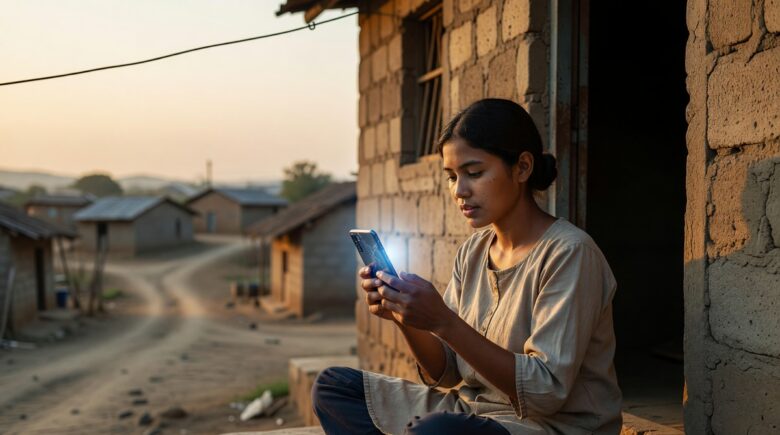
Fact-checked by the VisualEnews editorial team
Quick Answer
The digital divide in developing countries is shifting from simple internet access to a quality and skills gap. As of July 2025, 2.6 billion people remain offline globally, with the majority in Sub-Saharan Africa and South Asia. Mobile connectivity is rising fast, but less than 30% of rural populations in low-income nations have meaningful broadband access.
The digital divide in developing countries is no longer just about whether a person can connect — it is increasingly about the quality, affordability, and usability of that connection. According to the ITU’s 2024 Facts and Figures report, roughly 2.6 billion people worldwide have never used the internet, and the vast majority live in low- and middle-income countries across Africa, South Asia, and Latin America.
This matters now because digital access is no longer optional infrastructure — it underpins education, healthcare, financial services, and economic mobility. This article explains how the digital divide in developing countries is evolving, what new dimensions have emerged, which initiatives are making a measurable difference, and what barriers remain stubbornly resistant to change.
Key Takeaways
- 2.6 billion people worldwide remain offline as of 2024, with the largest concentrations in Sub-Saharan Africa and South Asia (ITU, 2024).
- Mobile broadband now covers 95% of the world’s population, yet meaningful usage lags far behind due to cost and digital literacy barriers (GSMA State of Mobile Internet Connectivity 2023).
- Women in low-income countries are 19% less likely to own a mobile internet-capable phone than men, deepening the gender dimension of the divide (GSMA Connected Women Report 2023).
- The World Bank estimates that a 10% increase in broadband penetration correlates with a 1.38% increase in GDP growth in developing economies (World Bank Research, 2016).
- Less than 30% of schools in low-income countries have internet access, compared to over 90% in high-income nations (UNICEF State of the World’s Children 2023).
In This Guide
- What Does the Digital Divide in Developing Countries Look Like Today?
- What New Dimensions Have Emerged Beyond Basic Access?
- How Is Mobile Internet Changing Connectivity in the Global South?
- Which Initiatives Are Making a Measurable Difference?
- What Barriers Are Still Holding Back Progress?
- What Does the Future of Digital Inclusion Look Like?
- Frequently Asked Questions
What Does the Digital Divide in Developing Countries Look Like Today?
The digital divide in developing countries today is defined by three overlapping gaps: access, affordability, and ability. While raw infrastructure has expanded significantly, the gap between those who can fully participate in the digital economy and those who cannot has actually widened in some dimensions.
Regional Snapshot: Where the Gap Is Deepest
Sub-Saharan Africa has the lowest internet penetration rate of any global region, at roughly 36% as of 2024, according to DataReportal’s 2024 Global Digital Overview. South Asia, while improving rapidly due to India’s expansion, still leaves hundreds of millions in rural areas without reliable connectivity.
Urban-rural divides within developing nations are just as stark as cross-border comparisons. In countries like Nigeria and Ethiopia, urban internet penetration can exceed 60%, while rural rates fall below 10%. Infrastructure investment consistently favors population-dense, revenue-generating cities.
In Sub-Saharan Africa, the average cost of 1 GB of mobile data represents more than 7% of average monthly income, compared to less than 1% in most high-income countries, according to the Alliance for Affordable Internet (A4AI).
The Urban-Rural Fault Line
The urban-rural split is not unique to any one continent. In Latin America, countries like Bolivia and Paraguay show connectivity gaps exceeding 40 percentage points between cities and rural communities. This gap means rural residents lack access not just to entertainment, but to telehealth, digital banking, and remote education.
What New Dimensions Have Emerged Beyond Basic Access?
The digital divide in developing countries has evolved well beyond the question of physical connectivity. Researchers and policymakers now recognize a multi-layered divide encompassing digital skills, content relevance, and platform equity.
The Skills and Literacy Gap
Even when devices and connections are available, many users in low-income countries lack the digital literacy to use them effectively. The UNESCO Digital Literacy Global Framework identifies foundational, intermediate, and transformative skill levels — and surveys suggest the majority of new internet users in developing nations operate only at the foundational level.
This skills deficit limits economic return. A person who can only send a WhatsApp message gains far less economic value from connectivity than someone who can access e-commerce platforms, use government digital services, or take online courses. Understanding this distinction is essential to understanding why the divide in developing countries persists even as device ownership grows.
“Access without ability is not inclusion. We need to move the conversation from connectivity metrics to capability metrics — what can people actually do online, and does it improve their lives?”
The Gender Dimension
Women in developing countries face compounded barriers to digital access. Beyond affordability, social norms in parts of South Asia, the Middle East, and Sub-Saharan Africa restrict women’s independent use of technology. GSMA data shows that women in low- and middle-income countries are 19% less likely to own a mobile internet-capable phone than men — a gap that has barely narrowed in five years.
This gender dimension of the digital divide intersects with broader inequalities in education, income, and autonomy. Closing it requires targeted policy, not just infrastructure spending. For a broader look at how technology access shapes economic participation, see our article on what digital identity means and why it matters.
How Is Mobile Internet Changing Connectivity in the Global South?
Mobile internet is the primary — and often only — pathway to digital access for billions of people in developing countries. Smartphones, not laptops or desktop computers, are the dominant access device across Africa, South Asia, and Southeast Asia.
The Mobile-First Reality
GSMA reports that mobile internet accounts for over 70% of all internet connections in Sub-Saharan Africa. This mobile-first reality has significant implications for how digital services must be designed. Apps and platforms built for high-bandwidth desktop environments often fail users on low-end Android devices with intermittent 3G connections.
The rise of 5G promises faster speeds, but its rollout in developing nations is uneven at best. While urban centers in countries like South Africa, Kenya, and India have 5G pilots underway, rural populations will rely on 4G and even 3G infrastructure for years to come. The gap between next-generation wireless technology and everyday rural reality is explored further in our comparison of 5G versus Wi-Fi 7 connectivity options.
Mobile broadband networks now cover 95% of the global population, yet only 57% of people in covered areas actually use mobile internet — a gap driven primarily by cost, device availability, and digital skills, according to the GSMA State of Mobile Internet Connectivity Report.
Mobile Money as a Gateway
M-Pesa in Kenya is the most cited example of mobile technology leapfrogging traditional infrastructure. Launched by Safaricom and Vodafone, it now serves over 50 million active users across Africa and has been replicated across the continent. Mobile money platforms like M-Pesa demonstrate that connectivity, even at low bandwidth, can transform economic participation.
This model shows that digital leapfrogging — skipping traditional development stages and adopting newer technologies — is a real and documented phenomenon. However, it also illustrates that infrastructure alone is insufficient. Policy environments, private sector investment, and user education must align.
| Region | Internet Penetration (2024) | Mobile-Only Internet Users | 1 GB Data Cost (% of Monthly Income) |
|---|---|---|---|
| Sub-Saharan Africa | 36% | 72% | 7.1% |
| South Asia | 53% | 68% | 3.2% |
| Latin America | 74% | 61% | 2.1% |
| Southeast Asia | 70% | 65% | 1.8% |
| High-Income Countries | 92% | 38% | 0.5% |
Sources: DataReportal 2024, A4AI Affordability Report, GSMA 2023.
Which Initiatives Are Making a Measurable Difference?
Several public and private initiatives have demonstrated measurable progress in narrowing the digital divide in developing countries. The most effective combine infrastructure investment with digital literacy programs and affordability interventions.
Government and Multilateral Programs
The World Bank‘s Digital Development Partnership has committed over $1.5 billion to digital infrastructure projects across developing nations since 2021. Programs in Rwanda, Ghana, and Bangladesh have funded fiber backbone expansion, data center development, and last-mile connectivity projects.
The United Nations‘ Broadband Commission for Sustainable Development has set a target of universal, affordable broadband by 2030 as part of the Sustainable Development Goals (SDGs). Progress is tracked annually, and the 2023 report shows the world is not currently on track to meet that target. Edge computing infrastructure — explained in detail in our guide to how edge computing works — is increasingly viewed as a cost-effective way to bring processing power closer to underserved populations.
Google‘s Project Loon — which used stratospheric balloons to deliver internet — was discontinued in 2021, but SpaceX Starlink has taken a different approach. As of 2024, Starlink operates in over 70 countries, including several in Sub-Saharan Africa, though monthly costs of $50–$120 remain prohibitive for most low-income users.
Private Sector and NGO Efforts
Meta‘s Connectivity initiative and Ericsson‘s connectivity programs have funded rural base station deployment across parts of Africa and Southeast Asia. The Internet Society has promoted Community Networks — locally owned and operated infrastructure in areas ignored by commercial providers.
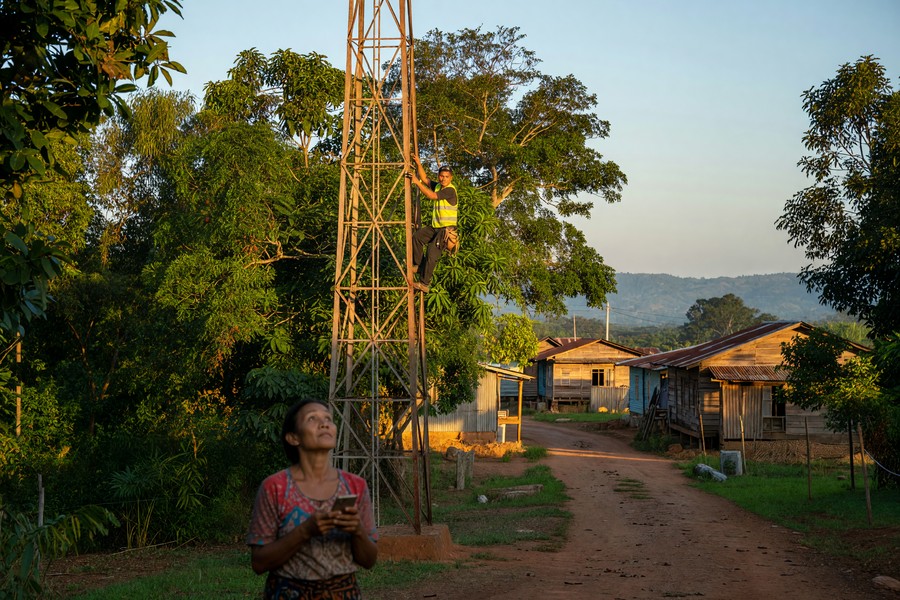
Community Networks now serve an estimated 790 communities across more than 60 countries, according to the Internet Society’s Community Networks program. These grassroots models are proving particularly effective in Latin America and parts of South Asia.
What Barriers Are Still Holding Back Progress?
Despite real progress, several structural barriers continue to sustain the digital divide in developing countries. These are not easily solved by technology alone.
Affordability Remains the Primary Obstacle
The A4AI defines affordable internet as costing no more than 2% of monthly income for 1 GB of data. By this measure, internet is unaffordable for the majority of people in Sub-Saharan Africa, where it averages over 7% of monthly income. Device costs compound this: a basic smartphone represents several months of earnings for many rural households.
Tax policy worsens the situation in many countries. Import duties on devices, value-added taxes on data, and spectrum licensing fees all increase end-user costs. The GSMA estimates that reducing mobile-specific taxes could bring 160 million new users online in developing markets. Understanding how digital costs accumulate for households is an issue explored more broadly in our analysis of how digital subscriptions drain household budgets quietly.
Infrastructure Investment Gaps
Building infrastructure in low-density, low-income rural areas is commercially unattractive for private operators. Without subsidies or regulatory incentives, carriers concentrate investment in profitable urban markets. The result is a persistent infrastructure gap that market forces alone will not close.
Power infrastructure compounds the problem. Many rural areas in Sub-Saharan Africa and South Asia lack reliable electricity, making it impossible to charge devices or power base stations without expensive off-grid solar solutions. Connectivity and energy access are inseparable challenges in the world’s most underserved regions.
“The market will not connect the unconnected by itself. Universal service requires universal policy — governments must treat broadband as essential infrastructure, the same way they treat roads and electricity grids.”
What Does the Future of Digital Inclusion Look Like?
The trajectory for the digital divide in developing countries over the next decade will be shaped by three converging forces: satellite internet expansion, artificial intelligence localization, and policy reform. Each carries both promise and risk.
Satellite Internet and Low Earth Orbit Networks
Low Earth Orbit (LEO) satellite constellations from SpaceX Starlink, Amazon Kuiper, and OneWeb could fundamentally change rural connectivity. Unlike geostationary satellites, LEO systems offer low latency and can reach any location on Earth. The core challenge remains cost — both terminal hardware and monthly subscriptions must drop significantly to serve low-income populations.
Some governments are already negotiating bulk licensing deals. Rwanda and Mozambique have signed regulatory frameworks with Starlink. If subscription costs fall to under $20 per month by 2027 — a target cited by several analysts — satellite could bypass the need for ground-based infrastructure entirely in remote regions.
AI and the Risk of Deepening the Divide
Artificial intelligence is transforming digital services globally, but it also risks deepening the divide if deployment favors high-income markets. AI-powered search, translation tools, and educational platforms have the potential to democratize access to information — but only if they support local languages and run efficiently on low-end hardware. The rapid evolution of how AI is changing internet search could either extend or entrench existing inequalities, depending on how platforms prioritize global markets.
Similarly, wearable health technology and digital diagnostics hold significant promise for healthcare in developing nations — but only where connectivity and digital literacy are sufficient to support them. The human factor remains the decisive variable.
Policymakers and NGOs evaluating digital inclusion programs should measure outcomes beyond connection rates. Track functional digital literacy, economic impact (income, job access), and gender equity metrics to get an accurate picture of whether the divide is truly closing.
Frequently Asked Questions
What is the digital divide in developing countries?
The digital divide in developing countries refers to the gap between populations with meaningful access to digital technologies and those without. It encompasses not just internet access, but also device availability, affordability, digital skills, and the relevance of online content in local languages.
How many people are still offline in developing countries?
Approximately 2.6 billion people globally remain offline, with the largest concentrations in Sub-Saharan Africa and South Asia, according to the ITU’s 2024 Facts and Figures. The majority live in low- and middle-income countries where infrastructure, cost, and literacy barriers persist.
Is mobile internet solving the digital divide in Africa?
Mobile internet has dramatically expanded coverage in Africa, but has not closed the divide. While 95% of Sub-Saharan Africa has mobile broadband coverage, actual usage rates are far lower due to data costs, device affordability, and digital literacy gaps. Coverage and meaningful usage are two very different metrics.
What role does digital literacy play in the divide?
Digital literacy is now considered a core dimension of the digital divide — as important as physical access. Users without foundational skills cannot benefit economically from connectivity, limiting the return on infrastructure investment. UNESCO and the ITU both prioritize literacy programs alongside infrastructure in their digital inclusion frameworks.
Which countries have made the most progress in closing the digital divide?
Rwanda, Bangladesh, and India have made notable progress through national broadband policies, government-backed digital literacy programs, and competitive mobile markets that have reduced data costs. Rwanda’s smart city initiatives and India’s BharatNet rural broadband program are frequently cited as models for other developing nations.
How does the digital divide affect education in developing countries?
The education impact is severe. Less than 30% of schools in low-income countries have internet access, versus over 90% in high-income nations, according to UNICEF’s 2023 report. The COVID-19 pandemic exposed this gap sharply, with millions of students in developing countries unable to access remote learning during school closures.
Can satellite internet close the digital divide in rural areas?
Satellite internet from LEO constellations like SpaceX Starlink and Amazon Kuiper has real potential to reach rural and remote populations. The main barrier is cost — current hardware and subscription prices remain unaffordable for most low-income households. Significant price reductions or government subsidy programs will be necessary for satellite to become a universal access solution.
Sources
- International Telecommunication Union (ITU) — Facts and Figures 2024
- GSMA — State of Mobile Internet Connectivity Report 2023
- DataReportal — Digital 2024 Global Overview Report
- UNICEF — State of the World’s Children 2023
- Alliance for Affordable Internet (A4AI) — Affordability Report
- GSMA — Connected Women: The Mobile Gender Gap Report 2023
- World Bank — Broadband and Economic Growth Research
- Internet Society — Community Networks Program
- Broadband Commission for Sustainable Development — State of Broadband 2023
- Wikipedia — Digital Divide: Overview and Global Context