Fact-checked by the VisualEnews editorial team
Quick Answer
The best slow motion video apps in July 2025 include Slow Motion Video Maker (Android), SloPro (iOS), and Videoshop (cross-platform). Top options support frame rates from 120 fps to 960 fps, with most premium features available for under $10 per month. iPhone 15 Pro and flagship Android devices can record native slow motion without third-party apps.
Slow motion video apps let you capture, edit, and export footage at dramatically reduced playback speeds — transforming ordinary clips into cinematic sequences. According to Statista’s mobile app market data, video editing apps collectively exceed 3 billion downloads annually, with slow motion tools among the fastest-growing subcategory.
Whether you shoot on an iPhone 15 Pro or a Samsung Galaxy S24, the right app determines how smooth, sharp, and shareable your slow motion footage actually is. This guide breaks down the top apps by platform, frame rate capability, and price — so you can choose the right tool without guesswork.
Key Takeaways
- The iPhone 15 Pro records native slow motion at up to 240 fps at 1080p, according to Apple’s official specifications, making third-party apps optional for basic use.
- Samsung Galaxy S24 Ultra supports Super Slow-mo at 960 fps for short burst clips, as confirmed by Samsung’s product specifications.
- The SloPro app uses optical flow interpolation to simulate up to 1000 fps on standard iPhone cameras, per App Store documentation.
- Premium slow motion video apps typically cost between $2.99 and $9.99 per month, with one-time purchase options ranging from $4.99 to $19.99, based on Google Play Store pricing data.
- Video editing app usage grew by 54% between 2020 and 2024, driven by short-form video platforms, according to Business of Apps research.
In This Guide
- What Are Slow Motion Video Apps and How Do They Work?
- Which Slow Motion Video Apps Are Best for iPhone?
- Which Slow Motion Video Apps Are Best for Android?
- How Do the Top Apps Compare by Features and Price?
- Do You Actually Need a Third-Party App for Slow Motion?
- What Settings Produce the Best Slow Motion Results?
- Frequently Asked Questions
What Are Slow Motion Video Apps and How Do They Work?
Slow motion video apps capture or process footage at high frame rates, then play it back at standard speed — creating the visual effect of slowed time. The higher the capture frame rate, the smoother and more dramatic the slow motion effect appears on playback.
There are two core techniques these apps use. The first is true high-frame-rate capture, which requires a compatible camera sensor recording at 120, 240, or 960 fps. The second is optical flow interpolation, a software method that generates artificial in-between frames to simulate slow motion on hardware that cannot capture high frame rates natively.
Frame Rate Basics You Need to Know
Standard video plays at 24 to 30 fps. To achieve 4x slow motion, a camera must record at 120 fps. For 8x slow motion, it needs 240 fps. Adobe’s slow motion video guide explains that frame rate directly determines how smooth the final result looks — interpolated frames never fully replicate true high-frame-rate capture.
Understanding this distinction matters when choosing between apps. True capture apps require newer hardware. Interpolation apps work on older devices but produce softer results. Knowing your phone’s camera specs is the first step to picking the right slow motion video app.
The human eye perceives motion blur at anything below 60 fps. Slow motion video at 240 fps played back at 30 fps delivers exactly 8 seconds of slow motion for every 1 second recorded — a ratio that explains why high frame rates are so prized for sports and action content.
Which Slow Motion Video Apps Are Best for iPhone?
The best slow motion video apps for iPhone include SloPro, Videoshop, Capcut, and Apple’s native Camera app — each serving different levels of control and output quality. iPhone users have a significant hardware advantage, as models from iPhone 13 onward support 240 fps recording at 1080p natively.
SloPro
SloPro is one of the most established slow motion apps on the App Store, available since 2012. It uses optical flow to simulate frame rates up to 1,000 fps and supports true 120 fps and 240 fps capture on compatible iPhones. The app gives granular control over playback speed within individual clip segments — useful for dramatic reveals in sports or music videos.
SloPro offers a free tier with watermarked exports. The full version is available as a one-time purchase of $3.99. It integrates directly with the iPhone Camera Roll, making the editing workflow fast and friction-free.
CapCut
CapCut, developed by ByteDance, has become a dominant video editing tool with robust slow motion features. Its Curve Speed tool allows frame-by-frame speed ramp adjustments — a feature previously found only in professional desktop software. CapCut is free on iOS and Android, though some export resolutions require a Pro subscription. Given the ongoing regulatory scrutiny of ByteDance in the United States, users concerned about data privacy should review CapCut’s current availability status. If you are weighing the cost of premium editing tools, our breakdown of free vs paid apps and what you give up is worth reading before committing.
Videoshop
Videoshop by Instrumental is a lightweight but capable option that supports slow motion editing on existing footage. It does not capture at high frame rates independently — it relies on iPhone hardware — but its timeline-based speed controls are intuitive and precise. The app costs $3.99 per month or $19.99 per year after a free trial.
Which Slow Motion Video Apps Are Best for Android?
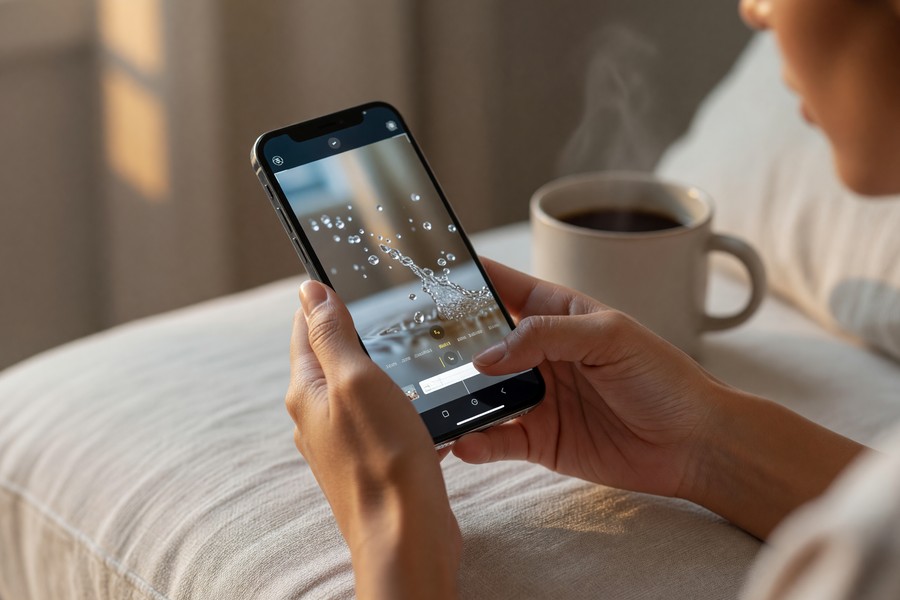
The best slow motion video apps for Android include Slow Motion Video Maker by InShot, CapCut, PowerDirector, and Samsung’s native Pro Video mode. Android devices vary widely in hardware capability, so app selection depends heavily on your specific phone model.
Slow Motion Video Maker by InShot
InShot’s Slow Motion Video Maker is consistently rated among the top slow motion apps on the Google Play Store, with over 500 million installs across InShot’s full app suite according to Google Play Store data. The app supports speed adjustment from 0.1x to 4x and allows segment-level speed control within a single clip. Exports up to 4K are supported on compatible Android hardware.
PowerDirector by Cyberlink
PowerDirector, developed by CyberLink, is a professional-grade Android editing app with true slow motion and speed ramping tools. It supports multi-track timelines, keyframe animation, and AI-powered motion tracking. The free version includes watermarks; the subscription costs $4.99 per month. PowerDirector is particularly strong for users who want desktop-level editing capabilities on a mobile device.
Before downloading a third-party slow motion app, open your phone’s native camera, switch to Slow Motion mode, and check the maximum available frame rate in settings. If your phone already supports 240 fps natively, you may not need an additional app — only an editor to refine and export the footage.
How Do the Top Apps Compare by Features and Price?
Choosing the right slow motion video app comes down to three factors: maximum frame rate support, editing flexibility, and export cost. The table below compares the leading options across these dimensions with specific data.
| App | Platform | Max Frame Rate | Price | Export Quality |
|---|---|---|---|---|
| SloPro | iOS | 1,000 fps (interpolated), 240 fps (native) | $3.99 one-time | Up to 1080p |
| CapCut | iOS / Android | Dependent on device hardware | Free / $7.99 per month (Pro) | Up to 4K (Pro) |
| PowerDirector | Android | 240 fps (device-dependent) | $4.99 per month | Up to 4K |
| Videoshop | iOS | 240 fps (via iPhone hardware) | $3.99 per month | Up to 4K |
| InShot Slow Motion Maker | Android | Device-dependent | Free / $3.99 per month | Up to 4K |
| Apple Camera (Native) | iOS | 240 fps at 1080p | Free (built-in) | Up to 1080p slow-mo |
| Samsung Pro Video (Native) | Android (Samsung) | 960 fps (Super Slow-mo burst) | Free (built-in) | Up to 720p at 960 fps |
Note that 960 fps capture on Samsung devices is limited to short bursts — typically 0.2 seconds of capture, which expands to roughly 6 seconds of slow motion playback. This is ideal for precise moments like a ball being kicked or a water drop, not extended sequences.
Mobile video editing apps generated an estimated $1.6 billion in revenue in 2023, with projections reaching $2.4 billion by 2027, according to Business of Apps’ video editing market report. Slow motion and speed-ramp features rank among the most-used tools in these applications.
Do You Actually Need a Third-Party App for Slow Motion?
On flagship smartphones released after 2021, you likely do not need a third-party app to capture slow motion — but you may need one to edit it. Native camera apps on iPhones and Samsung Galaxy devices already record at high frame rates, so the question shifts from capture to post-processing control.
When Native Apps Are Enough
Apple’s built-in Camera app and Photos app let you record and trim slow motion footage directly. For simple use cases — slowing a sports moment, a pet in motion, or a quick clip for social media — native tools are fully sufficient. The same applies to Samsung‘s built-in camera with Super Slow-mo mode enabled.
If you find yourself paying for multiple video apps without using their full feature sets, it may be worth reviewing your overall app subscriptions. Our guide on auditing your digital subscriptions can help you identify redundant spending before it compounds.
When Third-Party Apps Add Real Value
Third-party slow motion video apps become worthwhile when you need speed ramping within a single clip, audio pitch correction during slow motion, direct export to platforms like TikTok or Instagram Reels, or interpolation for older devices without native high-frame-rate hardware.
“Optical flow interpolation has improved dramatically in the last three years. For casual content creators, a well-implemented interpolation algorithm can produce results indistinguishable from true 240 fps capture — especially on 1080p social media exports.”
What Settings Produce the Best Slow Motion Results?
The best slow motion results come from shooting in bright, consistent light at the highest native frame rate your device supports — before relying on any app-level adjustments. Lighting is the single biggest variable separating professional-looking slow motion from muddy, blurred output.
Lighting and Shutter Speed Rules
Slow motion requires more light than standard video because the camera sensor has less time to gather light per frame at high frame rates. A common rule from cinematographers is the 180-degree shutter rule: set your shutter speed to double your frame rate. At 240 fps, that means a shutter speed of 1/480 second. B&H Photo’s video production guide explains this rule in detail for mobile and professional cameras alike.
In low light, high-frame-rate capture forces the camera to raise ISO, introducing grain and noise into your slow motion clip. Shooting outdoors in daylight or using supplemental LED lighting eliminates this problem entirely.
Storage and File Size Considerations
High-frame-rate video generates large files quickly. One minute of 4K footage at 240 fps can exceed 6 GB depending on codec settings. Before a shoot, verify your device has adequate free storage. This is especially relevant if you are also running background apps or cloud sync services that consume storage bandwidth. Understanding the trade-offs between SSD and HDD storage matters when you later move footage to a computer for editing.
Connectivity also affects how quickly you can offload large slow motion files. If you are working across devices on a home network, the speed comparison in our piece on 5G vs Wi-Fi 7 wireless technology is directly relevant to your workflow.
Apple introduced the Action mode feature with iPhone 14, which uses a cropped sensor for heavy stabilization — but it limits slow motion to 120 fps. Disabling Action mode restores access to full 240 fps capability, a detail many iPhone users overlook.
Exporting for Social Media
Most slow motion video apps let you choose export resolution and format. For TikTok, Instagram, and YouTube Shorts, 1080p at standard 30 fps playback is the platform-recommended output format — the slow motion effect is baked into the clip at export. Exporting at 4K is unnecessary for short-form platforms and significantly increases file upload time without visible quality gain on mobile screens.
Frequently Asked Questions
What is the best free slow motion video app for iPhone?
Apple’s built-in Camera app is the best free option for iPhone users who own an iPhone 8 or later. It records at 120 fps or 240 fps at 1080p at no cost. For additional editing features like speed ramping, CapCut’s free tier is the strongest no-cost alternative.
Can Android phones record true slow motion video?
Yes, many Android flagships record true slow motion natively. The Samsung Galaxy S24 Ultra supports up to 960 fps in Super Slow-mo burst mode, and the Google Pixel 8 Pro supports 240 fps at 1080p. Mid-range Android devices typically cap at 120 fps, requiring interpolation apps for smoother results.
Is CapCut safe to use for slow motion video editing?
CapCut functions effectively as a slow motion editor, but its parent company ByteDance has faced regulatory scrutiny in the United States regarding data privacy. As of July 2025, users should verify the app’s current legal status in their region before relying on it. Alternatives like PowerDirector or Videoshop offer similar features without the same regulatory uncertainty.
What frame rate do I need for good slow motion?
For visually smooth slow motion at 4x speed, you need 120 fps capture. For 8x slow motion, you need 240 fps. Most content creators find 120 fps sufficient for casual use, while 240 fps is preferred for sports, action, and cinematic content. Anything beyond 240 fps typically requires burst-mode capture and sacrifices resolution.
How do slow motion video apps handle audio during slow motion?
Audio pitch-shifts and distorts when slowed down in proportion to the video. Most slow motion video apps either mute audio automatically during slow motion segments or apply pitch correction algorithms. Apps like PowerDirector and CapCut offer dedicated audio pitch correction tools. Many creators replace slow motion audio entirely with background music for a cleaner result.
Do slow motion apps work on older iPhones like iPhone 8 or X?
Yes. iPhone 8 and iPhone X support 240 fps at 1080p natively — the same as current models, just without 4K slow motion support. Apps like SloPro work well on these devices, and the native Camera app already captures high-frame-rate footage. Optical flow interpolation apps can push the perceived frame rate higher on older hardware.
How do slow motion video apps relate to AI-powered editing tools?
Several leading apps now use AI to enhance slow motion quality — including frame interpolation, noise reduction, and automatic speed ramping based on motion detection. This trend aligns with broader shifts in how AI is transforming content creation tools. For more on that direction, our piece on how AI is changing the way we search and interact with technology provides useful context on AI’s expanding role in consumer software.
Sources
- Statista — Global Mobile App Downloads Statistics
- Apple — iPhone 15 Pro Technical Specifications
- Samsung — Galaxy S24 Ultra Product Specifications
- Adobe — Slow Motion Video Explained
- Business of Apps — Video Editing App Market Report
- B&H Photo — Shutter Speed Guide for Video
- Apple App Store — SloPro App Listing
- Google Play Store — Slow Motion Video Apps Category