
Fact-checked by the VisualEnews editorial team
Quick Answer
AI drug discovery uses machine learning and deep learning to accelerate every stage of pharmaceutical development — from target identification to clinical trial design. As of July 2025, AI-assisted pipelines have reduced early-stage drug discovery timelines by up to 70%, and the global AI in drug discovery market is projected to reach $4.9 billion by 2028.
AI drug discovery is the application of artificial intelligence — including machine learning, generative models, and natural language processing — to identify drug targets, predict molecular behavior, and optimize clinical outcomes faster than traditional lab methods allow. According to research published in the National Library of Medicine, conventional drug development takes an average of 12–15 years and costs over $2.6 billion per approved compound — a timeline AI is actively compressing.
In 2025, pharmaceutical giants, biotech startups, and academic institutions are deploying AI tools at every stage of the research pipeline. This guide covers how AI is reshaping drug discovery, which technologies are leading the charge, what the data says about real-world impact, and where the field is headed next.
Key Takeaways
- AI drug discovery has reduced target identification timelines by up to 70%, compressing a process that once took years into months (National Library of Medicine).
- DeepMind’s AlphaFold has predicted the structures of over 200 million proteins, providing researchers with a structural biology resource that previously did not exist (Nature, 2021).
- The global AI in drug discovery market is forecast to grow at a CAGR of 45.7% between 2023 and 2028, reaching $4.9 billion (MarketsandMarkets).
- Insilico Medicine’s AI-designed drug candidate INS018_055 entered Phase II clinical trials in under 30 months — a process that typically takes 5–6 years (Nature Biotechnology, 2023).
- Pfizer, Roche, and AstraZeneca have each established dedicated AI research units, with combined AI-related R&D investments exceeding $1 billion across the three companies as of 2024 (FierceBiotech).
In This Guide
- What Exactly Is AI Drug Discovery?
- How Does AI Accelerate Target Identification and Validation?
- How Is AI Transforming Molecular Design and Drug Optimization?
- How Is AI Improving Clinical Trials and Patient Selection?
- Which Companies and Tools Are Leading AI Drug Discovery?
- What Are the Biggest Challenges and Limitations of AI in Drug Discovery?
- What Does the Future of AI Drug Discovery Look Like?
What Exactly Is AI Drug Discovery?
AI drug discovery refers to the use of computational intelligence systems — trained on biological, chemical, and clinical data — to identify, design, and validate pharmaceutical compounds. It replaces or augments lab-intensive steps with predictive models that can evaluate millions of molecular candidates in hours rather than years.
The traditional drug development pipeline involves sequential phases: target identification, lead discovery, preclinical testing, and multi-phase clinical trials. AI does not eliminate these phases, but it dramatically shortens each one by predicting outcomes before experiments begin.
Core AI Technologies Involved
Three AI paradigms dominate the field. Deep learning analyzes complex biological datasets — genomic sequences, protein structures, electronic health records — to identify patterns invisible to human researchers. Generative AI designs novel molecular structures from scratch by learning the chemical grammar of known drugs. Natural language processing (NLP) mines decades of scientific literature to surface relationships between genes, diseases, and compounds that researchers may have missed.
These technologies work together across a unified pipeline, making AI drug discovery a systems-level intervention rather than a point solution. As AI continues reshaping how we process and extract knowledge — a trend also visible in how AI is changing the way we search the internet — its applications in biomedical research are accelerating rapidly.
Before AlphaFold, determining a single protein’s 3D structure could take researchers years of laboratory work. AlphaFold now predicts structures in minutes, with coverage across virtually all known protein sequences.
How Does AI Accelerate Target Identification and Validation?
AI accelerates target identification by analyzing multi-omics data — genomics, proteomics, and transcriptomics — to pinpoint the biological molecules most likely responsible for a given disease. This step, which traditionally required years of hypothesis-driven lab work, can now be completed in weeks using trained models.
The significance cannot be overstated. Selecting the wrong target is the most common reason drug candidates fail late in development. AI-driven target validation reduces this risk by cross-referencing patient data, disease pathways, and published literature simultaneously.
Protein Structure Prediction as a Foundation
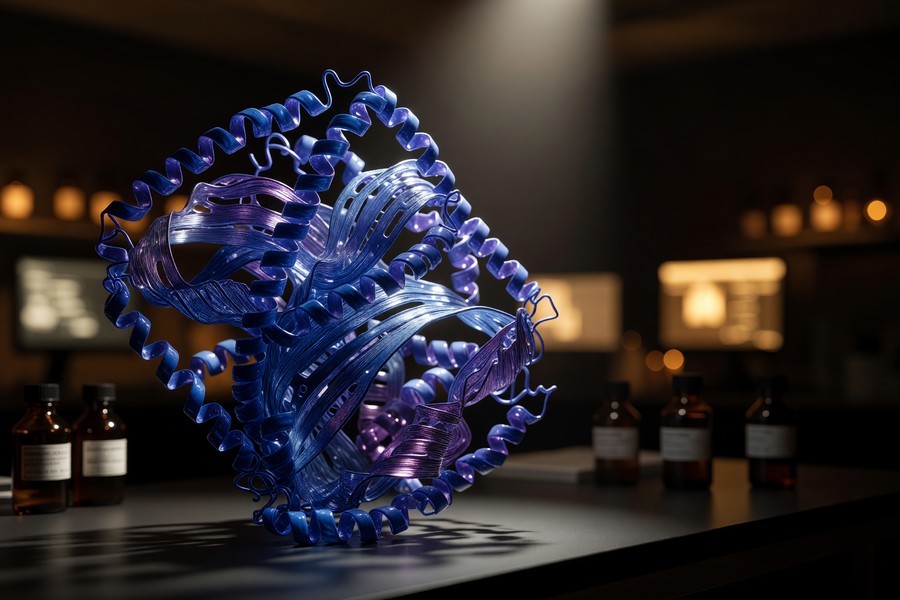
DeepMind’s AlphaFold is the most consequential AI contribution to target identification. Its ability to predict 3D protein structures from amino acid sequences — with accuracy matching experimental methods — has given researchers access to structural data on over 200 million proteins, as published in Nature. This eliminates a foundational bottleneck that stalled drug design for decades.
Beyond AlphaFold, platforms like BenevolentAI use knowledge graphs to map relationships between genes, proteins, and compounds across the entire scientific literature. These tools surface target hypotheses that human researchers would take years to formulate independently.
How Is AI Transforming Molecular Design and Drug Optimization?
AI transforms molecular design by generating and scoring drug-like compounds computationally, replacing the slow trial-and-error of traditional medicinal chemistry. Generative models can propose millions of novel molecular structures in hours and rank them by predicted potency, selectivity, and safety.
This capability represents a genuine paradigm shift. Instead of modifying known molecules iteratively — the standard approach for decades — AI enables researchers to explore entirely new chemical spaces.
Generative Chemistry in Practice
Insilico Medicine demonstrated the real-world power of generative AI when its platform designed a drug candidate for idiopathic pulmonary fibrosis. The compound, INS018_055, went from target identification to Phase II clinical trials in under 30 months, according to Nature Biotechnology — a timeline roughly four times faster than the industry standard.
Schrödinger, another key player, uses physics-based AI models to predict how candidate molecules will bind to targets, filtering out weak performers before synthesis. This reduces the number of compounds that need to be physically synthesized and tested, cutting both cost and time.
The global AI in drug discovery market is growing at a CAGR of 45.7% and is projected to reach $4.9 billion by 2028, driven by rising R&D costs and demand for faster pipelines.
| Development Stage | Traditional Timeline | AI-Assisted Timeline |
|---|---|---|
| Target Identification | 2–4 years | 6–12 months |
| Lead Discovery | 3–5 years | 12–18 months |
| Preclinical Testing | 2–4 years | 1–2 years |
| Phase I Clinical Trial | 1–2 years | 1–1.5 years |
| Total (Avg. to Phase II) | 10–14 years | 3–5 years |
How Is AI Improving Clinical Trials and Patient Selection?
AI improves clinical trials primarily by matching the right patients to the right trials faster and predicting which patient subgroups are most likely to respond to a given treatment. This addresses one of the costliest failure points in drug development: recruiting unresponsive patient populations.
Clinical trial failure rates remain devastatingly high. According to the FDA’s clinical research overview, only about 12% of drugs that enter clinical testing are ultimately approved. AI aims to improve that rate by front-loading intelligence into trial design.
Adaptive Trial Design and Real-World Evidence
Medidata Solutions and Veeva Systems are among the companies deploying AI to analyze electronic health records, wearable sensor data, and genomic profiles to build synthetic control arms and optimize enrollment criteria. These tools can cut trial enrollment times by 30–50%, according to industry benchmarks.
The intersection of AI and wearable health data is particularly powerful here. As explored in our coverage of how wearable technology is transforming personal health tracking, continuous biometric monitoring is generating the kind of granular patient data that AI clinical trial platforms depend on.
“The biggest opportunity for AI in medicine is not replacing physicians — it is making the discovery of new therapies so much faster that diseases we currently accept as untreatable become solvable within a generation.”
Which Companies and Tools Are Leading AI Drug Discovery?
The AI drug discovery landscape is led by a mix of dedicated biotech firms, major pharmaceutical companies, and cloud-platform providers. Each occupies a distinct role in the discovery pipeline.
Understanding which organizations are driving this field matters for anyone tracking where pharmaceutical innovation is headed in the next decade.
Key Players by Category
Recursion Pharmaceuticals uses high-throughput robotic biology combined with deep learning to generate over 2 petabytes of proprietary biological data, enabling it to map cellular behavior at industrial scale. Exscientia, acquired by Recursion in 2024, was one of the first companies to advance an AI-designed molecule into human clinical trials.
Among Big Pharma, AstraZeneca and Pfizer have each embedded AI teams across their R&D divisions. Google DeepMind remains the most influential external contributor through AlphaFold and its successor, AlphaFold 3, which extends predictions to DNA, RNA, and ligand interactions. Nvidia provides the GPU infrastructure that makes large-scale molecular simulation computationally feasible.
If you are tracking AI drug discovery as an investment or research area, monitor pipeline announcements from Recursion Pharmaceuticals, Insilico Medicine, and Exscientia — these companies have the most publicly visible AI-native pipelines with phase-specific data disclosures.
Open-Access Tools Enabling Broader Research
The European Bioinformatics Institute (EMBL-EBI) hosts the publicly available AlphaFold Protein Structure Database, which has been accessed by researchers in over 190 countries. Open-source frameworks like RDKit and PyTorch Geometric allow academic institutions to build custom molecular AI models without proprietary infrastructure.
The democratization of these tools mirrors a broader pattern in AI — powerful capabilities once limited to tech giants are now accessible to smaller teams, a dynamic also visible in how quantum computing is beginning to change everyday technology.
What Are the Biggest Challenges and Limitations of AI in Drug Discovery?
The most significant challenge facing AI drug discovery is data quality and availability. AI models are only as good as the datasets they train on, and biological data is notoriously fragmented, inconsistently labeled, and frequently proprietary.
Overfitting is a related concern. Models trained on narrow chemical spaces can generate candidates that look promising computationally but fail in wet-lab validation — a problem sometimes called “AI hallucination” in the biological context.
Regulatory and Interpretability Barriers
The U.S. Food and Drug Administration (FDA) and the European Medicines Agency (EMA) have not yet established clear regulatory frameworks for AI-generated drug candidates. This creates uncertainty about how AI-derived evidence will be evaluated in approval submissions. The FDA’s AI/ML in Drug Development discussion paper acknowledges the gap and signals that guidance is forthcoming.
Interpretability remains a core scientific issue. Many deep learning models function as black boxes, making it difficult to explain to regulators — or to other scientists — why a model ranked a particular compound highly. Explainable AI (XAI) research is addressing this, but it is not yet a solved problem.
“We are building models that can outperform human experts at predicting certain molecular properties — but the models can still fail catastrophically when encountering chemistry outside their training distribution. That humility has to be built into every deployment.”
What Does the Future of AI Drug Discovery Look Like?
The future of AI drug discovery points toward fully autonomous research loops — systems that design, test, and iterate on drug candidates with minimal human intervention. This concept, sometimes called self-driving laboratories, is already being piloted at institutions including Carnegie Mellon University and the University of Toronto.
Multimodal AI — models that simultaneously process genetic, imaging, clinical, and real-world health data — will become the standard research architecture within this decade. This convergence will unlock precision medicine applications where treatments are designed for patient subpopulations, not broad disease categories.
AI and Neglected Disease Research
One underreported implication is AI’s potential to accelerate drug discovery for neglected tropical diseases and rare conditions that have historically been commercially unviable. The Wellcome Trust and the Bill and Melinda Gates Foundation are funding AI initiatives specifically targeting diseases like malaria, tuberculosis, and leishmaniasis, where the potential to save lives is high but traditional commercial incentives are weak.
The broader convergence of AI with edge computing, wearables, and genomics suggests that the infrastructure for truly personalized drug development is coming together rapidly. For a deeper look at the computational infrastructure enabling these advances, see our explainer on what edge computing is and how it works.
Frequently Asked Questions
What is AI drug discovery in simple terms?
AI drug discovery uses machine learning algorithms to find and design new medicines faster than traditional lab methods. Instead of testing thousands of compounds physically, AI predicts which molecules will work before they are synthesized, cutting years and billions of dollars from the development process.
How long does AI drug discovery take compared to traditional methods?
AI-assisted pipelines can compress the discovery-to-Phase-I timeline from 10–14 years down to approximately 3–5 years, depending on the disease area. Insilico Medicine’s IPF drug candidate reached Phase II in under 30 months, which is the most documented benchmark in the field to date.
Which AI tool has had the biggest impact on drug discovery?
DeepMind’s AlphaFold is widely regarded as the single most impactful AI tool in biomedical research history. By solving the protein folding problem and releasing its database publicly, it gave every researcher in the world access to structural data that previously required years of experimental work per protein.
Are any AI-discovered drugs already approved?
No fully AI-designed drug has received FDA approval as of July 2025, but several are in advanced clinical trials. The field’s first AI-designed clinical candidates entered Phase I around 2019–2020, meaning approval timelines may be reached within the next two to three years if trials succeed.
What role does the FDA play in AI drug discovery?
The FDA is actively developing guidance for AI-assisted drug development but has not yet issued a comprehensive framework. The agency’s AI/ML Drug Development program is engaging with industry stakeholders and expects to publish formalized guidance. Developers must currently demonstrate AI model validity through traditional evidentiary standards.
How does AI drug discovery affect drug pricing?
Lower development costs theoretically create conditions for more affordable drugs — if savings are passed on to patients. The more direct near-term impact is that faster pipelines reduce the capital tied up in development, making it economically viable to pursue smaller patient populations and rare diseases that traditional economics could not justify.
Is AI replacing human researchers in drug discovery?
AI is augmenting human researchers, not replacing them. The most effective models in production today combine AI’s pattern-recognition speed with human expertise in experimental design, biological interpretation, and regulatory strategy. The goal is to free scientists from low-value repetitive work so they can focus on hypothesis generation and validation.
Sources
- National Library of Medicine — Artificial Intelligence in Drug Discovery and Development
- Nature — Highly Accurate Protein Structure Prediction with AlphaFold (DeepMind)
- Nature Biotechnology — Generative AI and the Drug Discovery Process (Insilico Medicine)
- U.S. Food and Drug Administration — AI/ML in Drug Development
- U.S. Food and Drug Administration — Step 3: Clinical Research
- MarketsandMarkets — AI in Drug Discovery Market Forecast 2023–2028
- Recursion Pharmaceuticals — Platform Overview
- FierceBiotech — AI R&D Investment Tracking in Big Pharma
- EMBL-EBI — AlphaFold Protein Structure Database
- Wellcome Trust — Drug Discovery and AI Initiative