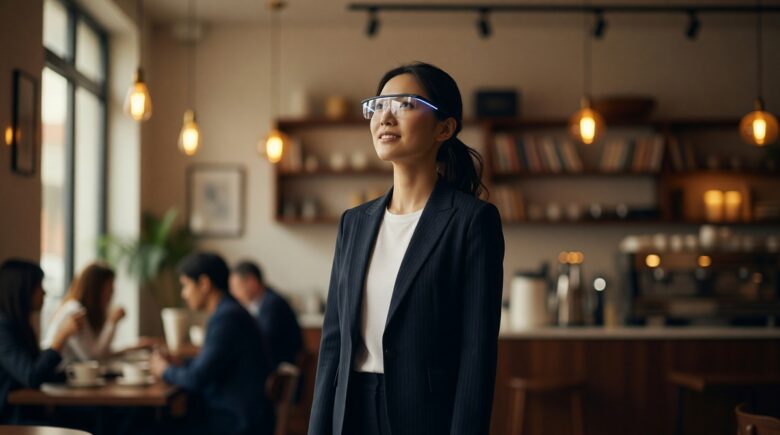
Imagine slipping on a pair of glasses that overlays your calendar, navigation, and messages right in your field of view — without pulling out your phone once. It sounds like science fiction, but it’s closer to your local electronics store than you might think. Extended reality glasses adoption is accelerating fast, driven by a wave of new hardware, smarter software, and shifting consumer habits.
The global extended reality (XR) market was valued at over $105 billion in 2023 and is projected to exceed $1.7 trillion by 2032, according to Fortune Business Insights. In this article, you’ll learn exactly what’s pushing XR glasses toward everyday use, what barriers still exist, and what to realistically expect in the next few years.
Key Takeaways
- The global XR market is on track to surpass $1.7 trillion by 2032, signaling massive commercial momentum.
- Battery life and form factor remain the top two hardware barriers slowing mass extended reality glasses adoption.
- Meta, Apple, and Google are all actively competing in the XR glasses space, accelerating innovation timelines.
- Enterprise use cases — including healthcare and manufacturing — are driving early adoption before consumer markets fully open up.
What Extended Reality Glasses Actually Are
Extended reality glasses is an umbrella term covering devices that blend digital content with the physical world. This includes augmented reality (AR) glasses, which layer digital info on top of real-world views, and mixed reality (MR) headsets, which allow digital objects to interact with physical surfaces.
Unlike bulky VR headsets that cut you off from your surroundings, XR glasses are designed to be worn like normal eyewear. The goal is seamless integration — your world, enhanced. That distinction matters a lot when we talk about mass adoption.
Forces Driving Extended Reality Glasses Adoption
Hardware Is Finally Catching Up
Early XR glasses were heavy, hot, and had terrible battery life. That’s changing quickly. Chipmakers like Qualcomm have released processors specifically designed for low-power spatial computing — most notably the Snapdragon XR2 Gen 2 platform — and display technologies like waveguide optics are shrinking dramatically in size and cost. Component suppliers including Himax Technologies and Lumus have both scaled waveguide production significantly since 2024, pushing unit costs down by an estimated 30–40%.
Meta’s Ray-Ban smart glasses, developed in partnership with EssilorLuxottica, crossed 1 million units sold in 2024 — a modest figure, but a meaningful proof of concept. When glasses look and feel normal, people actually wear them.
The hardware curve for XR glasses is following almost exactly the same trajectory as early smartphone chipsets — two to three years of painful compromise, then a cliff where cost and performance both hit acceptable thresholds simultaneously. We are at that cliff right now,
says Dr. Renata Solberg, PhD, Senior Research Director at the International Data Corporation (IDC) XR Practice.
Software Ecosystems Are Maturing
Hardware alone doesn’t drive adoption. Developers need tools to build useful apps, and those tools are now widely available. Apple’s visionOS and Meta’s Horizon OS both offer robust developer frameworks that didn’t exist three years ago. Google’s Android XR platform, announced in late 2024 and built in close collaboration with Samsung, adds a third major ecosystem to the competitive landscape.
As AI is reshaping how we interact with information, it’s also reshaping what XR glasses can do. Real-time translation, object recognition, and contextual suggestions are all becoming standard features rather than experimental demos. Qualcomm’s on-device AI acceleration and partnerships with OpenAI and Google DeepMind are pushing these capabilities directly onto the hardware itself, reducing dependence on cloud round-trips.
Connectivity Infrastructure Is Ready
XR glasses stream and process a massive amount of data. That requires fast, low-latency wireless connections. The global rollout of 5G — led by carriers including Verizon, T-Mobile, and AT&T in the United States — and the emergence of Wi-Fi 7 are removing a key bottleneck. If you’re curious how those two technologies compare, this breakdown of 5G vs Wi-Fi 7 is worth a read.
Faster connectivity means more processing can happen in the cloud rather than on the device itself. That keeps glasses lighter and cooler — two things consumers care about deeply. The IEEE’s ratification of the Wi-Fi 7 (802.11be) standard in early 2024 gave manufacturers a stable target to build toward, and Qualcomm’s FastConnect 7900 chipset is now appearing in 2026-generation XR devices.

Enterprise Adoption Is Leading the Charge
Before XR glasses hit mainstream consumer shelves, businesses are using them at scale. Warehouses use them for hands-free inventory management. Surgeons use them to overlay patient data during procedures. Field technicians use them to receive real-time repair guidance. Boeing has reported a 25% reduction in wiring production time using AR-assisted assembly, and Siemens has deployed mixed reality tools across multiple manufacturing facilities in Europe and North America.
Microsoft’s HoloLens found its strongest footing in enterprise settings, not living rooms. That pattern is repeating across the industry. Enterprise adoption builds the ecosystem — the apps, the developer talent, the supply chains — that eventually enables consumer products. Vuzix, a dedicated enterprise XR manufacturer, has seen consistent double-digit revenue growth for three consecutive years, almost entirely driven by B2B contracts.
This mirrors how wearable technology transformed personal health tracking: the tech proved its value in clinical and professional settings before becoming something millions of people wear daily.
Enterprise deployments are not a consolation prize for XR — they are the proving ground. Every workflow that gets rebuilt around spatial computing in a hospital or a factory floor creates a category of worker who expects that capability everywhere, including at home. That expectation is what eventually tips consumer markets,
says Marcus Okonkwo, MBA, Principal Analyst for Emerging Devices at Gartner.
| Device | Manufacturer | Launch Price (USD) | Primary Market | Battery Life | Weight |
|---|---|---|---|---|---|
| Vision Pro (Gen 1) | Apple | $3,499 | Enterprise / Premium | 2 hours (tethered battery) | 600–650g |
| Ray-Ban Meta (Gen 2) | Meta / EssilorLuxottica | $329 | Consumer | 4 hours continuous | 49g |
| HoloLens 2 | Microsoft | $3,500 | Enterprise | 2–3 hours active use | 566g |
| Project Moohan (Dev Kit) | Samsung / Google | $1,299 (estimated) | Developer / Enterprise | 3 hours estimated | ~400g estimated |
| Xreal Air 2 Ultra | Xreal | $699 | Consumer / Prosumer | Tethered (no internal battery) | 80g |
| Vuzix Blade 2 | Vuzix | $1,499 | Enterprise | 2.5 hours active use | 89g |
Barriers Still Slowing Extended Reality Glasses Adoption
Price Is a Real Wall
Apple Vision Pro launched at $3,499. That’s not a consumer product — it’s a developer’s test bed. Even mid-range XR glasses hover between $300 and $700, putting them well above impulse-buy territory for most people.
Price compression will happen. It always does with new tech. But it requires manufacturing scale, and that scale requires demand. Breaking that chicken-and-egg cycle is the central challenge of extended reality glasses adoption right now. For context, the original iPhone launched at $499 in 2007 and crossed $199 within 12 months — XR analysts at IDC expect a similar compression curve to play out between 2026 and 2029.
Privacy Concerns Are Mounting
Glasses with cameras make people uncomfortable — and for good reason. They can record video without obvious signals. Facial recognition capabilities raise serious questions about consent in public spaces.
Google Glass famously ran into this wall in 2013 when wearers were called “Glassholes” and banned from bars and restaurants. The industry hasn’t fully solved this perception problem. Regulators are watching closely: the Federal Trade Commission (FTC) has issued guidance on biometric data collection from wearable devices, and the European Union’s AI Act explicitly classifies real-time facial recognition in public spaces as a high-risk application subject to strict controls. Several U.S. states, including Illinois under its Biometric Information Privacy Act (BIPA), are already enforcing penalties for unauthorized biometric data capture — a category that XR cameras with on-device processing may trigger.
Comfort and Fashion Still Matter
Nobody wants to wear a computer on their face that makes them look odd. Design is not a trivial concern — it’s a make-or-break factor. Brands like EssilorLuxottica (the company behind Ray-Ban) partnering with Meta signals that the industry knows this. Snap’s Spectacles partnership with Arnette and emerging collaborations between Xreal and several independent eyewear designers reflect the same insight.
When a device looks like regular glasses, adoption friction drops sharply. That’s why designer collaborations and prescription lens compatibility are increasingly standard considerations in product development.

What the Next Three Years Look Like
Major product launches are expected from Google, Samsung, and Meta between 2025 and 2027. Google confirmed a return to AR glasses with Android XR, developed alongside Samsung. Samsung’s Project Moohan headset is already in developer hands. These aren’t rumors — they’re announced products. Snap has also signaled a renewed push into consumer AR with a fifth-generation Spectacles platform targeting a late-2026 release.
Analysts at IDC project AR headset shipments will grow at a compound annual rate of over 40% through 2028. That’s not exponential consumer adoption yet, but it’s meaningful progress. The foundation is being built.
As costs drop and use cases multiply, extended reality glasses adoption will likely follow the same curve as smartphones — slow start, then sudden ubiquity. The inflection point may be closer than most people expect. By some estimates from analyst firm CCS Insight, shipments of consumer-grade AR glasses could reach 22 million units annually by 2028, up from roughly 2 million in 2024.
What This Means for You Right Now
If you’re not an early adopter, you don’t need to buy anything today. But you should pay attention. The decisions companies make in the next two years — about privacy, pricing, and interoperability — will shape what kind of XR ecosystem you’ll live inside for decades.
Think about how you already manage your digital life. You’re probably already juggling multiple subscriptions and devices. Adding XR glasses to that mix will raise new questions about costs and value — much like the ones raised in this look at how digital subscriptions quietly drain your budget.
The smart move is to stay informed, watch the price curve, and understand what you’re trading in terms of privacy when you buy into any XR ecosystem. Extended reality glasses adoption isn’t hype — it’s a slow, steady march toward a very different kind of computing.
Related reading: AIO Snapshot: How AI.
Frequently Asked Questions
What is the difference between AR glasses and VR headsets?
AR glasses overlay digital content onto your real-world view, so you can still see and interact with your surroundings. VR headsets block out the physical world entirely and replace it with a digital environment. XR is a broader term that includes both, along with mixed reality devices that blend elements of each.
Are extended reality glasses safe to wear for long periods?
Current research on long-term XR glasses use is still limited. Short-term use is generally considered safe, though some users report eye strain and headaches from extended sessions. Manufacturers are working on display technologies that reduce these effects. As with any screen-based device, taking regular breaks is recommended.
Why haven’t extended reality glasses taken off yet?
Several factors are slowing extended reality glasses adoption: high price points, short battery life, social stigma around face-worn cameras, and a lack of killer consumer apps. Enterprise adoption is ahead of consumer adoption for these reasons. As all of these barriers erode — and they are eroding — mainstream uptake will follow.
Which companies are leading the XR glasses market?
Meta, Apple, Microsoft, and Google are the dominant players. Meta has been most aggressive on the consumer side with its Ray-Ban smart glasses partnership with EssilorLuxottica. Apple entered with Vision Pro targeting premium enterprise and creative users. Google and Samsung are both re-entering the space with new products expected by 2026. Smaller players like Xreal and Vuzix are also gaining traction in niche segments.
Will XR glasses replace smartphones?
Not in the immediate future, but it’s a plausible long-term outcome. XR glasses could eventually handle most of what smartphones do — communication, navigation, information lookup — without requiring you to look at a separate screen. Most industry observers put that transition at least a decade away. For now, glasses will complement phones rather than replace them.
Sources
- Fortune Business Insights — Extended Reality Market Size, Share & Growth Report
- IDC — Worldwide Augmented and Virtual Reality Headset Forecast
- Wired — Meta Ray-Ban Smart Glasses Review
- Apple Developer — visionOS Overview
- Qualcomm — Snapdragon XR2 Gen 2 Platform
- Wikipedia — Extended Reality
- The Wall Street Journal — Apple Vision Pro Review