| MT Marcus Tran | 🕓 13 min read | Updated Mar 16, 2026 |
Fact-checked by the Visual eNews editorial team | Our editorial standards
You didn’t imagine it. The grocery store really did get a lot more expensive — and your frustration is completely warranted. Since January 2020, food prices at the grocery store have climbed roughly 30% in total. That means a cart that cost $200 five years ago now runs about $260 for the exact same items. A Reddit user who tracked identical grocery receipts from 2019 and 2025 found their basket jumped from $273.46 to $386.77 — a 41% increase. The federal minimum wage, by the way, has not moved from $7.25 in that same period.
📌 For more practical strategies on everyday financial decisions, explore our complete guide to managing money in real life.
The system is genuinely broken in ways that real people are feeling every single week. This isn’t a case of buying too many lattes. Eggs spiked over $8 a dozen in early 2025. Beef is up more than 63% from where it was in 2020. Coffee is 12% more expensive than it was just a year ago. And unlike a lot of financial stressors, groceries are non-negotiable — you have to eat.
Here’s the thing, though: there are concrete moves you can make that actually matter. Not “bring a list and don’t go hungry” advice that you’ve heard a hundred times. Real strategies — specific dollar amounts, specific store comparisons, specific swaps — that can put hundreds of dollars back in your pocket every year. That’s what this guide is for.
Key Takeaways
- ✓Food-at-home prices have risen roughly 30% since January 2020, and the USDA projects another 2.5% increase in 2026 — so this isn’t over.
- ✓Switching from a mid-tier chain like Kroger to Aldi can save a household $90–$115 every month ($1,080–$1,380/year) on the same basket of groceries.
- ✓Costco and BJ’s Wholesale Club average 21% cheaper per item than Walmart — which is already cheaper than most traditional supermarkets.
- ✓The average American wastes $125/month on groceries they never cook or eat. Meal planning attacks this waste directly — and it’s one of the fastest paths to savings.
- ✓Store brands (private labels) now cost an average of $2 less per item than national brand alternatives; switching 50% of your cart to store brands can save $55–$100/month.
- ✓A smart combination of store choice, store brands, meal planning, and strategic couponing can realistically cut a household grocery bill by $200–$400/month.
Why Grocery Prices Keep Climbing
To use a strategy effectively, it helps to understand what you’re up against. Grocery inflation isn’t one single thing — it’s a pile-up of different crises hitting simultaneously, some of which are still unfolding.
The surge started in 2020 as pandemic supply chain disruptions hit food production. Then in 2021, costs accelerated as supply chain problems deepened and labor markets tightened. By 2022, food-at-home prices peaked at 11.8% year-over-year — the worst food inflation in 40 years. That year’s spike hit every category simultaneously: meat, produce, dairy, bakery goods, beverages. All of it at once.
Inflation slowed dramatically in 2023 (+1.3%) and 2024 (+1.8%), which sounds like relief — until you remember those are increases on top of the 2022 spike. “Slowing inflation” doesn’t mean prices went down. It means they went up more slowly. The cumulative 30% increase since 2020 doesn’t go away when the rate cools. You’re still paying 30% more for the same cart.
Then in 2025, inflation re-accelerated to 2.4% (December-to-December), driven by two major stories: beef prices and coffee. Beef and veal jumped 16.4% in a single year — partly because the U.S. cattle herd shrank to a 64-year low due to drought and cyclical herd contraction. Ground beef now costs roughly $6.32 per pound, up 63% from January 2020. Coffee and tea climbed 11.8% due to global green coffee bean supply pressures. Meanwhile, eggs had their own wild ride: they peaked at over $8 a dozen in March 2025 (driven by an avian flu outbreak affecting 166 million birds), then crashed back down — but even with that relief, the cumulative effect on household budgets has been severe.
Key Stat
Food-at-home prices have risen approximately 30% in total since January 2020. The USDA ERS projects another +2.5% increase in 2026. Even at “low” inflation rates, you’re adding to an already elevated base. Source: BLS CPI 2025 in Review; USDA ERS Food Price Outlook.
What’s the forecast for 2026? The USDA Economic Research Service projects food-at-home prices to rise another 2.5%, with all food up 3.1%. Beef is expected to climb another 5.5%. So no, this isn’t a one-year problem that’s going to snap back. Adapting your grocery strategy is a long-term move, not a temporary one.
What’s Actually Expensive Right Now (and What Isn’t)
Not all categories are equally brutal. Knowing which ones are expensive — and which are actually decent right now — lets you shop smarter instead of just feeling helpless.
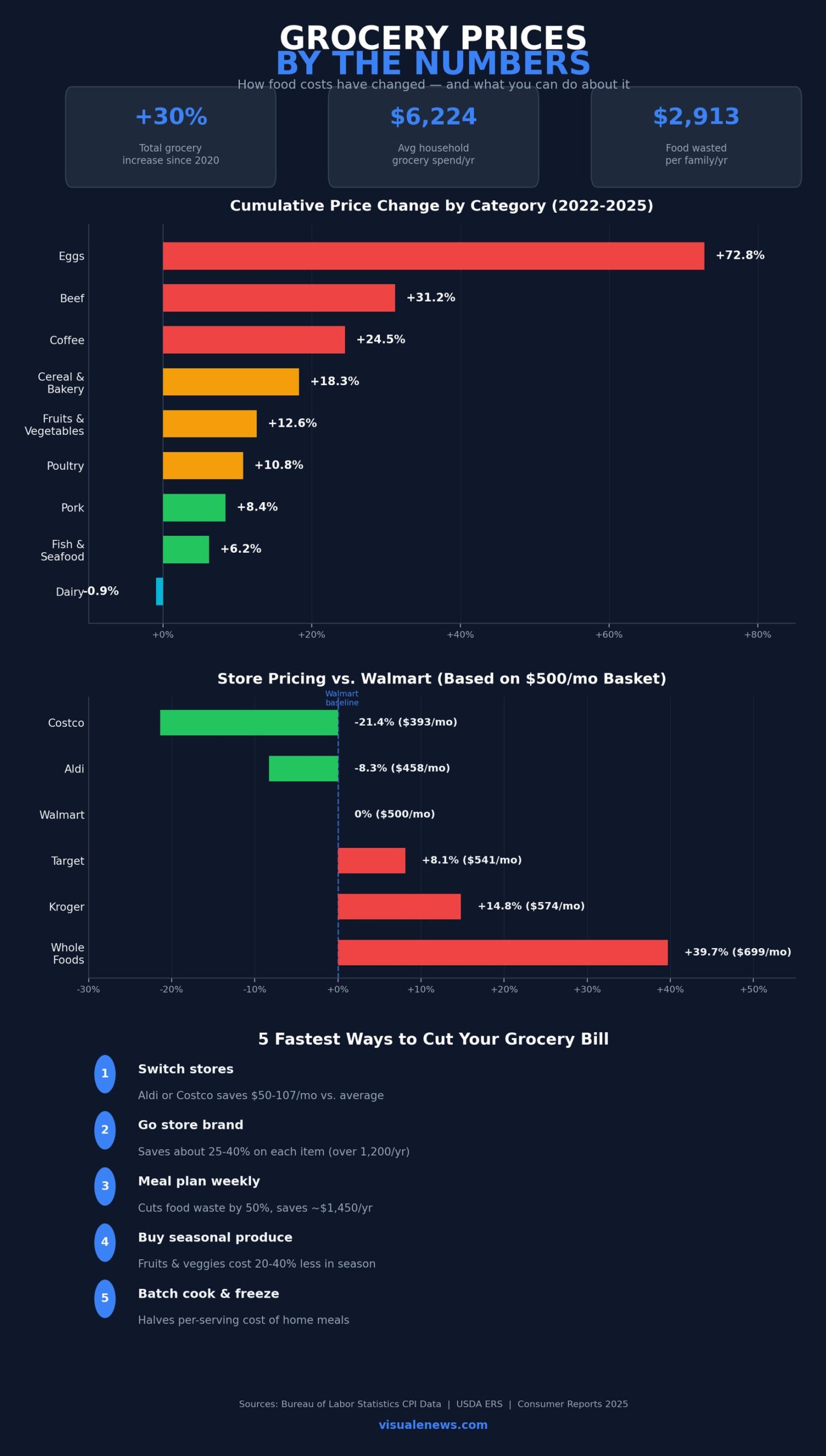
The expensive side: Beef is the headline villain. Uncooked beef steaks jumped 17.8% in 2025 alone. Ground beef, roasts — all of it is up double digits. If beef is a staple in your household, this is where you’re feeling the pain most acutely. Coffee and tea are also significantly more expensive — up 11.8% in 2025, on top of a cumulative increase of roughly 16% over the prior three years. If you’re grinding your own beans at home thinking you’re being frugal, you’re still paying a lot more than you used to.
The surprisingly okay side: Dairy has actually gotten slightly cheaper — down 0.9% in 2025. Milk and cheese are some of the better deals at the grocery store right now compared to their historical trajectory. Fruits and vegetables have barely moved, up only about 0.5% in 2025. Rice, pasta, and cornmeal are actually cheaper than a year ago (down 1.7%). If you’re looking for high-value, budget-friendly categories, this is your list.
Did You Know
Eggs — the most dramatic inflation story of the past two years — peaked at $8.15 per dozen on March 4, 2025, driven by an avian flu outbreak that affected over 166 million birds. By September 2025, prices had dropped back to $3.49/dozen. The USDA ERS forecasts eggs will fall another 27.4% in 2026. If you pulled back on eggs during the spike, now is a great time to bring them back into your meal rotation. Source: USDA ERS Food Price Outlook.
The practical implication here: be flexible with proteins. Chicken rose only 1.2% in 2025. Legumes — beans, lentils, chickpeas — barely moved. These are your beef substitutes right now, and honestly the nutrition is comparable or better. Beef is still great, but paying $6.32/pound for ground beef when chicken thighs and canned black beans exist at a fraction of the cost is where a lot of the savings opportunity lies.
Base your meal plans on sales rather than cravings. Swap beef for turkey or beans a couple of times a week. Opt for store brands for staples. Buy whole produce and process it yourself to get more value for your money.
How Much You’re “Supposed” to Spend — and What’s Realistic
One of the most useful tools for calibrating your grocery budget is the USDA Food Plans, which are updated monthly to reflect current prices. These aren’t arbitrary benchmarks — they represent the actual cost of nutritious eating at four different spending levels, calculated using real market prices.
As of January 2026, the Thrifty Food Plan — the most austere level, and the basis for SNAP benefit calculations — estimates that a reference family of four (two adults age 20–50 and two kids) can eat nutritiously for $1,000.20 per month. That’s the floor. The Low-Cost Plan runs about $1,300/month; the Moderate-Cost Plan is approximately $1,600/month; and the Liberal Plan exceeds $2,000/month.
For a single adult woman age 20–50, the Thrifty plan is $248.50/month. For a single adult man, it’s $311.70/month.
Meanwhile, the Bureau of Labor Statistics reports that the average American household actually spent $6,224/year ($519/month) on food at home in 2024. That’s pretty close to the Thrifty-to-Low-Cost range for many household sizes — which means if you’re spending more than about $600–700/month on groceries for two adults, there’s likely room to improve without sacrificing nutrition.
Watch Out
The USDA Food Plans are based on home cooking with zero food waste. Real households don’t achieve this. Factor in the average American’s $125/month in wasted grocery spending (food bought but never eaten or cooked), and the Thrifty Plan’s theoretical number becomes meaningfully higher in practice. This is why waste reduction is just as important as price-hunting. Source: CNET Meal Survey, 2025.
There’s also a meaningful regional dimension. What you spend in Wisconsin ($221/week average for a household) looks very different from what you spend in Hawaii ($334/week) or California ($298/week). If your grocery bills feel unmanageable and you live in a high-cost state, that’s real — it’s not that you’re bad at budgeting. The same basket genuinely costs more where you are.
The Single Biggest Lever: Where You Shop
If you’re only going to make one change to your grocery strategy, this is the one. Where you shop has a bigger impact on your annual grocery bill than almost any other single variable. We’re not talking about pennies — we’re talking about hundreds of dollars a month.
Consumer Reports, partnering with Strategic Resource Group, conducted a comprehensive price comparison study in late summer 2025, analyzing 30+ stores across six metro areas using Walmart as a baseline. The results are striking.
*Estimated monthly cost based on $400/month Walmart baseline. **Annual savings compared to Kroger shopper spending ~$474/month. Source: Consumer Reports 2025 Supermarket Price Comparison.
Let’s translate those percentages into real money. A household that currently spends $500/month at Whole Foods and switches to Aldi would save approximately $242/month — that’s $2,904 per year for buying the same type of food. Even a household switching from Kroger to Aldi saves about $115/month, or $1,380 per year.
A real-world basket test by Allrecipes confirmed this dynamic: the exact same grocery list cost $156 at Trader Joe’s and $109 at Aldi — a $47 difference in a single shopping trip. On a weekly basis, that compounds to $2,444/year.
Now, a realistic note: Aldi and Costco don’t carry everything. You may not find your favorite specialty item, specific name brand, or prepared food you rely on. That’s why the emerging “3-Store Rule” is worth adopting — one discount store (Aldi or Lidl) for everyday staples, one warehouse club (Costco or BJ’s) for bulk purchases, and one traditional store for specific items you can’t get elsewhere. Research from ConsumerAffairs suggests this three-store approach can cut grocery bills 20–30% compared to shopping exclusively at a mid-tier chain. Yes, it requires more coordination — but the math tends to make it worth the effort.
Pro Tip
Before committing to a new primary store, do a test shop: buy your standard two-week grocery list at your current store (keep the receipt), then buy the same items at the discount alternative. The real-dollar difference usually ends the debate. Many people are surprised to find the quality gap is smaller than they expected — especially on produce, dairy, and packaged staples.
Store Brands vs. Name Brands: The Math Is Clear
Here’s something the food industry doesn’t love you knowing: many store-brand products are manufactured in the exact same facilities as their name-brand counterparts. The product is often identical. The label is different. The price is typically 20–40% lower.
A Bank of America analysis from July 2025 found that private-label products now cost an average of $2 less per item than national brand alternatives. USDA Economic Research Service research puts the average price gap at 23% lower for store brands. Consumer sentiment has shifted dramatically: 71.8% of shoppers in 2025 reported buying at least one private-label product primarily because it was cheaper — and a majority (54%) say they’ll choose store brand over name brand going forward.
The math for your household is straightforward. If you’re spending $500/month on groceries and switch 50% of your purchases from name brands to store brands (at an average 23% discount on those items), you save roughly $55–$100 every month — or $660–$1,200 per year — without changing where you shop, what you eat, or how much you buy.
Did You Know
Dartmouth Tuck School of Business research confirms that consumers are “willing to pay 20–25% less for private labels even when they perceive the products as physically identical” to name brands. In other words, the psychological premium for brand names persists even when consumers know the products are the same. The grocery store is literally counting on you paying that premium. Source: Dartmouth Tuck.
Where store brands deliver the most consistent value: pantry staples (pasta, rice, flour, sugar, canned beans, canned tomatoes), dairy basics (milk, shredded cheese, butter, yogurt), frozen vegetables, paper products, and cooking oils. Where you might want to stick with name brands: over-the-counter medications (store-brand generics are actually FDA-regulated equivalents, but many people prefer name brands there), and a handful of products where taste genuinely differs to you personally — that’s a legitimate call.
A quick experiment: on your next grocery trip, swap just five name-brand items for store-brand equivalents. Track the difference. Most people find the savings are real and the quality difference is either undetectable or irrelevant for how they’re using the item.
Meal Planning: The Anti-Waste Strategy That Pays
Before you hunt for coupons or drive to a different store, deal with the money that’s already leaking out of your current system. The average American wastes $125 per month — $1,500 per year — on groceries they buy but never cook or eat, according to a 2025 CNET survey. The EPA puts household food waste at $728 per person per year; for a family of four, that’s $2,913 per year in food thrown away.
This is money you’re already spending and getting nothing for. Meal planning attacks this directly.
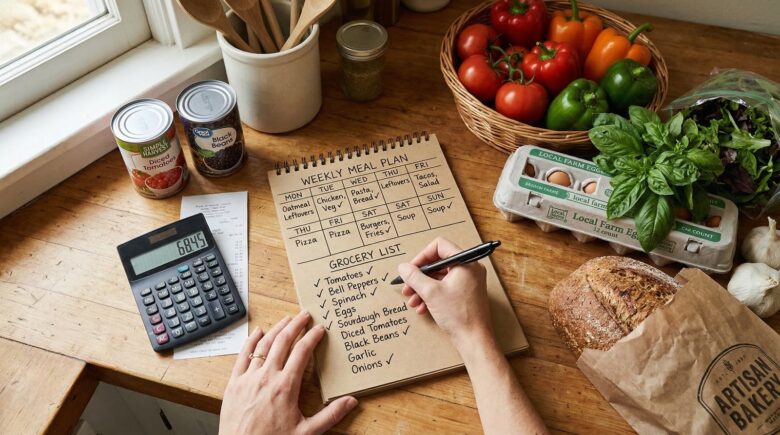
What meal planning actually means in practice: once a week (Sunday works well for most people), you decide what you’re eating for the next 7 days and build your grocery list around that plan — and nothing else. You don’t need an elaborate system. A piece of paper, a phone note, or a free app works fine. The key is knowing before you enter the store exactly what you’re buying and why.
I advocate for meal planning. This way, when you arrive at the store, you know all the items you need to purchase to prepare healthy meals for the week, rather than buying random ingredients and ending up spending $200 only to realize you don’t have anything that can be put together into a meal.
There’s also a smart variation called reverse meal planning that consumer savings expert Andrea Woroch recommends: instead of deciding what you want to eat first, check what’s on sale at your store and build meals around those items. “Try reverse meal planning — look at what’s on sale at your local grocery store and then find recipes that utilize those ingredients to further cut expenses,” she explains. This approach layers the benefits of meal planning on top of loss leader and sale shopping, maximizing savings on both fronts.
The discipline of meal planning also eliminates a lot of expensive impulse decisions — the “what are we doing for dinner?” moment at 6 PM that often ends in takeout. Eating at home more consistently versus dining out saves an estimated $482.63/year on average nationally, and up to $758.55/year in high-cost metro areas, according to a 2026 ProfitDuel study.
Pro Tip
Fidelity’s personal finance team recommends a simple hack for impulse buying: use curbside pickup for your main grocery order. When you order online, you’re forced to make deliberate decisions about every item — you’re not wandering the snack aisle at 7 PM when you’re hungry. Most major grocery chains offer free curbside pickup for orders above a minimum. This alone can cut impulse spending by 15–20%. Source: Fidelity Learning Center.
Tactical Savings: Coupons, Loss Leaders, and Apps
These aren’t the main event — store choice and meal planning will move the needle more — but tactical savings stack nicely on top of the bigger structural changes.
Loss leaders: Every major grocery chain prices certain items below cost on a rotating basis to drive foot traffic. These appear on the front page of the weekly store ad (and in the store’s app). The strategy: scan the week’s loss leaders first, then plan meals around whatever’s cheapest. A 5-lb bag of potatoes might be $1.47. A whole chicken might be priced at cost. A loss-leader-focused shopper reported saving “about $75 each month — a whole quarter of my grocery bill” on a roughly $300/month grocery budget, according to reporting from The Kitchn. Over a year, that’s $900.
Loyalty programs and digital coupons: 79% of shoppers are now using retailer loyalty apps, up from 69% in 2024, according to a 2025 survey by The Krazy Coupon Lady. Kroger and Meijer shoppers report saving $700–$1,700 per year through their loyalty programs. The catch, if you care: Kroger sold shopper data to third-party data brokers for $527 million in 2024. That’s the trade-off of “free” savings. It’s a legitimate personal choice, but know what you’re exchanging.
Cash-back apps: Apps like Ibotta, Fetch, and Shopkick give you money back on qualifying purchases — usually a dollar or two on specific products. These are at their most useful when they happen to overlap with items you were already going to buy. 58% of budget-conscious shoppers use these apps. They’re not transformative on their own, but stacked with a loyalty program and store brand choices, the cumulative effect adds up.
Watch Out
Coupons only save you money if you were already going to buy that item. A $1-off coupon on a product you don’t need, wouldn’t otherwise buy, or could get cheaper as a store brand is not a saving — it’s a spending trigger. Never buy something purely because of a coupon. The same applies to “buy one, get one free” deals on things that will expire before you use them. 40% of grocery shoppers use promo codes; the ones who actually save money are using them strategically, not reflexively.
Unit price comparison is one of the most underused tricks in grocery shopping. The shelf tag in most stores includes a unit price (cost per ounce, per pound, per count). Bigger isn’t always cheaper — sometimes the “family size” has a worse per-unit price than the standard size. Take 10 seconds to compare. Your phone’s calculator app is sufficient. This habit consistently eliminates one of the most common ways shoppers overpay.
Seasonal Produce, Bulk Buying, and Smart Timing
Two more high-impact strategies that work especially well when layered on top of the foundational moves above.
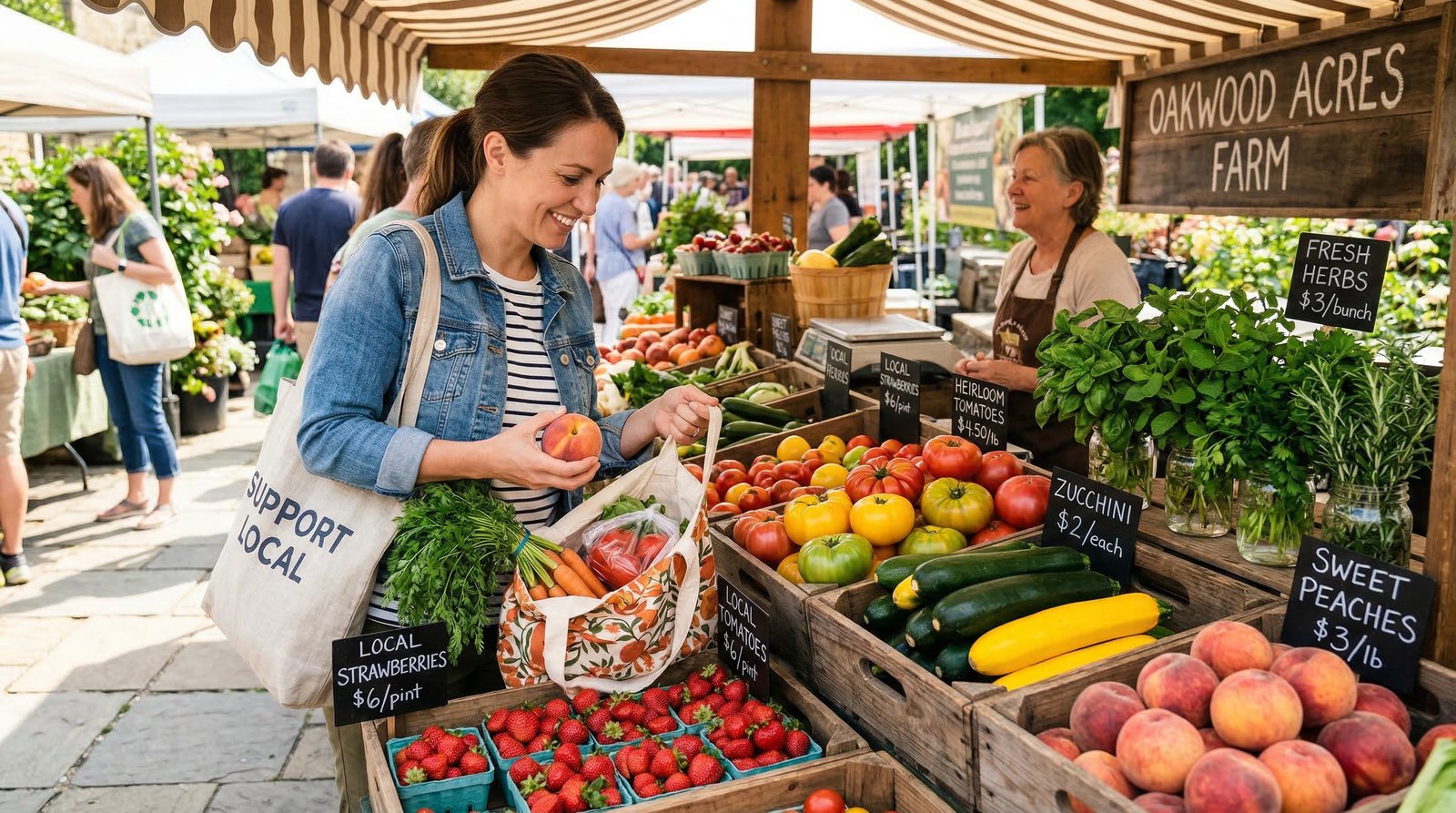
Seasonal produce: The price difference between in-season and out-of-season produce is consistently dramatic. Research published in Public Health Nutrition found that cantaloupe was 36% cheaper at roadside stands during peak season than at supermarkets; watermelon was 42.9% cheaper at farmers’ markets in peak season; summer squash was 30% cheaper in autumn at farmers’ markets; and tomatoes in season ran 30.8% less. This isn’t unique to farmers’ markets — the same dynamic plays out at regular grocery stores, where produce prices track seasonality.
The seasonal buying calendar: berries in summer, squash and apples in fall, citrus and root vegetables in winter, asparagus and peas in spring. Buying these in-season and freezing extras for later is a legitimate cost-cutting move recommended by dietitians and financial advisors alike.
Julia Zumpano, RD, of the Cleveland Clinic, is specific about this: “Frozen produce is just as healthy, if not healthier, than its fresh counterpart” — because freezing locks in nutrients at peak ripeness. Buying fresh strawberries in January (imported from Chile) when you can buy frozen domestic strawberries for half the price is a real cost you don’t need to pay.
Bulk buying: Warehouse clubs like Costco and BJ’s are genuinely 21% cheaper than Walmart on a per-item basis — but they require buying in larger quantities. The math works best for: shelf-stable pantry staples (rice, pasta, canned goods, cooking oil, coffee, nuts), frozen proteins (chicken, fish), paper products, and cleaning supplies. It does not work for: fresh produce you can’t eat before it goes bad, prepared foods with short shelf lives, or novelty items you’re not sure you’ll use.
One strategy gaining traction in 2025–2026: “bulk sharing” with family or friends. Two households splitting a Costco run can each get the per-unit savings without the waste risk. A New Jersey family of five reported saving nearly $75 every week — approximately $3,900/year — by coordinating Costco runs with extended family and splitting bulk purchases. The $65 annual Costco membership pays for itself in less than a month of these savings.
Top 10 Money-Saving Grocery Swaps
Here are the highest-impact swaps with real numbers. These aren’t theoretical — they’re based on verified price data from Consumer Reports, BLS CPI, USDA research, and reported consumer experiences.
Prices based on national averages from BLS CPI data, Consumer Reports 2025 store comparison, and USDA market data. Actual savings vary by household size, location, and spending level.
The key insight here: the top four strategies — store choice, store brands, warehouse clubs, and meal planning — can each independently deliver $600–$1,500 in annual savings. Stacking all four is not unrealistic. A disciplined household can realistically cut $200–$400 per month from a previously unoptimized grocery budget.
Case Study: How Maria Cut $195 Off Her Monthly Grocery Bill
Real-World Example: Maria’s Grocery Overhaul in Atlanta
Maria is a single mom with two kids — ages 8 and 11 — living in Atlanta. Before making any changes, she was spending around $680 per month on groceries, doing most of her shopping at the Kroger near her apartment. She wasn’t buying anything extravagant — just family staples, some convenience items, and whatever looked good in the moment. But the bill kept going up and the cart didn’t seem to grow.
What her situation looked like:
- Primary store: Kroger (which the Consumer Reports study puts at 14.8% more expensive than Walmart baseline)
- Shopping without a list roughly 3 out of 4 trips
- Buying mostly name brands out of habit
- Significant food waste — she estimates a third of fresh produce she bought was thrown away unused
- Beef in most dinners, 4–5 nights a week
The changes she made (over about 6 weeks):
1. Switched her primary store from Kroger to Aldi. Maria’s Aldi is about three miles farther away. The first two trips felt unfamiliar — the store layout is different, the brands are all private label. By the third trip, it felt normal. Her core weekly list — produce, dairy, bread, pantry staples, chicken, canned goods — cost roughly $85–$95 at Aldi compared to $120–$130 at Kroger. That’s a ~$140/month saving from this one change alone.
2. Added a Costco membership ($65/year) for bulk staples. Maria goes to Costco once or twice a month. She buys: chicken thighs (much cheaper per pound than Kroger or Aldi for her volume), frozen broccoli and stir-fry vegetables, a large bag of rice, coffee, cooking oil, paper towels and toilet paper. She splits some bulk items with her sister’s family. Costco has paid for its annual membership fee every single month. Estimated savings over Kroger for those specific items: $40–$50/month.
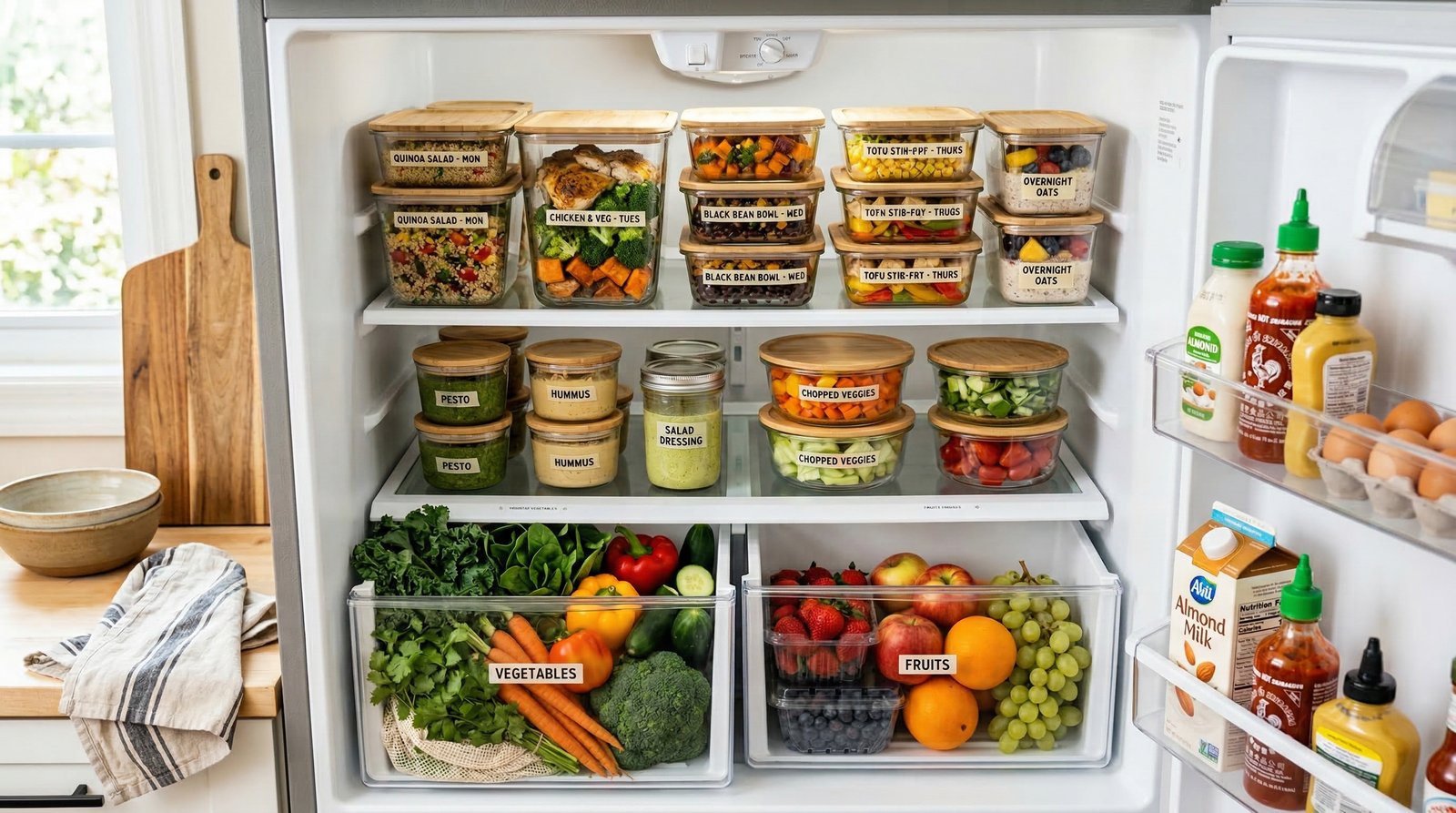
3. Started Sunday meal planning. Every Sunday, Maria spends about 20 minutes looking at what’s in the fridge, checking the Aldi and Kroger apps for sales, and writing out what she’s cooking for the week. She makes a specific grocery list and sticks to it. This eliminated most of her food waste — she used to throw away about $60–$70 worth of produce and leftovers monthly. Now it’s closer to $10–$15. ~$50/month saved.
4. Switched the majority of purchases to store brands. At Aldi, this happens automatically — the store is almost entirely private label. She also now buys Kroger store brand for the few items she still gets there. She tried switching back to a name brand cereal once; her kids couldn’t tell the difference. ~$30–$40/month saved.
5. Cut beef to 2 nights a week instead of 5. Chicken thighs, canned black beans, lentils, and eggs (which are now back down in price) fill the other nights. This was a bigger change, and the family needed a couple of weeks to adjust. Now it’s just the way they eat. ~$40–$50/month saved.
6. Seasonal produce and batch cooking on Sundays. Maria now buys in-season produce, doubles recipes when she cooks, and freezes half. The batch cooking means she has an easy dinner on Wednesday from food cooked Sunday, which keeps her from ordering delivery when she’s tired.
She’s eating better (more variety in proteins, less processed convenience food), wasting less food, and spending significantly less. The changes required about six weeks to fully adopt. None of them required any financial sacrifice beyond accepting that Aldi brands are fine and Kroger wasn’t actually serving her well.
Frequently Asked Questions
How much should a family of four spend on groceries per month?
The USDA Thrifty Food Plan for a reference family of four (two adults age 20–50, two children ages 6–11) is $1,000.20/month as of January 2026 — and that’s the minimum nutritious eating level. The USDA’s Low-Cost Plan is approximately $1,300/month; Moderate-Cost is around $1,600/month. The BLS reports actual average household food-at-home spending in 2024 was $6,224/year ($519/month), though this is an average across all household sizes. As a rule of thumb, many financial advisors suggest budgeting 10–15% of take-home pay for groceries. Sources: USDA Food Plans; BLS Consumer Expenditures 2024.
Are grocery prices still going up in 2026?
Yes, but at a slower rate than the 2022 peak. In 2022, food-at-home prices rose 11.8%. By 2024 that had slowed to 1.8%. In 2025, it re-accelerated slightly to 2.4% (December-to-December). The USDA projects food-at-home prices will increase approximately 2.5% in 2026. The February 2026 BLS report showed food at home up 2.4% year-over-year. The critical context: 2.5% inflation on top of a 30% cumulative increase since 2020 still means your grocery bill keeps growing. Sources: USDA ERS Food Price Outlook; BLS CPI February 2026.
What groceries have gone up the most in price?
Over 2024–2025, the biggest increases were beef (+16.4% in 2025 alone; +63% since 2020), coffee and tea (+11.8% in 2025), eggs (wildly volatile due to bird flu — peaked at $8.15/dozen in March 2025, now declining), and nonalcoholic beverages (+5.1% in 2025). On the other hand, dairy dropped 0.9%, fresh vegetables were essentially flat, and rice, pasta, and cornmeal fell 1.7%. If you want to save money right now, shift meals away from beef and toward dairy, legumes, eggs, and plant proteins. Sources: BLS CPI 2025 in Review; FoodNavigator-USA.
Is Aldi actually cheaper than Walmart?
In the 2025 Consumer Reports study, Aldi averaged 8.3% cheaper than Walmart overall. A real-world basket test by Allrecipes found the same grocery list cost $109 at Aldi versus $119 at Walmart — a $10 difference per trip, or $520/year on weekly shopping. Many experienced budget shoppers use both: Aldi first for most items, then Walmart or another store for specific items Aldi doesn’t carry. Note that Costco and BJ’s are even cheaper per item (21% below Walmart) but require bulk purchasing and a $65/year membership. Sources: Food & Wine / Consumer Reports; Allrecipes 8-Store Comparison.
How much money does meal planning actually save?
Meal planning saves money in two ways: it reduces food waste and it eliminates impulse purchases and emergency takeout. The average American wastes $125/month ($1,500/year) on grocery food that’s never eaten. Consistent meal planners typically cut that waste by 50–75%, saving $75–$100/month before accounting for reduced takeout. Eating at home more vs. dining out saves an estimated $482/year nationally (up to $758/year in high-cost areas). Combined, a disciplined meal planner can realistically save $150–$200/month. Sources: CNET Survey 2025; ProfitDuel 2026; EPA Food Waste Cost Report.
Are store brands as good as name brands?
For most categories, yes. In 2025, 71.8% of shoppers bought private-label products primarily for cost savings, and a growing majority say quality is comparable or better. Many store-brand products are manufactured in the same facilities as name brands — the label is the main difference. Dartmouth research confirms consumers are willing to pay 20–25% less for private labels “even when they perceive them as physically identical.” Where name brands sometimes justify the premium: over-the-counter medications (store-brand generics are FDA-regulated equivalents, but personal preference matters), baby formula, and specific products where you personally can taste or notice a difference. Sources: FoodNavigator-USA; Dartmouth Tuck.
What’s the fastest single change I can make to lower my grocery bill?
Switch your primary grocery store to Aldi, Lidl, or another deep-discount chain. The Consumer Reports study found shoppers save 8.3% vs. Walmart just by switching to Aldi — and Walmart is already 14.8% cheaper than Kroger. For a household spending $800/month, switching from a Kroger-equivalent store to Aldi could save $90–$115 every month ($1,080–$1,380/year). The second fastest change: start buying store brands for at least half your cart, saving another 20–40% on those specific items. Between store choice and store brands, most households can find $150–$200/month in savings within the first month of changes. Source: Consumer Reports 2025.
About the Author
Marcus Tran has covered personal finance, consumer debt, and household economics for eight years, with a focus on practical strategies for people on tight or irregular incomes. His reporting draws on BLS data and Federal Reserve consumer surveys.
Sources
- Bureau of Labor Statistics, Consumer Price Index: 2025 in Review. https://www.bls.gov/opub/ted/2026/consumer-price-index-2025-in-review.htm
- Bureau of Labor Statistics, Consumer Price Index: 2024 in Review. https://www.bls.gov/opub/ted/2025/consumer-price-index-2024-in-review.htm
- USDA Economic Research Service, Food Price Outlook Summary Findings (Feb 2026). https://www.ers.usda.gov/data-products/food-price-outlook/summary-findings/
- Bureau of Labor Statistics, CPI Release February 2026. https://www.bls.gov/news.release/pdf/cpi.pdf
- Bureau of Labor Statistics, Consumer Expenditures 2024. https://www.bls.gov/news.release/cesan.nr0.htm
- USDA Food and Nutrition Service, USDA Food Plans: Cost of Food Monthly Reports (January 2026). https://www.fns.usda.gov/research/cnpp/usda-food-plans/cost-food-monthly-reports
- Consumer Reports / Strategic Resource Group, Most and Least Expensive Supermarkets (2025). https://www.consumerreports.org/money/prices-price-comparison/most-and-least-expensive-supermarkets-a3157951568/
- Allrecipes, 8 Cheapest Grocery Stores, Ranked. https://www.allrecipes.com/8-cheapest-grocery-stores-ranked-11865502
- Investopedia (citing Bank of America analysis), Bargain-Hungry Shoppers Are Buying More Store-Brand Goods. https://www.investopedia.com/bargain-hungry-grocery-shoppers-are-buying-more-store-brand-goods-11772814
- USDA ERS, Private Label Products. https://www.ers.usda.gov/sites/default/files/_laserfiche/publications/44930/11070_err129_1_.pdf
- Dartmouth Tuck School of Business, Private Label Products in the Manufacturer-Retailer Power Balance. https://tuck.dartmouth.edu/news/articles/private-label-products-in-the-manufacturer-retailer-power-balance
- FoodNavigator-USA, US Plays Catch-Up in Store Brands Renaissance (2025). https://www.foodnavigator-usa.com/Article/2025/11/18/us-plays-catch-up-in-store-brands-renaissance/
- Flashfood / Harris Poll, Survey: Majority of Americans Plan to Cook at Home More in 2025 To Save Money. https://www.businesswire.com/news/home/20250114988756
- CNET, Meal Kits Survey 2025: Americans Waste $125/Month on Groceries. https://www.cnet.com/health/nutrition/meal-kits-survey-2025/
- EPA, Cost of Food Waste Report (2025). https://www.epa.gov/system/files/documents/2025-04/costoffoodwastereport_508.pdf
- ProfitDuel, How Much Money You Could Save by Eating at Home (2026). https://www.profitduel.com/profit-trends/how-much-money-you-could-save-by-eating-at-home
- ConsumerAffairs, The New Grocery Strategy: Why Smart Shoppers Are Using the 3-Store Rule. https://www.consumeraffairs.com/news/the-new-grocery-strategy-why-smart-shoppers-are-using-the-3-store-rule-031226.html
- ConsumerAffairs, Grocery Cost by State Report. https://www.consumeraffairs.com/finance/grocery-cost-report.html
- World Population Review, Grocery Prices by State. https://worldpopulationreview.com/state-rankings/grocery-prices-by-state
- The Krazy Coupon Lady, State of Couponing Survey 2025. https://thekrazycouponlady.com/tips/money/state-of-couponing-survey-2025
- The Kitchn, How Loss Leader Grocery Shopping Saves Real Money. https://www.thekitchn.com/loss-leaders-grocery-shopping-tip-23767685
- ABC News GMA, Families and Friends Saving Money Through Bulk Sharing. https://abcnews.com/GMA/Food/families-friends-shop-split-bulk-sharing-save-money/story?id=112156925
- Cleveland Clinic Newsroom, Tips for Maximizing Your Grocery Budget (Aug 2025). https://newsroom.clevelandclinic.org/2025/08/22/tips-for-maximizing-your-grocery-budget
- Seattle Times, Rising Prices Have Us All Turning Into Budget Chefs (Nov 2025). https://www.seattletimes.com/life/food-drink/rising-prices-have-us-all-turning-into-budget-chefs/
- Pew Research Center, Americans on Healthy Food and Eating (May 2025). https://www.pewresearch.org/science/2025/05/07/americans-on-healthy-food-and-eating/
- FoodNavigator-USA, Dairy, Bakery Goods and Produce Climb in Dec 2025. https://www.foodnavigator-usa.com/Article/2026/01/14/dairy-bakery-goods-and-produce-climb-but-cheaper-eggs-offer-a-rare-break/
- American Farm Bureau Federation, Egg Prices Continue Setting Records. https://www.fb.org/market-intel/egg-prices-continue-setting-records
- Fidelity Learning Center, How to Save Money on Groceries. https://www.fidelity.com/learning-center/personal-finance/save-on-groceries
- USDA, Food Waste FAQs. https://www.usda.gov/about-food/food-safety/food-loss-and-waste/food-waste-faqs
- Public Health Nutrition / NCBI, Seasonal Produce Price Comparison Study. https://pmc.ncbi.nlm.nih.gov/articles/PMC10271266/