Fact-checked by the VisualeNews editorial team
Quick Answer
To build an emergency fund from scratch, start by saving a minimum of $1,000 as a starter buffer, then work toward 3–6 months of essential living expenses in a high-yield savings account. As of July 2025, even setting aside $25–$50 per week consistently can reach a basic emergency fund within one year.
Building an emergency fund is one of the most powerful financial moves you can make — and as of July 2025, it remains the single most recommended first step in personal finance. Nearly 57% of Americans cannot cover a $1,000 emergency expense with savings alone, according to Bankrate’s 2024 Annual Emergency Savings Report. Knowing how to build an emergency fund from scratch — even on a tight budget — is not optional; it is foundational to every other financial goal you have.
According to the Federal Reserve’s 2023 Report on the Economic Well-Being of U.S. Households, 37% of adults said they would struggle to pay an unexpected $400 expense using cash or its equivalent. That means roughly one in three Americans are living one car repair or medical bill away from financial disruption. The gap between where most people are and where they need to be is significant — but it is closeable with a clear system.
In this guide, you will get a step-by-step framework to build an emergency fund from zero, including how much to save, where to keep it, how to automate contributions, and how to stay on track when income is irregular or tight. Every recommendation is grounded in data from verified sources so you can move forward with confidence.
Key Takeaways
- Nearly 57% of Americans cannot cover a $1,000 emergency from savings (Bankrate Emergency Savings Report, 2024), making the emergency fund the most critical first financial priority for most households.
- Financial experts and the Consumer Financial Protection Bureau (CFPB) recommend saving 3–6 months of essential expenses — for a household spending $3,500/month, that means a target of $10,500–$21,000.
- High-yield savings accounts currently offer APYs of 4.50%–5.00% at institutions like Ally Bank and Marcus by Goldman Sachs (as of mid-2025), significantly outpacing the national average savings rate of 0.45% (FDIC, 2025).
- Automating savings contributions increases the likelihood of reaching a financial goal by up to 3 times compared to manual transfers, according to research from the National Bureau of Economic Research (NBER).
- People with a starter emergency fund of just $500–$2,000 are significantly less likely to take on high-interest debt after an unexpected expense (Urban Institute, 2023), reducing reliance on credit cards averaging 21.59% APR (Federal Reserve, 2025).
- Workers with irregular income — freelancers, gig workers, and part-time employees — should target a larger cushion of 6–9 months of expenses, given income volatility documented by the Bureau of Labor Statistics (BLS) across gig economy sectors.
In This Guide
- Why Is an Emergency Fund So Important?
- How Much Should You Save in an Emergency Fund?
- Where Should You Keep Your Emergency Fund?
- How Do You Start an Emergency Fund With Little to No Money?
- How Can You Automate Your Emergency Fund Savings?
- How Do You Build an Emergency Fund With Irregular Income?
- What Are the Biggest Mistakes People Make With Emergency Funds?
- How Do You Rebuild an Emergency Fund After Using It?
Why Is an Emergency Fund So Important?
An emergency fund is important because it breaks the cycle of debt that unexpected expenses create. Without a financial buffer, a single car repair, medical bill, or job loss forces most people to reach for a credit card — locking them into high-interest debt that can take years to repay.
The average credit card APR in the United States reached 21.59% in early 2025, according to Federal Reserve Consumer Credit data. Charging a $2,000 emergency to a credit card at that rate and paying only the minimum could cost hundreds of dollars in interest and take years to clear.
The Urban Institute found that households with a liquid savings buffer of just $250–$749 were less likely to be evicted, miss a bill payment, or rely on payday loans after an income disruption — demonstrating that even small emergency funds have outsized protective effects.
The Real Cost of Not Having a Financial Buffer
Without savings, financial emergencies often trigger a cascade of consequences. A missed rent payment can lead to late fees, damaged credit, and in extreme cases, eviction. A skipped car repair can result in a vehicle breakdown that costs far more later — and costs you your job if transportation is required.
Understanding what actually breaks a budget reveals that it is almost never small daily habits — it is the large, unpredictable events that a well-funded emergency account directly absorbs.
How Emergency Funds Reduce Financial Anxiety
Research consistently links financial precarity to elevated stress, anxiety, and reduced cognitive performance. A study published by the American Psychological Association (APA) found that money is the leading source of stress for Americans in 12 of the last 14 years surveyed.
Having even a modest emergency fund shifts the psychological experience of financial risk. It converts a potential crisis into a manageable inconvenience — and that shift in mindset has measurable downstream effects on decision-making quality.

How Much Should You Save in an Emergency Fund?
The standard recommendation is to save 3–6 months of essential living expenses in your emergency fund. For someone spending $3,000 per month on necessities, that means a target range of $9,000 to $18,000. However, the right number depends on your specific income stability, household size, and risk factors.
The CFPB and FDIC both align on the 3–6 month guideline for most employed households. The CFPB’s financial well-being resources emphasize that the goal is to cover essential expenses — not total spending — during an income disruption.
How to Calculate Your Emergency Fund Target
Start by totaling only your non-negotiable monthly expenses: rent or mortgage, utilities, groceries, insurance premiums, minimum debt payments, and transportation. Exclude discretionary spending like dining out, subscriptions, and entertainment — those can be cut during a true emergency.
| Household Profile | Monthly Essential Expenses | Recommended Target (3–6 months) |
|---|---|---|
| Single renter, stable job | $2,000 | $6,000 – $12,000 |
| Couple, dual income, homeowners | $4,500 | $13,500 – $27,000 |
| Family of four, one income | $5,500 | $16,500 – $33,000 |
| Freelancer or gig worker | $3,000 | $18,000 – $27,000 (6–9 months) |
| Retired individual | $2,500 | $15,000 – $22,500 (6–9 months) |
The starter goal before reaching 3–6 months is a $1,000 buffer — a number widely cited by financial educators including Dave Ramsey and confirmed as meaningful by Urban Institute research. Think of it as your first milestone, not your finish line.
Self-employed Americans and gig workers should save 6–9 months of expenses rather than the standard 3–6 months, because income gaps between contracts or clients can stretch significantly longer than a typical layoff period for salaried employees.
Should You Adjust for Job Security?
Yes — job security is a major factor. If you work in a volatile industry, have a single-income household, or have specialized skills that take longer to re-employ, lean toward the higher end of the range. Government workers and tenured educators with strong job protections can typically maintain the lower end.
The Bureau of Labor Statistics reports that the average duration of unemployment was 22.3 weeks in 2024 — meaning roughly five months. That data point alone supports maintaining at least five months of reserves as a practical baseline for most workers.
Where Should You Keep Your Emergency Fund?
Your emergency fund should be kept in a liquid, FDIC-insured account that is separate from your everyday checking account — ideally a high-yield savings account (HYSA). The best HYSAs in July 2025 offer APYs between 4.50% and 5.00%, well above the national average of 0.45%.
The separation matters as much as the interest rate. Keeping your emergency fund in a different account — ideally at a different bank — reduces the temptation to spend it on non-emergencies and creates a small friction that protects the balance.
Best Account Types for an Emergency Fund
| Account Type | Current APY Range (2025) | FDIC Insured? | Liquidity |
|---|---|---|---|
| High-Yield Savings Account | 4.50% – 5.00% | Yes | Immediate (2–3 business days) |
| Money Market Account | 4.00% – 4.75% | Yes | Immediate |
| Traditional Savings Account | 0.01% – 0.45% | Yes | Immediate |
| 6-Month CD (Ladder) | 4.75% – 5.25% | Yes | Low (penalty for early withdrawal) |
| Investment Brokerage Account | Varies (market-linked) | No (SIPC protected) | Low (market risk) |
Institutions like Ally Bank, Marcus by Goldman Sachs, SoFi, and Discover Bank consistently rank among the top HYSA providers. The FDIC insures accounts up to $250,000 per depositor, per institution — so your emergency fund is fully protected up to that threshold at any federally insured bank.
Open your high-yield savings account at a bank different from your primary checking account. The extra 2–3 business days required to transfer money acts as a natural guardrail — you will think twice before tapping it for non-emergencies.
What About Investing the Emergency Fund?
Do not invest your emergency fund in stocks, mutual funds, or ETFs. Markets can drop 20%–40% in a downturn — exactly when you are most likely to need that money. A 2022-style bear market, which saw the S&P 500 fall 19.4%, illustrates why liquidity and stability must come before yield for emergency reserves.
Some financial planners suggest a CD ladder for the portion of your fund beyond the first two months of expenses — splitting the excess into 3-month and 6-month CDs to earn slightly higher rates while keeping near-term funds accessible. This strategy works only once you have already reached a solid base.
How Do You Start an Emergency Fund With Little to No Money?
You start an emergency fund with whatever you can spare today — even $5. The first priority is not the amount; it is the habit and the account. Opening a dedicated savings account and making your first deposit, however small, is a more important step than any specific dollar figure.
Research from the National Bureau of Economic Research (NBER) consistently shows that small initial commitments to savings behavior are more predictive of long-term financial health than income alone. The behavior precedes the balance.
Finding Money to Save When the Budget Is Tight
The most effective starting strategy is a micro-savings audit. Review your last 30 days of bank and credit card statements and identify three specific line items you can reduce temporarily. Common targets include unused subscriptions, dining-out frequency, and impulse purchases under $20.
Even redirecting $50 per month into a dedicated savings account produces $600 in one year — not a full emergency fund, but a meaningful start. Pair that with a tax refund contribution, and many households can reach $1,000 in the first year. If you want a complete system for managing day-to-day spending, the guide on managing money in real life offers practical frameworks that pair well with emergency fund building.
“The emergency fund isn’t about a number — it’s about a behavior. The moment you open a separate account and make your first deposit, you’ve changed your relationship with money. The balance will grow. What matters is that you’ve started.”
Using Windfalls and One-Time Income to Accelerate Savings
Tax refunds are one of the fastest ways to jump-start an emergency fund. The average federal tax refund in 2024 was $3,011, according to IRS Filing Season Statistics. Directing even half of that refund into savings creates a meaningful cushion before the habit is fully formed.
Other one-time sources include work bonuses, overtime pay, birthday gifts, side income, and proceeds from selling unused household items. Treat any money that was not in your original budget as a savings candidate first, before spending it.
How Can You Automate Your Emergency Fund Savings?
Automating your savings is the single most effective tactic for building an emergency fund consistently. By scheduling automatic transfers from your checking account to your HYSA on payday, you remove willpower from the equation — the money moves before you have a chance to spend it.
This “pay yourself first” approach is endorsed by the CFPB, the Social Security Administration, and virtually every credentialed financial planner. It is the behavioral backbone of every successful savings plan.
How to Set Up Automatic Transfers
Log into your bank’s online portal or mobile app and navigate to the transfers or scheduled payments section. Set a recurring transfer for the day after your paycheck hits — even if the amount is just $25 or $50. Most banks allow transfers to external accounts, so you can send directly to your HYSA at a different institution.
If you use direct deposit through your employer, many payroll systems allow you to split your paycheck — directing a fixed dollar amount or percentage to a second account automatically. This is the most friction-free option available, and it bypasses your checking account entirely.
Employees who use automated payroll savings contributions are 3 times more likely to maintain consistent saving behavior over a 12-month period compared to those who rely on manual transfers, according to research published by the National Bureau of Economic Research.
The “Round-Up” Strategy
Several financial apps — including Chime, Acorns, and Qapital — offer round-up savings features that automatically transfer the difference between each purchase and the next whole dollar to a savings account. A $3.60 coffee becomes a $3.60 charge plus a $0.40 deposit to savings.
Round-ups alone typically generate $30–$100 per month for average users — not dramatic, but meaningful when stacked on top of a scheduled auto-transfer. The psychological impact of watching small amounts accumulate also reinforces the saving habit.
How Do You Build an Emergency Fund With Irregular Income?
Building an emergency fund with irregular income requires a percentage-based approach rather than a fixed dollar amount. Instead of committing to saving $200 per month — which may be impossible in a slow month — commit to saving 10%–20% of every payment received, regardless of size.
Freelancers, contractors, and gig workers face unique challenges that traditional savings advice does not address. If you earn inconsistently, the frameworks on why traditional advice fails irregular income are directly relevant and worth reading alongside this guide.
Creating a Variable Savings System
The percentage method ensures you always save something — even in a month where income drops by half. On a strong income month, the dollar amount is higher. On a slow month, you still contribute in proportion. Over time, this approach produces a more consistent accumulation than rigid fixed amounts that you may skip when money is tight.
Set up your HYSA with an easy transfer process and make it a rule: every time you receive a client payment, invoice payment, or gig income, transfer your target percentage within 24 hours. Delay increases the likelihood that the money gets absorbed into spending.
Irregular income earners who comingle emergency savings with operating funds frequently raid their savings during slow months without realizing it. Always use a separate, clearly labeled account — ideally at a different institution — to make the boundary psychologically and practically real.
Building a Larger Cushion for Income Volatility
The standard 3–6 month guideline is insufficient for most self-employed people. A freelancer whose biggest client goes quiet for two months, or a gig driver sidelined by a vehicle issue, may face income gaps of 2–4 months without a single “layoff” event. Target 6–9 months of essential expenses as a baseline.
The Bureau of Labor Statistics classifies over 59 million Americans as independent workers or freelancers as of 2023. For this group, the emergency fund is also partly a cash flow buffer — not just a catastrophe reserve.
What Are the Biggest Mistakes People Make With Emergency Funds?
The most common emergency fund mistakes are: keeping savings in the wrong account, dipping into the fund for non-emergencies, setting an unrealistic initial target, and failing to replenish after a withdrawal. Each of these errors undermines the protective function of the fund.
Mistake 1: Keeping Emergency Savings in Checking
Money kept in a checking account is almost always spent. Research from the Consumer Financial Protection Bureau on household savings behavior consistently shows that proximity to spending is the primary driver of whether savings are maintained. A dedicated, separate account is not optional — it is the mechanism.
If you are building a financial system from the ground up, the guide on achieving financial stability provides a comprehensive framework for structuring your accounts and cash flow in a way that protects savings by design.
Mistake 2: Treating the Fund as a General Buffer
An emergency fund is for true emergencies: job loss, medical events, car breakdown preventing work, essential home repair, or family crisis. It is not for travel deals, holiday shopping, or a sale on electronics. The distinction matters because every non-emergency withdrawal leaves you exposed to the actual emergency you were protecting against.
“I see this constantly — people build up $3,000 in savings and then spend it on a vacation because it feels like ‘extra money.’ Six weeks later, they need new tires and have to put it on a credit card at 22%. The emergency fund only works if you protect it fiercely.”
Mistake 3: Waiting Until the Target Is Set to Start
Many people delay opening a savings account until they can “afford” to save. This is a behavioral trap. The minimum viable action is opening an account today and depositing whatever is available — even $10. The account’s existence, and the habit of contributing to it, is more valuable than the balance at any given moment.
If financial anxiety is making it hard to take action, understanding why financial anxiety feels worse than the actual numbers can help reframe the emotional barriers that make starting feel impossible.

How Do You Rebuild an Emergency Fund After Using It?
Rebuilding after using your emergency fund requires the same approach as building it the first time — but with one added step: immediately resuming automatic contributions the day you tap the fund. Treat the replenishment as a new financial priority, not a future task.
If you used your fund for a legitimate emergency, give yourself credit for the system working exactly as designed. The emotional weight of a depleted account can trigger avoidance — don’t let it. The goal is to return to zero-to-target within 6–12 months, depending on how much was spent.
Creating a Replenishment Plan
Calculate the gap between your current balance and your target. Divide that number by 6 or 12 to determine a monthly contribution needed to rebuild within your preferred timeline. If you used $4,000 and want to rebuild in 8 months, that’s $500 per month — adjust your budget accordingly.
If monthly cash flow is tight during the rebuild period, pause non-essential automatic expenses temporarily. Streaming services, gym memberships, and discretionary subscriptions are reasonable candidates to suspend for 2–3 months while you restore your safety net.
Avoiding the “I’ll Get to It Later” Trap
The most dangerous period for an emergency fund is the week after you use it. The psychological relief of having solved the crisis can temporarily reduce the urgency to replenish. Set a calendar reminder for the day after your next paycheck with a specific replenishment transfer amount pre-scheduled.
Financial progress often feels invisible when you are rebuilding rather than growing — but rebuilding is growth. The article on what to do when financial progress feels invisible addresses this specific motivational challenge with concrete strategies.
Households that experience a financial emergency and deplete their savings are 40% more likely to carry revolving credit card debt for more than 12 months if they do not have a formal replenishment plan in place within 30 days of the withdrawal, according to research from the JPMorgan Chase Institute.
Real-World Example: How Marcus Built a $9,000 Emergency Fund in 18 Months on a $42,000 Salary
Marcus, 29, worked as a logistics coordinator earning $42,000 per year (take-home: approximately $2,950/month). His essential monthly expenses totaled $2,200 — leaving roughly $750 in discretionary cash each month. He had zero savings and $800 in a checking account when he started.
Month 1: Marcus opened a high-yield savings account at Ally Bank (then earning 4.75% APY) and set up a $200/month automatic transfer on the 1st of each month — his pay date. He also sold $340 in unused electronics on Facebook Marketplace and deposited the proceeds directly.
Months 2–6: He contributed $200/month consistently and reduced his food delivery spending from $280 to $90/month, redirecting the $190 difference to savings. Total saved after 6 months: approximately $2,600.
Month 7: Marcus received a $1,800 federal tax refund and deposited $1,400 into savings, keeping $400 for a discretionary purchase. Balance: $4,000.
Months 8–18: Continued at $300/month (increased after a small raise) with occasional windfalls. At month 18, balance reached $9,200 — exceeding his 3-month target of $6,600 and approaching a 4-month cushion. Interest earned during the period: approximately $280. Marcus did not use credit cards for any emergencies during the period, despite a $650 car repair in month 14 — which was paid from savings without disrupting his progress significantly.
Your Action Plan
-
Open a Dedicated High-Yield Savings Account Today
Visit Ally Bank, Marcus by Goldman Sachs, or SoFi and open a savings account separate from your checking account. This takes 10–15 minutes online. The account separation is the most important structural move in the entire process.
-
Calculate Your Essential Monthly Expenses
List every non-negotiable monthly expense: rent or mortgage, utilities, groceries, insurance, transportation, and minimum debt payments. Add them up. Multiply by 3 for your minimum target and by 6 for your full target. Write this number down and label it your “Emergency Fund Goal.”
-
Set a $1,000 Starter Milestone
Before targeting your full 3–6 month goal, set $1,000 as your first milestone. This amount, confirmed as meaningful by the Urban Institute, provides protection from the most common small emergencies and removes the need to put minor crises on a credit card.
-
Set Up Automatic Transfers on Payday
Log into your bank or payroll system and schedule a recurring transfer to your HYSA for every pay date — even if it’s $25 or $50. Use your employer’s direct deposit split feature if available. For budgeting systems that support automatic savings, tools like YNAB (You Need a Budget) or the automated features in Ally Bank’s savings buckets make this setup straightforward.
-
Identify Three Spending Reductions to Boost Savings Rate
Review your last 30 days of spending using your bank’s transaction history or a free tool like Mint or Credit Karma. Identify three recurring expenses to reduce temporarily. Redirect the savings to your HYSA manually in the first month, then automate the additional amount.
-
Deposit Any Windfall Directly Into Savings
Commit to depositing at least 50% of every tax refund, work bonus, gift, or unexpected income directly into your emergency fund before spending anything. The average federal tax refund of $3,011 (IRS, 2024) can eliminate months of slow incremental saving in a single deposit.
-
Define What Counts as a True Emergency — In Writing
Write down a simple rule for when you are allowed to access the fund. Acceptable: job loss, medical expense, essential vehicle repair, critical home system failure. Not acceptable: sales, vacations, electronics, or social events. Having this rule written down reduces impulsive withdrawals and protects the fund’s purpose.
-
Schedule a Quarterly Review and Replenishment Check
Set a calendar reminder every three months to review your emergency fund balance against your target. If you made a withdrawal, schedule a replenishment plan immediately. If your essential expenses increased (e.g., new rent price, added family member), recalculate your target and adjust your automatic transfer accordingly.
Frequently Asked Questions
How much should my emergency fund be?
Your emergency fund should cover 3–6 months of essential living expenses. For most Americans, this means a target between $9,000 and $21,000, though the first milestone to aim for is $1,000. Self-employed individuals and single-income households should target the higher end of the range — 6–9 months.
Where is the best place to keep an emergency fund?
The best place to keep an emergency fund is a high-yield savings account (HYSA) at an FDIC-insured bank. As of mid-2025, top HYSAs at institutions like Ally Bank and Marcus by Goldman Sachs offer APYs of 4.50%–5.00%, compared to the national average of just 0.45%. The account should be separate from your everyday checking account to reduce temptation.
How do I build an emergency fund fast?
To build an emergency fund quickly, combine three strategies: automate a fixed transfer on every payday, reduce two or three discretionary spending categories and redirect the difference, and deposit any windfalls (tax refunds, bonuses, side income) directly into savings. Most people can reach a $1,000 starter fund within 3–6 months using this approach.
Can I invest my emergency fund to earn more?
No — you should not invest your emergency fund in stocks or market-linked assets. Emergency funds must be liquid and stable, because you may need them during a market downturn. A high-yield savings account or money market account provides a competitive return without market risk, which is the appropriate tradeoff for emergency reserves.
What counts as a real emergency?
A real emergency is an unexpected, necessary expense that cannot be deferred — typically job loss, a significant medical event, a car breakdown that affects your ability to work, or an essential home repair like a burst pipe. Planned expenses (vacations, holidays, predictable car maintenance) should be saved for separately in a sinking fund, not drawn from the emergency fund.
How do I build an emergency fund if I live paycheck to paycheck?
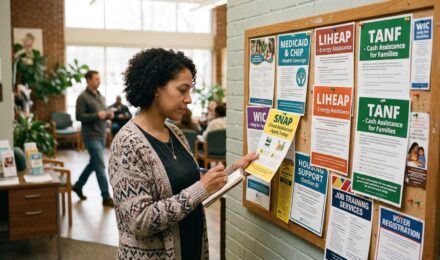
Start with the smallest possible automatic transfer — even $10 or $25 per paycheck — into a separate savings account. The habit matters more than the amount at the start. Look for one or two expense reductions (a canceled subscription, a shift in grocery habits) to free up additional room. If cash flow is severely constrained, review whether you qualify for assistance programs that could free up income for savings.
How long does it take to build a full emergency fund?
The timeline depends on your income, expenses, and savings rate. Saving $300 per month reaches a $9,000 target in 30 months. Saving $500 per month gets there in 18 months. Most financial planners consider 12–24 months a realistic timeline for reaching a full 3-month fund from zero for median-income households. Windfalls like tax refunds can significantly accelerate the timeline.
Should I pay off debt or build an emergency fund first?
Build a $1,000 starter emergency fund first, then direct additional cash toward high-interest debt, then return to building a full 3–6 month fund. This sequence, recommended by the CFPB and widely accepted by financial planners, prevents you from going deeper into debt every time a small unexpected expense arises while you are trying to pay down existing balances.
What should I do if I have to use my emergency fund?
Using your emergency fund is the system working as designed — it is not a failure. After using it, immediately restart automatic contributions and create a written replenishment plan with a specific monthly amount and target date. Treat rebuilding the fund as your top financial priority until the balance is restored to your target level.
Do I need an emergency fund if I have a credit card?
Yes — a credit card is not a substitute for an emergency fund. Credit cards charge interest rates averaging 21.59% (Federal Reserve, 2025), meaning a $3,000 emergency on a credit card could cost hundreds of dollars more than the same event paid from savings. Relying on credit for emergencies also increases your debt load and can negatively affect your credit utilization ratio and FICO Score.
According to the FDIC’s 2023 National Survey of Unbanked and Underbanked Households, approximately 4.2% of U.S. households — representing roughly 5.6 million families — remain unbanked, making it essential to have an FDIC-insured bank account as a prerequisite to building any formal emergency savings.
Sources
- Bankrate — Annual Emergency Savings Report 2024
- Federal Reserve — Report on the Economic Well-Being of U.S. Households (2023)
- Federal Reserve — Consumer Credit Statistical Release (G.19)
- Consumer Financial Protection Bureau (CFPB) — Save Your Own Way Resource Hub
- FDIC — Deposit Insurance Coverage Overview
- IRS — Filing Season Statistics for Individual Income Tax Returns
- Bureau of Labor Statistics — Duration of Unemployment Table (2024)
- Urban Institute — Emergency Savings and Financial Security Research
- National Bureau of Economic Research — Automatic Savings Behavior and Financial Outcomes
- JPMorgan Chase Institute — Household Financial Research
- FDIC — 2023 National Survey of Unbanked and Underbanked Households
- American Psychological Association — Stress in America Survey
- NerdWallet — Best High-Yield Savings Accounts 2025
- Bureau of Labor Statistics — Contingent and Alternative Employment Arrangements
- Ally Bank — Online Savings Account Rates and Features