
|
SR
|
Sonia Reyes Senior Policy & Benefits Writer |
15 min read |
Fact-checked by the Visual eNews editorial team | Our editorial standards
If you’ve ever sat down to research government assistance programs and walked away more confused than when you started, you’re not alone. The system is labyrinthine by nature — a tangle of acronyms, eligibility thresholds, renewal deadlines, and agency websites that seem designed to discourage rather than guide. People get turned away because of a missing document, disqualified because of a technicality they didn’t know existed, or simply give up because figuring out what they qualify for feels like a part-time job.
Here’s the uncomfortable truth: tens of millions of Americans who qualify for federal benefits never receive them. The IRS estimates that roughly one in five eligible workers fails to claim the Earned Income Tax Credit each year — leaving billions of dollars uncollected. A 2023 analysis found that in 63% of U.S. counties, a meaningful gap exists between the number of people eligible for SNAP and the number actually receiving it. For WIC, one of the most effective nutrition programs in the country, overall coverage sits at just 47% of eligible people nationally. These aren’t fringe cases. This is a systemic problem, and it affects working families, seniors, people with disabilities, and children across every zip code in the country.
This guide exists to change that — at least for you. Whether you’re trying to understand what programs exist, figure out whether you might qualify, navigate an application without losing your mind, or understand your rights if something goes wrong, this is the most complete, plain-language resource we know how to write. We’ll cover every major federal program, flag the state and local benefits most people overlook, walk through the application process step by step, and explain exactly what to do if you’re denied. Consider this your map through a maze that shouldn’t exist, but does.
🔑 Key Takeaways
- Government assistance programs exist across dozens of categories — food, healthcare, housing, energy, childcare, income support — and many people qualify for multiple programs simultaneously.
- Eligibility is almost never as restrictive as people assume: income limits, household size adjustments, and categorical eligibility rules mean the threshold is often higher than you’d expect.
- The EITC alone distributes roughly $70 billion annually to about 24 million working families, yet an estimated 20% of eligible taxpayers don’t claim it each year.
- Benefits.gov, your state’s 211 helpline, and local community action agencies are your three most powerful tools for finding programs you qualify for quickly.
- You have legally protected rights as an applicant — including the right to a fair hearing if you’re denied — and understanding those rights can mean the difference between getting help and not.
- Using assistance programs is not a moral failure or a permanent identity. These programs exist to provide a floor during hard times, and the majority of recipients cycle off within two years.
In This Guide
- What Government Assistance Actually Means
- Who Qualifies (and Why More People Than You Think)
- Major Federal Programs Explained
- State and Local Programs Most People Don’t Know About
- How to Apply Without Losing Your Mind
- Common Disqualifiers and How to Avoid Them
- When Benefits End — What Comes Next
- Why the System Feels Punishing (and What’s Being Done)
- Your Rights as an Applicant

What Government Assistance Actually Means
The phrase “government assistance” carries a lot of baggage that has nothing to do with what it actually is. At its most basic, government assistance is a set of programs funded through taxes — programs that every working American contributes to — designed to provide a financial floor beneath which people shouldn’t fall. These programs cover everything from groceries and healthcare to heating bills, housing, and income support for people who are elderly, disabled, or temporarily out of work.
The programs exist because the free market, left entirely to itself, doesn’t meet everyone’s basic needs. That’s not a political opinion — it’s a logistical fact. There will always be times in any person’s life — a job loss, a medical crisis, a divorce, a recession — when income temporarily drops and costs don’t. The safety net is what prevents a temporary setback from becoming a permanent collapse. Understanding this framing matters, because the biggest barrier to assistance isn’t eligibility — it’s stigma. People who desperately need help often talk themselves out of applying because they’ve absorbed a story about what kind of person “needs government help,” and they don’t want to be that person.
The reality is more ordinary: over 60 million Americans receive some form of federal assistance in any given year. People cycle in and out of these programs constantly. The average SNAP recipient stays enrolled for about 10 months before their income rises above the threshold. These aren’t permanent identities — they’re temporary tools that help people stay stable while they get back on their feet. If you’re curious about the deeper connection between policy decisions and your everyday finances, the complete guide to financial stability offers a useful broader perspective.
America’s social safety net encompasses more than 80 federal programs. The programs range from cash assistance and food support to housing vouchers, energy bill help, job training, childcare subsidies, and health coverage — often serving the same household through multiple channels simultaneously.
Who Qualifies (and Why More People Than You Think)
Most people’s mental model of who qualifies for government assistance is wrong in the same direction: they imagine a much narrower pool of eligibility than actually exists. The truth is that income limits for most programs are set at a percentage of the Federal Poverty Level (FPL), and those numbers are higher than most people assume. For 2025, the FPL for a family of four is $32,150. Programs like SNAP extend eligibility to households with gross incomes up to 130% of the FPL — that’s about $41,800 for a family of four. Medicaid thresholds in expansion states reach up to 138% of the FPL. CHIP covers children in households earning up to 200% to 300% of the FPL in many states.
Beyond income, several factors can trigger or expand eligibility that most applicants don’t think to mention. Household size is the most important variable — every additional person in your household raises the income threshold at which you’d qualify. A single adult earning $22,000 might not qualify for SNAP, but a household of four at that same income likely would. Other factors that can make you eligible or increase your benefit include: having children or dependents, having a disability, being pregnant, being over 60, paying more than 30% of your income on housing, and having high medical expenses. Government assistance programs you may already qualify for without realizing it goes deeper into the lesser-known eligibility pathways worth knowing about.
In FY 2025, an average of 42.1 million people received SNAP benefits monthly — 12.3% of the U.S. population. Separately, roughly 76 million people were enrolled in Medicaid or CHIP. And about 24 million working families claimed the Earned Income Tax Credit, averaging $2,894 each. These programs are not obscure safety valves. They are the everyday financial infrastructure of American life.
It’s also worth knowing that many people qualify for multiple programs at once — and receiving benefits from one program won’t automatically disqualify you from others. A household receiving SNAP may also qualify for Medicaid, LIHEAP, and the EITC. In fact, “categorical eligibility” rules in many states mean that if you’re already enrolled in one program, you’re automatically eligible for others without a separate income test.
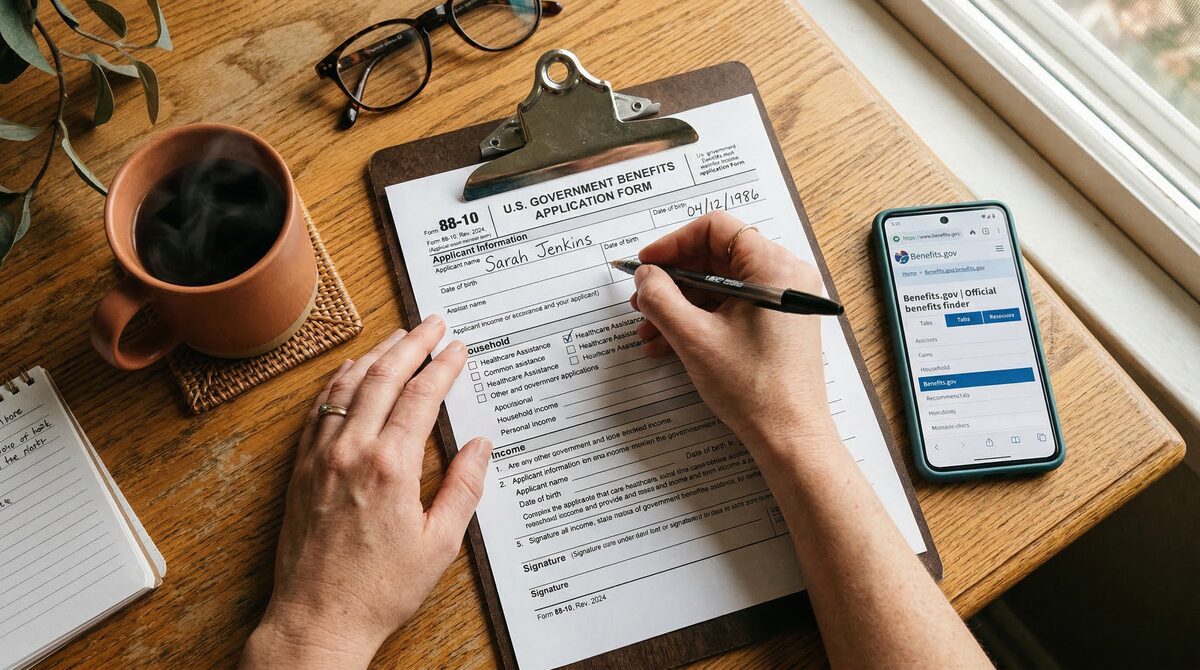
Major Federal Programs Explained
The federal government runs dozens of assistance programs, but the eight listed below are the ones that affect the most households and offer the most significant support. Understanding what each program does, who it’s for, and what it pays is the foundation for figuring out where to start.
| Program | What It Provides | Who Qualifies (General) | Average Benefit | Apply Through |
|---|---|---|---|---|
| SNAP Supplemental Nutrition Assistance Program |
Monthly EBT card for grocery purchases | Households with gross income ≤130% FPL; assets ≤$2,750 (or $4,250 with elderly/disabled member) | ~$187/person/month (FY 2024) | State SNAP agency; benefits.gov |
| Medicaid | Free or low-cost health insurance | Low-income adults, children, pregnant women, elderly, disabled; up to 138% FPL in expansion states | Comprehensive coverage; no premium in most cases | Healthcare.gov or state Medicaid agency |
| CHIP Children’s Health Insurance Program |
Low-cost health coverage for children | Children in families earning too much for Medicaid but not enough for private insurance; up to 200–300% FPL in most states | Low or no premiums; comprehensive care | Healthcare.gov or state CHIP program |
| EITC Earned Income Tax Credit |
Refundable tax credit (cash) for working families | Working adults/families with earned income; up to $59,899 (single, 3+ kids) or $66,819 (married) | $2,894 average; up to $7,830 (TY 2024) | File federal tax return (Form 1040) |
| WIC Women, Infants, and Children |
Nutrition foods, formula, breastfeeding support, referrals | Pregnant, postpartum, breastfeeding women, infants, and children up to age 5 with income ≤185% FPL | ~$50–$100/month in food benefits + services | State WIC agency; local health departments |
| TANF Temporary Assistance for Needy Families |
Short-term cash assistance and work support | Families with children experiencing financial hardship; income and asset tests vary widely by state | $204–$1,370/month depending on state | State TANF or social services agency |
| SSI Supplemental Security Income |
Monthly cash payments for basic needs | Adults 65+, blind, or disabled with limited income (≤$2,020/mo from work) and resources (≤$2,000 individual) | Up to $967/month (2025 federal rate) | Social Security Administration (ssa.gov) |
| LIHEAP Low Income Home Energy Assistance Program |
Help with heating and cooling bills; crisis assistance | Households with income ≤150% FPL or 60% of state median income; priority for elderly and families with young children | Varies widely; average $300–$800/season | State or local community action agency |
A note on SNAP and WIC together: Many families use both programs simultaneously — they serve slightly different purposes. SNAP covers a wider range of grocery items; WIC is specifically designed for nutritious foods during pregnancy and early childhood, with a stronger emphasis on fresh produce, dairy, and formula. If you have young children and you’re enrolled in SNAP, check WIC eligibility too.
📚 Real-World Example: The Family That Qualified for More Than They Knew
Consider a family of four in Texas: two parents, both working part-time at roughly $38,000 combined annual income. They assumed they earned “too much” for any government assistance. In reality, at 130% FPL for a family of four (about $41,800), they qualified for SNAP. Their children qualified for CHIP. The working parent filing taxes was eligible for the EITC worth approximately $3,000. When the winter gas bill spiked, they qualified for LIHEAP crisis assistance. Four separate programs — none of which they’d applied for — because they assumed they didn’t qualify.
This story isn’t unusual. It’s the rule, not the exception, particularly for households with children, high housing costs, or medical expenses.
State and Local Programs Most People Don’t Know About
Federal programs get most of the attention, but state and local programs often fill critical gaps — and in many cases, they have more flexible eligibility rules than their federal counterparts. Every state administers its own version of major federal programs, and many have added supplemental benefits on top of the federal floor. Here are the categories most commonly overlooked:
State Supplemental SNAP Benefits
Many states issue additional SNAP dollars beyond the federal minimum, particularly for households with elderly or disabled members. California’s CalFresh, for example, includes categorical eligibility rules that eliminate the asset test entirely for many households. New York’s state supplement can add meaningful dollars on top of the federal SNAP benefit. Check your state’s SNAP office website or call 211 to ask specifically about state add-ons.
Utility Assistance Beyond LIHEAP
LIHEAP is the federal program, but nearly every state has additional utility assistance programs funded through a mix of state dollars, utility company ratepayer programs, and nonprofit partnerships. Programs like California’s CARE/FERA, New York’s HEAP supplement, and the Low Income Rate Assistance (LIRA) programs offered by many municipal utilities can significantly reduce monthly bills — often without even requiring a separate application.
State Earned Income Credits
As of 2025, more than 30 states and the District of Columbia have their own state-level Earned Income Tax Credit, layered on top of the federal EITC. These state credits range from 5% to 125% of the federal credit. If you claim the federal EITC and live in a state with its own version, you’re leaving money on the table if you’re not claiming both. Most tax software and professional preparers calculate this automatically, but it’s worth confirming.
Childcare Subsidies
The Child Care and Development Fund (CCDF) provides federal dollars to states to help low- and moderate-income families afford childcare, but each state runs its own program with its own eligibility rules and subsidy amounts. These programs are significantly underutilized because families don’t know they exist or assume the waitlists are too long. Call your local child care resource and referral agency (CCR&R) for current availability.
Prescription Assistance
Many state Medicaid programs have prescription assistance tracks that go beyond the basic drug formulary. Additionally, pharmaceutical manufacturers are required by many programs to offer patient assistance programs (PAPs) for brand-name medications. The free NeedyMeds database and RxAssist both aggregate these programs by medication, and many can be applied for directly online in minutes.
Housing Assistance Beyond Section 8
Housing choice vouchers (Section 8) are well-known but perpetually oversubscribed. Less known are state and local emergency rental assistance programs, homeownership assistance grants, property tax freeze programs for seniors, and weatherization assistance that can lower energy costs by permanently improving a home’s insulation and heating efficiency. Your local public housing authority and state housing finance agency websites are the best starting points.
Dialing 211 from any phone in the U.S. connects you to a local social services information line staffed by people who know what programs are available in your specific county and city. It’s free, confidential, and dramatically faster than trying to research state and local programs yourself. You can also visit 211.org to search your area online.
How to Apply Without Losing Your Mind
The application process for government benefits is genuinely difficult — there’s no point pretending otherwise. Forms are long, documentation requirements are extensive, and government websites are often not built for real human beings trying to navigate them under stress. But understanding the process in advance makes it dramatically more manageable. For an even deeper look at this topic, see our detailed guide on how to apply for assistance without losing your mind.
Start with Benefits.gov
The federal government’s benefits.gov website allows you to answer a short questionnaire and see a list of programs you may qualify for, with links to apply. It’s not exhaustive, and it won’t make the application process easy, but it’s the fastest way to survey the landscape and identify which programs to prioritize. Start here before going to individual agency websites.
Gather Your Documents in Advance
The most common reason applications are delayed or denied is missing documentation. Before you start any application, gather: photo ID for all adults in the household; proof of address (utility bill, lease, mail); Social Security numbers for all household members; proof of income for the past 30 days (pay stubs, award letters, employer statements); bank statements; and any relevant medical documentation if you’re applying based on disability or medical need. Having these ready prevents the frustrating cycle of submitting an incomplete application and waiting for a follow-up notice.
Apply at the Right Time
Some programs — particularly SNAP — have no enrollment periods. You can apply any day of the year and, if approved, typically receive benefits within 30 days (or within 7 days if you qualify for expedited service based on extremely low income). Other programs like LIHEAP open enrollment seasonally, typically in the fall for heating assistance. Don’t wait until you’re in crisis to apply; benefits aren’t retroactive.
Use Help When It’s Available
Community action agencies, legal aid organizations, and benefits enrollment specialists can help you complete applications, gather documents, and navigate appeals — often for free. The national network of VITA (Volunteer Income Tax Assistance) sites, run by the IRS, also provides free tax preparation that ensures EITC and other tax credits are claimed correctly. These services exist specifically for this purpose, and using them is not a sign of weakness; it’s just smart.
Track Your Application Status
Every program has a different timeline for processing applications. SNAP is legally required to process applications within 30 days (7 days for expedited cases). Medicaid is typically 45 days. SSI can take 3 to 6 months or longer. Know the expected timeline, keep copies of everything you submit, and follow up proactively if you haven’t heard back within the stated window. If the agency is taking longer than legally required, you have the right to request an expedited hearing.

Common Disqualifiers and How to Avoid Them
Understanding what can disqualify you from benefits — or reduce your benefit amount — is just as important as knowing what qualifies you. Many of the most common disqualifiers are avoidable with a little advance knowledge. For a more thorough examination of the structural reasons these rules exist, see why assistance rules feel punishing on purpose.
Asset Limits
Most federal programs have both income limits and asset (resource) limits. For SNAP, the standard limit is $2,750 in countable assets — $4,250 if any household member is elderly or disabled. For SSI, it’s $2,000 for an individual. Assets that typically don’t count include your primary residence, one vehicle (in many states), retirement accounts in some programs, and certain household goods. Understand what’s excluded before assuming you’re over the limit.
Work Requirements
SNAP has work requirements for able-bodied adults without dependents (ABAWDs) between ages 18 and 54. These rules require working at least 80 hours per month or participating in approved work, training, or volunteer activities. Recent legislation has expanded these requirements. If you fall into this category, document your work or training activities carefully. Exemptions exist for people with disabilities, caregivers of young children, and residents of areas with high unemployment rates.
Immigration Status
Federal benefits eligibility for noncitizens is complex. Most undocumented immigrants are ineligible for federal benefits with few exceptions (emergency Medicaid, some child nutrition programs). Lawful permanent residents are generally eligible for most benefits after five years of residence, though there are exceptions. If immigration status is a factor, consult with an immigration attorney before applying, as applying for certain benefits can have implications for immigration proceedings in some circumstances.
Incomplete Applications
An application that’s denied for missing documentation isn’t necessarily a permanent disqualification — it’s often an administrative setback that can be corrected. If your application is denied for incompleteness, you have the right to submit missing documentation and have the application reconsidered. Don’t let a procedural denial stop you from getting benefits you qualify for.
Unreported Changes
Once enrolled, most programs require you to report changes in income, household composition, or address within a specific window (typically 10 to 30 days). Failing to report a raise, a new household member, or a move can lead to an overpayment determination — meaning the agency concludes you were paid benefits you weren’t entitled to and asks for repayment. Keep your case worker informed and document all changes in writing.
If a government agency claims you received benefits you weren’t entitled to, you have the right to dispute that claim and request a waiver of repayment based on hardship. Do not ignore an overpayment notice. Request a hearing, gather your documentation, and consider getting help from a legal aid attorney if the amount is significant.
When Benefits End — What Comes Next
Benefits don’t last forever, and for most programs, that’s by design. Understanding what happens as you approach the end of your eligibility period — whether because your income has risen, your circumstances have changed, or a time limit has been reached — can help you transition without a cliff. For a comprehensive look at this transition process, see our full article on what happens after benefits end.
SNAP Recertification
SNAP benefits aren’t indefinite — they come in certification periods that typically last 6 to 12 months, though some states certify households for longer. You’ll receive a renewal notice before your certification period ends. Don’t miss it. Missing a renewal date means your benefits stop, even if you’re still eligible. Many states now allow recertification online or by phone, making it easier than the original application.
Medicaid Renewals
After the COVID-19 continuous enrollment provision ended in 2023, states began “unwinding” — reviewing all Medicaid enrollments and disenrolling people whose circumstances had changed. As of late 2024, over 25 million people had been disenrolled in this process, many of them for procedural reasons (outdated contact information, missed paperwork) rather than actual ineligibility. If you received a Medicaid termination notice, you have the right to appeal — and if you were disenrolled procedurally, you may be able to re-enroll.
TANF Time Limits
TANF cash assistance has a federal lifetime limit of 60 months (5 years) for the adults in a household. Children can continue receiving benefits after the adult time limit is reached in some states. Some states impose shorter time limits than the federal maximum. As you approach this limit, work with your case worker to plan a transition — many TANF programs include job training, childcare assistance, and employment services specifically designed to support this process.
Building Stability Before Benefits End
The best outcome from any benefits period is that you exit the program because you no longer need it, not because your time ran out. If you’re receiving TANF, use the workforce development services. If you’re on SNAP, look into state programs that help recipients transition to higher-paying work. The managing money in real life guide is a helpful resource for building financial resilience during this transition period.
Why the System Feels Punishing (and What’s Being Done)
There’s a reason applying for benefits can feel humiliating, exhausting, and punitive — and it’s not entirely accidental. The structure of many assistance programs reflects decades of policy decisions rooted in assumptions about poverty that research has consistently failed to support: that poverty is primarily caused by individual failure, that generous benefits disincentivize work, and that people need to “earn” public help by demonstrating compliance. The result is a system layered with verification requirements, work mandates, asset tests, and renewal paperwork that functions less like a helping hand and more like an obstacle course.
The evidence on how these design choices affect people is clear. Administrative burden — the time, cost, and stress of complying with program rules — has been shown to reduce participation among people who are legitimately eligible. A study published in the Journal of Policy Analysis and Management found that application complexity was a significant predictor of non-participation in SNAP, independent of actual need or eligibility. The people most deterred by complexity are often the most vulnerable: people working multiple jobs, parents with young children, people with limited English proficiency, and people with disabilities.
On the positive side, a growing policy reform movement is pushing to simplify access. More than 30 states have implemented online SNAP applications. The ARP-era expansion of the EITC and Child Tax Credit demonstrated that simplified, automatic delivery mechanisms are both technically feasible and politically popular. Some states have extended Medicaid certification periods to reduce churn from administrative disenrollment. The gap between who needs help and who gets it is real and documented — but it’s not inevitable. Our article on the gap between who needs help and who gets it explores the structural causes of this gap in more depth.
The administrative burden of proving eligibility repeatedly, over and over again, to access basic nutrition or healthcare is itself a policy choice. It’s not a technical necessity. It’s a design decision that has real costs for real families.
Understanding why the system is designed the way it is can help you approach it less personally. The friction isn’t a sign that you’re not deserving — it’s a feature of a system designed with skepticism as its baseline. Knowing that going in can help you persist through the parts that feel unnecessarily difficult. And if you’re ever tempted to feel embarrassed about using these programs, remember: why assistance programs exist, and why using them isn’t cheating is a piece we wrote specifically to address that mindset.
Your Rights as an Applicant
Government assistance programs aren’t favors — they’re legally established entitlements with defined eligibility criteria and formal processes. That means you have rights at every step of the application and enrollment process, and understanding those rights can make a material difference in whether you get the help you’re entitled to.
The Right to Apply
You cannot legally be turned away from applying for a benefit program without completing an application. If an agency worker tries to discourage you from applying or tells you informally that you “won’t qualify,” insist on submitting a written application anyway. The clock on processing deadlines doesn’t start until a written application is received.
The Right to a Timely Decision
Each program has legally defined processing timelines. SNAP must be decided within 30 days (7 days for expedited cases). Medicaid must be decided within 45 days (90 days for disability-based applications). If these deadlines are missed, you may be entitled to benefits retroactively from the date of application. Contact the agency in writing if processing is taking longer than required.
The Right to Notice
If your application is denied or your benefits are reduced or terminated, you must receive written notice explaining the reason, the specific rule being applied, and your right to appeal. This notice must be provided with enough advance time for you to request a hearing before the action takes effect (typically 10 days for terminations).
The Right to a Fair Hearing
Every federal benefit program includes a fair hearing process. If you’re denied, reduced, or terminated, you have the right to request a hearing before an impartial hearing officer. In most programs, you can request that benefits continue at their current level while your appeal is pending (“aid paid pending appeal”). Legal aid organizations can help you prepare for and represent you at these hearings, often for free.
The Right to Non-Discrimination
Federal law prohibits discrimination in government benefit programs on the basis of race, color, national origin, sex, age, and disability. If you believe you’ve been discriminated against in the application or enrollment process, you have the right to file a complaint with the relevant agency’s civil rights office. For SNAP, that’s the USDA Food and Nutrition Service. For Medicaid, it’s the HHS Office for Civil Rights.
The Right to Privacy
Information you provide to government agencies in benefit applications is generally protected and cannot be shared with immigration enforcement agencies for most federal programs. There are some exceptions, and rules have changed under different administrations, but if immigration status is a concern, consult a legal aid attorney for current guidance before applying.
Every state has a network of free legal aid organizations that specialize in benefits law — SNAP, Medicaid, SSI/disability, housing, and more. These organizations can help you appeal denials, correct overpayment claims, and navigate complicated situations for free. Find your local legal aid at lawhelp.org or by calling 211.
Your Action Plan: Getting Started with Government Assistance
-
Run a benefits screening on Benefits.gov
Go to benefits.gov and complete the benefits finder questionnaire. It takes about 10 minutes and will generate a personalized list of federal programs you may qualify for, with links to apply.
-
Call 211 for local programs
Dial 211 or visit 211.org to speak with a local specialist who knows what’s available in your specific county or city. State and local programs often provide critical support that federal programs don’t cover — and they’re frequently underutilized.
-
Gather your documents before you start any application
Collect ID, proof of address, Social Security numbers, income documentation (last 30 days), bank statements, and any relevant medical or disability documentation. Having everything ready prevents the most common source of application delays.
-
Apply for SNAP and Medicaid first if you’re not already enrolled
These two programs have the broadest eligibility and serve the most foundational needs (food and healthcare). Apply online through your state’s benefits portal, through Healthcare.gov, or in person at your local social services office.
-
File your taxes every year — even if you don’t think you owe anything
The Earned Income Tax Credit, Child Tax Credit, and several other refundable credits are only accessible by filing. Free tax preparation is available through the IRS VITA program and through providers like H&R Block’s free tier and TurboTax Free Edition. The average EITC in 2024 was $2,894 — and it goes unclaimed by roughly 1 in 5 eligible families.
-
Check your state’s specific programs and supplements
Beyond the federal programs, your state likely has supplemental nutrition benefits, utility assistance, childcare subsidies, and prescription help with different income thresholds. Your state’s official benefits website (search “[your state] benefits”) is the best starting point.
-
Know your recertification dates and mark your calendar
Once enrolled, the biggest risk to your benefits is missing a renewal. Put your recertification deadline in your calendar with a reminder 30 days in advance. Many states send notices to old addresses — confirm your contact information with your case worker every time something changes.
-
If you’re denied, appeal — don’t just give up
A denial isn’t necessarily final. Many denials are issued for procedural reasons or documentation gaps that can be corrected. Request a fair hearing within the appeal window (usually 90 days), contact a legal aid organization for help, and remember: you have the legal right to a formal review of any denial.
Frequently Asked Questions
Will applying for government benefits affect my credit score?
No. Applying for or receiving government assistance programs — SNAP, Medicaid, TANF, SSI, LIHEAP, or any other federal benefit — has absolutely no effect on your credit score. Credit bureaus don’t receive information about benefit enrollment, and lenders cannot see whether you receive public assistance. The two systems are entirely separate.
Can I receive benefits if I’m working?
Yes, and this is one of the most important myths to dispel. The majority of SNAP recipients live in households with at least one working adult. The EITC is designed exclusively for working people — you must have earned income to qualify. Medicaid in most expansion states covers working adults with low incomes regardless of employment status. These programs supplement low wages, they don’t replace work.
Do I have to report my benefits as income on my taxes?
It depends on the program. SNAP benefits are never taxable income. Medicaid coverage has no tax implications for recipients. TANF cash assistance is generally not taxable. SSI payments are not taxable. EITC refunds are not income — they’re a tax credit. However, Social Security benefits (not SSI) may be partially taxable if your total income exceeds certain thresholds. If you’re unsure, a free VITA tax preparer can clarify your situation.
Will receiving benefits affect my ability to get a green card or citizenship?
This is a complex area that has changed under different administrations. The “public charge” rule, which immigration officials use to assess whether an applicant is likely to become dependent on government support, does not apply to most benefits programs. Programs explicitly excluded from the public charge analysis include SNAP, Medicaid (with limited exceptions), CHIP, LIHEAP, WIC, housing assistance, and many others. However, immigration law is complex and changes frequently — if you have active immigration proceedings, consult with an immigration attorney before applying for any benefits.
How long does it take to start receiving benefits after I apply?
It varies by program. SNAP: up to 30 days, but as few as 7 days for households with very low income (expedited service). Medicaid: typically 45 days, or 90 days for disability-based applications. TANF: varies by state, typically 30 to 45 days. SSI: 3 to 6 months on average, sometimes longer. EITC: received as part of your tax refund, typically within 21 days of filing electronically.
What if I can’t get to an office in person?
Most programs now offer online applications, phone applications, and mail-in options. SNAP applications in nearly every state can be submitted online. Medicaid applications go through Healthcare.gov or state portals, which are accessible anywhere. For people with disabilities, agencies are legally required to provide reasonable accommodations, which can include home visits, extended deadlines, and alternative formats. Call the agency and ask specifically about remote or accessible application options.
Can my landlord or employer find out I’m receiving benefits?
No. Federal privacy laws protect your benefit information. Landlords cannot access your SNAP or Medicaid enrollment status. Employers cannot see whether you file for EITC or other credits. The only general exception is for housing-related benefits: if you receive a housing voucher and rent from a private landlord, that landlord necessarily knows about the voucher because payments go through them — but even then, they don’t have access to your other program enrollments.
What’s the difference between SSI and Social Security disability (SSDI)?
These are two distinct programs that are frequently confused. SSI (Supplemental Security Income) is a needs-based program for people who are elderly, blind, or disabled AND have limited income and resources. You don’t need a work history to qualify. SSDI (Social Security Disability Insurance) is an insurance program based on your work history — you need to have paid Social Security taxes for a sufficient number of years to qualify. The benefit amounts differ, the eligibility rules differ, and you can potentially receive both if you meet the criteria for each.
I was denied benefits. What’s my next step?
First, read your denial notice carefully. It must state the specific reason for denial and cite the rule being applied. Then, decide if you want to request a fair hearing. You have a limited window to appeal — typically 90 days, but check your notice for the specific deadline. Contact your local legal aid organization for free help preparing your appeal. If the denial was for a missing document, you may also be able to submit the document and request reconsideration without a formal hearing.
Do I have to apply separately for each program?
Not always. Many states have implemented “one-stop” application systems where a single application can screen you for multiple programs simultaneously. Healthcare.gov, for example, screens for both Medicaid and marketplace plan eligibility in a single application. Some states have integrated SNAP, Medicaid, and CHIP into a single application. Ask when you apply whether the agency can screen you for other programs at the same time — this is both your right and in the agency’s interest.
Sources
- USDA Food and Nutrition Service — SNAP Participation Data FY 2024/2025: fns.usda.gov/pd/supplemental-nutrition-assistance-program-snap
- USDA Economic Research Service — SNAP Participation by State FY 2024: ers.usda.gov
- Centers for Medicare & Medicaid Services — Medicaid & CHIP Enrollment Data (November 2025): medicaid.gov
- IRS — EITC Reports and Statistics, Tax Year 2024: irs.gov/credits-deductions/individuals/earned-income-tax-credit/eitc-reports-and-statistics
- IRS — Statistics for Tax Returns with the EITC (2024): irs.gov
- USDA Food and Nutrition Service — WIC Modernization Annual Evaluation Report 2024: fns.usda.gov
- USDA Economic Research Service — Total WIC Participation FY 2024: ers.usda.gov
- WIC Community Innovation and Outreach Project — WIC Participation Coverage Rates 2022: hellowic.org
- Social Security Administration — SSI Eligibility Requirements: ssa.gov/ssi/text-eligibility-ussi.htm
- Center on Budget and Policy Priorities — TANF Benefit Levels by State 2023: cbpp.org
- KFF — Medicaid Enrollment and Unwinding Tracker: kff.org/medicaid/medicaid-enrollment-and-unwinding-tracker/
- U.S. Census Bureau — 2024 Survey of Income and Program Participation (SIPP): census.gov
- Benefits.gov — Federal Benefits Finder: benefits.gov
- HHS Office of Community Services — LIHEAP Program Information: acf.hhs.gov/ocs/programs/liheap
- Center for American Progress — Poverty in America 2024: americanprogress.org