
You’re cruising through November when it hits you: the car registration is due, the holidays are coming, and your kid’s birthday is next week. None of these are surprises — you knew they were coming — yet your bank account is nowhere near ready. That’s exactly the problem that sinking funds are built to solve, and getting sinking funds explained clearly can change how you handle money forever.
According to Bankrate’s annual emergency savings report, nearly 57% of Americans couldn’t cover an unexpected $1,000 expense from savings alone. This article will show you what sinking funds are, how to set them up, and why they’re one of the simplest tools for ending the cycle of financial surprises.
Key Takeaways
- A sinking fund is a dedicated savings bucket for a known future expense — separate from your emergency fund.
- Most households have 5–10 irregular expenses per year that can be predicted and saved for in advance.
- Even saving $25–$50 per month per category can fully cover many common irregular costs before they arrive.
- Sinking funds reduce reliance on credit cards for planned expenses, helping you avoid interest charges that average 20%+ APR.
What Is a Sinking Fund?
A sinking fund is money you set aside gradually for a specific, known expense. Think of it as saving in slow motion — small, regular contributions that add up before the bill lands. The term originally comes from corporate finance, where companies would set aside funds over time to retire debt.
In personal finance, the concept is simpler. You identify an expense that doesn’t hit every month, calculate roughly what it’ll cost, and divide that by the number of months until you need it. Then you save that amount every month. That’s it.
Sinking Funds vs. Emergency Funds
These two are often confused, but they serve different purposes. An emergency fund covers unexpected events — a job loss, a medical crisis, a broken appliance you didn’t see coming. A sinking fund covers expenses you can predict but don’t pay monthly.
Car insurance paid twice a year? Sinking fund. Annual vet checkup? Sinking fund. Holiday gifts? Sinking fund. Your emergency fund should stay untouched for true surprises — not for things you knew were coming.

Sinking Funds Explained: How They Actually Work
The mechanics are simple. Let’s say you spend $600 on holiday gifts each December. Divide $600 by 12 months, and you need to set aside $50 per month starting in January. By December, the money is there — no credit card required.
Getting sinking funds explained in concrete terms helps you see why they work so well. You’re not finding money at the last minute. You’re converting a large, stressful payment into small, manageable chunks spread across the year.
Where to Keep the Money
You have options. Many people use a high-yield savings account with sub-accounts or “buckets” — each labeled for a specific fund. Banks like Ally and Capital One 360 allow multiple savings accounts with custom names for free.
Some people use a single savings account and track each fund in a spreadsheet. Either approach works. The key is that the money feels earmarked — not available for random spending.
Common Sinking Fund Categories to Start With
Most households have more predictable irregular expenses than they realize. Once you start listing them, you’ll understand why so many budgets fall apart — and why what actually breaks a budget is rarely the small daily purchases people obsess over.
Here are common categories worth creating a sinking fund for:
- Car registration and maintenance
- Home repairs and appliance replacement
- Holiday and birthday gifts
- Annual insurance premiums
- Medical and dental copays
- Back-to-school costs
- Vacations and travel
- Pet care and vet bills
- Subscriptions billed annually
- Tax payments (for freelancers or self-employed people)
You don’t need to fund all of these at once. Start with two or three that cause you the most financial stress each year.
How to Set Up Your First Sinking Fund
Start by picking one expense you know is coming in the next 6–12 months. Estimate the cost. Divide by the number of months until you need it. That’s your monthly savings target.
For example: you need new tires by spring — roughly $600. You have 5 months. Save $120 per month. Put it somewhere separate from your checking account so you’re not tempted to dip into it.
Automating Your Contributions
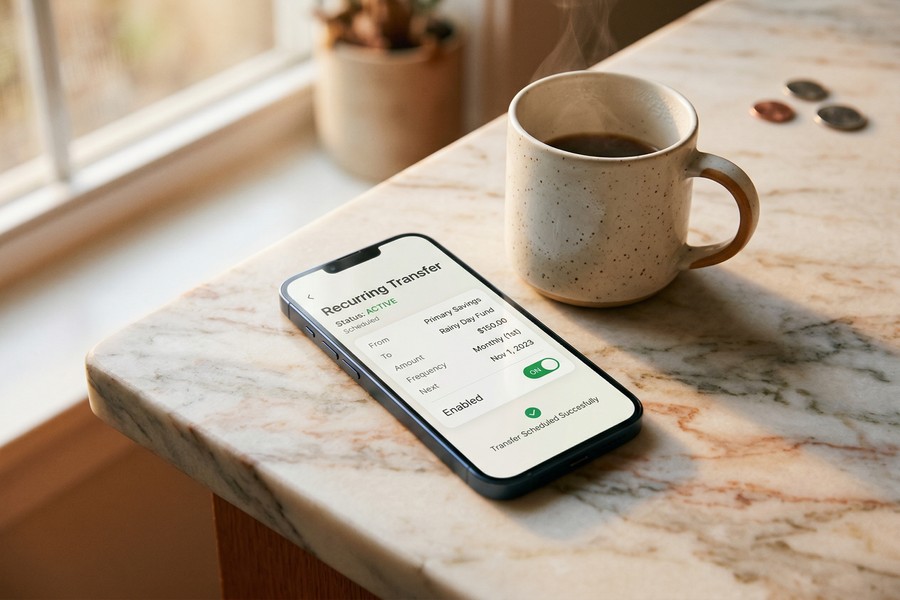
Automation is your best friend here. Set up an automatic transfer on payday — even $25 or $50 — so the decision is made before you see the money in your checking account. This is one of those small money wins that matter more than big ones over time.
Once automation is in place, you stop relying on willpower. The system does the work. That’s exactly the kind of structure described in a simple money system for people who hate budgeting — low effort, high consistency.
Sinking Funds Explained for Irregular Income
What if your income changes month to month? The fixed contribution model still works — you just adjust it. Instead of saving a set dollar amount, try saving a percentage of each paycheck toward your sinking funds.
If you earn $2,000 one month and $3,500 the next, even 5–8% of each deposit directed toward sinking funds adds up meaningfully. This is especially important for freelancers and gig workers — a topic covered in depth in our guide on irregular income and why traditional advice fails it.
The core principle holds regardless of income stability: plan for what you can see coming.
Avoiding Common Sinking Fund Mistakes
The biggest mistake is underfunding. People underestimate costs — especially for car repairs and home maintenance. Consumer Reports estimates that car maintenance costs average $1,186 per year, not counting unexpected breakdowns. Budget conservatively and round up.
Another mistake is raiding the fund. If you dip into your holiday gift fund for a spontaneous purchase in October, you’ve defeated the purpose. Keeping sinking funds in a separate account from your daily spending makes this harder to do impulsively.
When Life Changes Your Plan
Sometimes a cost comes earlier than expected, or it’s bigger than you saved for. That’s okay. Use what you have from the sinking fund first, then cover the gap from savings or — as a last resort — a low-interest credit card. You’ll still be in better shape than if you’d saved nothing.
Getting sinking funds explained also means understanding they’re flexible tools, not rigid rules. Adjust the amounts, pause contributions in tight months, and restart when you can. For more on building this kind of practical financial structure, see our guide on managing money in real life.
Frequently Asked Questions
How many sinking funds should I have?
There’s no magic number. Most personal finance experts suggest starting with 2–4 categories and expanding as your budget allows. The goal is to cover your highest-stress irregular expenses first, then add more as the habit becomes routine.
Can I use one savings account for all my sinking funds?
Yes — as long as you track each fund separately. A simple spreadsheet or budgeting app can show you how much of your total balance belongs to each category. That said, separate sub-accounts make it easier to avoid mixing funds accidentally.
Is a sinking fund the same as a savings account?
A sinking fund lives in a savings account, but it’s not the same thing. A savings account is just the container. A sinking fund is the intentional purpose behind specific money in that account. The same savings account can hold multiple sinking funds.
What if I can’t afford to contribute every month?
Contribute what you can, even if it’s $10. A partial sinking fund is still better than no fund at all. If money is very tight, prioritize the irregular expense that’s coming soonest and focus there first. Over time, even small contributions build a meaningful cushion.
It also helps to look at your overall relationship with money. If budgeting consistently feels impossible, it may be worth reading about why being bad with money is often a systems problem — not a personal failure.
Do sinking funds earn interest?
They can. If you keep your sinking funds in a high-yield savings account insured by the FDIC, your contributions earn interest while you wait. Rates vary, but even modest interest helps — especially on funds you’re building toward a goal 6–12 months out.
Sources
- Bankrate — Annual Emergency Savings Report
- Consumer Reports — How Much to Budget for Car Maintenance
- FDIC — High-Yield Savings: What You Need to Know
- Consumer Financial Protection Bureau — An Essential Guide to Building an Emergency Fund
- Investopedia — Sinking Fund Definition and How It Works