Fact-checked by the VisualEnews editorial team
Quick Answer
Solid state battery technology replaces the liquid electrolyte in traditional lithium-ion cells with a solid material, delivering up to 2x the energy density and charging speeds up to 5x faster. As of July 2025, manufacturers including Toyota and Samsung are racing to commercialize solid-state cells for EVs and consumer electronics within the next two to three years.
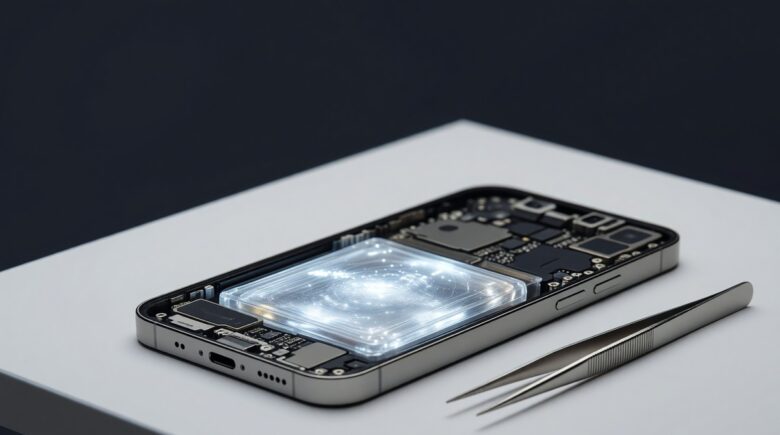
Solid state battery technology is a battery design where the liquid or gel electrolyte found in conventional lithium-ion cells is replaced by a solid conductor — typically a ceramic, glass, or polymer material. According to the U.S. Department of Energy’s solid-state battery research overview, this structural change enables significantly higher energy density, reduced flammability risk, and longer cycle life compared to today’s standard rechargeable batteries.
The shift matters now because consumer devices — from smartphones to electric vehicles — are pushing lithium-ion chemistry to its physical limits. The industry needs a successor, and solid-state is the leading candidate.
How Does Solid State Battery Technology Actually Work?
Solid-state batteries function by moving lithium ions through a solid electrolyte layer positioned between the anode and cathode. This replaces the liquid electrolyte separator used in lithium-ion cells, which is flammable and degrades over time.
The solid electrolyte conducts ions while acting as a physical barrier to prevent short circuits. Most current designs use one of three solid electrolyte families: oxide-based ceramics (like LLZO), sulfide-based materials, or solid polymer membranes. Each trades off ionic conductivity, manufacturing complexity, and temperature stability differently.
Why the Electrolyte Change Is So Significant
The liquid electrolyte in a standard lithium-ion cell is the primary source of thermal runaway — the chain reaction that causes battery fires. Removing it eliminates the largest safety liability in portable power. Solid electrolytes also enable the use of a lithium metal anode, which stores nearly 10x more charge per gram than the graphite anodes used today, according to research published in Nature Energy.
Key Takeaway: Solid-state batteries replace flammable liquid electrolytes with solid conductors, enabling a lithium metal anode that holds nearly 10x more charge per gram than graphite. This single change is the foundation for every performance and safety gain the technology promises. See DOE’s solid-state battery overview for further detail.
How Does Solid State Battery Technology Compare to Lithium-Ion?
Solid-state batteries outperform lithium-ion on nearly every technical metric — but currently cost far more to manufacture at scale. The table below summarizes the key differences using published performance benchmarks.
| Metric | Lithium-Ion (Current) | Solid-State (Target) |
|---|---|---|
| Energy Density | ~250–300 Wh/kg | ~400–500 Wh/kg |
| Charge Speed (0–80%) | ~30–60 minutes | ~10–15 minutes |
| Cycle Life | ~500–1,000 cycles | ~2,000–5,000 cycles (projected) |
| Flammability Risk | High (liquid electrolyte) | Very low (solid electrolyte) |
| Operating Temperature Range | -20°C to 60°C | -30°C to 100°C (ceramic types) |
| Manufacturing Cost (per kWh) | ~$110–$130 | ~$400–$800 (current prototypes) |
The energy density advantage translates directly to either smaller batteries for the same runtime or longer runtime in the same physical space. For smartphones, this could mean a device that lasts two full days on a single charge without increasing thickness. For electric vehicles, the same pack volume could deliver 50–80% more range, according to projections cited by the International Energy Agency’s Global EV Outlook 2024.
The major drawback today is cost. Current solid-state prototypes cost three to six times more per kilowatt-hour than commercial lithium-ion cells. Manufacturing at scale — especially for sulfide-based electrolytes, which are moisture-sensitive — remains the central engineering challenge.
Key Takeaway: Solid-state cells target 400–500 Wh/kg versus lithium-ion’s ~250–300 Wh/kg, but prototype manufacturing costs remain 3–6x higher per kWh. Closing that cost gap is the defining challenge before consumer devices benefit. The IEA’s 2024 EV Outlook tracks commercialization timelines closely.
Who Is Leading Solid State Battery Technology Development?
Toyota, Samsung SDI, QuantumScape, Solid Power, and CATL are the most active developers of commercial solid-state battery technology as of mid-2025. Each is targeting slightly different applications and electrolyte chemistries.
Toyota has the most publicly committed timeline. The company announced plans to begin producing solid-state EV batteries by 2027–2028, with a target range of 1,200 km (745 miles) per charge, as reported by Toyota’s official newsroom. QuantumScape, backed by Volkswagen, is using a lithium-metal anode with a ceramic separator and has demonstrated 800+ charge cycles with less than 20% capacity loss in third-party testing.
Consumer Electronics Developers
Samsung SDI and Panasonic are targeting solid-state cells for smartphones and wearables first — lower capacity requirements make the cost premium easier to absorb. Samsung has demonstrated a prototype solid-state cell that charged to 80% in 9 minutes in lab conditions. The progress in battery technology directly affects devices like those covered in our guide to how wearable technology is transforming personal health tracking, where battery life is a persistent limitation.
“The solid-state battery is not a incremental improvement — it is a platform shift. When you remove the liquid electrolyte, you change the entire design space for the device around the battery.”
Key Takeaway: Toyota targets solid-state EV production by 2027–2028 with a 1,200 km range goal, while Samsung SDI is pursuing faster commercialization in wearables and smartphones. See Toyota’s solid-state battery announcement for the full production roadmap.
What Devices Will Benefit From Solid State Battery Technology First?
Electric vehicles and premium consumer electronics are the two categories most likely to see solid-state batteries first — with EVs receiving the largest investment but consumer electronics potentially arriving in retail form sooner.
For smartphones, the smaller battery size reduces the manufacturing precision required. A solid-state cell in a flagship phone could realistically deliver 48-hour battery life in a chassis no thicker than today’s devices. This would be a meaningful upgrade for users who currently manage battery anxiety — a real concern explored in our roundup of best laptops for remote workers in 2026, where runtime is a top purchase criterion.
For EVs, the stakes are higher. A 500 Wh/kg solid-state pack in a mid-size sedan could yield ranges exceeding 600 miles while reducing battery weight by roughly 30%, according to modeling by Argonne National Laboratory’s BatPaC battery cost and performance model.
Medical Devices and IoT
Implantable medical devices and industrial IoT sensors are a quieter but significant early market. Solid-state cells are non-flammable and can operate across a wider temperature range, making them far safer for implantables like pacemakers. This overlaps with the broader transformation happening in personal health hardware — see our coverage of wearable health technology trends for context on why battery design is so central to this space.
Key Takeaway: EVs and premium smartphones are the primary early markets for solid-state batteries, with EV packs targeting 500 Wh/kg to deliver ranges over 600 miles. Argonne National Laboratory’s BatPaC model provides the most credible independent performance projections available.
When Will Solid State Battery Technology Reach Consumers?
The realistic consumer timeline for solid state battery technology is 2027–2030 for EVs and 2026–2028 for premium consumer electronics, based on current manufacturer roadmaps. Mass-market pricing parity with lithium-ion is not expected before 2030.
Several technical hurdles remain. Dendrite formation — where thin spikes of lithium metal pierce the solid electrolyte and cause short circuits — is still an active research problem. Interface resistance between the solid electrolyte and electrode layers also reduces real-world performance below lab benchmarks. Both issues are solvable but require additional engineering investment.
Government support is accelerating the timeline. The U.S. Department of Energy allocated $200 million to solid-state battery research through the Battery500 Consortium, a multi-national lab program targeting a 500 Wh/kg cell, as detailed in the DOE’s Battery500 Consortium program page. Similar programs exist in the EU and Japan.
Understanding this technology shift fits within a broader pattern of emerging tech that will reshape everyday devices — similar to how quantum computing will change everyday technology on a longer horizon, or how 5G and Wi-Fi 7 have already reshaped wireless connectivity faster than most predicted.
Key Takeaway: Consumer solid-state batteries are realistically 2–5 years away, with the DOE’s Battery500 Consortium investing $200 million to hit the 500 Wh/kg target. See the DOE Battery500 program page for current research milestones and participating institutions.
Frequently Asked Questions
What is solid state battery technology in simple terms?
A solid-state battery replaces the liquid electrolyte inside a standard rechargeable battery with a solid material. This makes the battery safer, more energy-dense, and longer-lasting. Think of it as swapping a liquid-filled sponge for a solid ceramic tile between the two electrodes.
Are solid state batteries available to buy right now?
Not in mainstream consumer devices as of July 2025. Small solid-state cells exist in niche medical and industrial applications. Samsung and Toyota are the closest to commercial-scale production, with first consumer products expected between 2026 and 2028.
How much longer do solid state batteries last than lithium-ion?
Solid-state batteries are projected to last 2,000–5,000 charge cycles versus the 500–1,000 cycles typical of lithium-ion cells. In practical terms, an EV battery could outlast the vehicle itself, and a smartphone battery could remain healthy for five or more years of daily charging.
Will solid state batteries make electric vehicles cheaper?
Initially, no — solid-state cells cost significantly more to produce than lithium-ion. However, the longer lifespan and higher energy density mean fewer battery replacements and smaller pack sizes. Total cost of ownership for an EV could decrease even if the upfront price is higher at first.
Can solid state batteries explode or catch fire?
Solid-state batteries carry a dramatically lower fire risk than lithium-ion cells because they contain no flammable liquid electrolyte. Thermal runaway — the reaction that causes lithium-ion fires — requires the liquid component. Solid electrolytes do not combust in the same way, making the technology far safer for vehicles, aircraft, and implantable devices.
Does solid state battery technology work differently in cold weather?
Cold weather is a known weakness for some solid-state electrolyte types, particularly polymers, which lose ionic conductivity below 0°C. Ceramic oxide electrolytes perform better in cold conditions than lithium-ion cells do. Most manufacturers are targeting designs that operate reliably from -30°C to 100°C for EV applications.
Sources
- U.S. Department of Energy — Solid-State Batteries Overview
- U.S. Department of Energy — Battery500 Consortium Program
- International Energy Agency — Global EV Outlook 2024
- Nature Energy — Lithium Metal Anode Energy Density Research
- Toyota Global Newsroom — Solid-State Battery Production Announcement
- Argonne National Laboratory — BatPaC Battery Cost and Performance Model
- Wikipedia — Solid-State Battery (Technical Overview)