The Gap Between Who Needs Help and Who Gets It
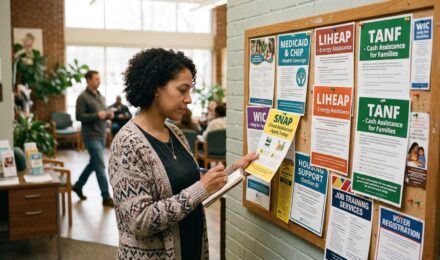
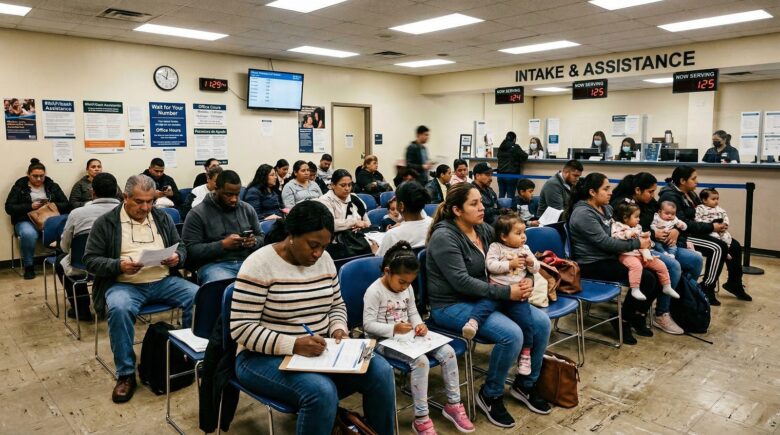
Every year, billions of dollars in financial assistance sit unclaimed while millions of Americans struggle to make ends meet. This paradox reveals something troubling about the social safety net we’ve built: the people who need help most often can’t access it. Whether it’s government benefits, nonprofit assistance, or emergency relief programs, complex application processes and outdated systems create barriers that block vulnerable populations from receiving support they legally qualify for.
According to research from the Urban Institute, approximately $140 billion in federal benefits goes unclaimed annually because eligible recipients never apply or can’t navigate the application process. That’s not a rounding error. It’s a systemic failure — one that has real consequences for real families trying to get through each month. Understanding why this gap exists, and what can be done about it, matters whether you’re personally navigating assistance programs or trying to understand a system that shapes millions of lives.
📌 For a comprehensive overview of available programs and how to access them, check out our complete guide to government assistance programs.
Why Financial Aid Programs Miss the People They’re Designed to Serve
Financial assistance programs operate under layers of bureaucratic requirements that confuse even educated, well-resourced applicants. Forms demand documentation that many low-income families don’t readily have on hand. Pay stubs, tax returns, utility bills, and bank statements must align perfectly — and one missing document can derail an entire application. The implicit assumption built into these systems is that applicants have stable housing, consistent employment, reliable transportation, and dependable internet access. These assumptions systematically exclude the very people the programs are designed to serve.
The gig economy has made traditional proof of income nearly obsolete for millions of workers. A delivery driver or independent contractor doesn’t receive standard pay stubs. Freelancers and seasonal workers face similar documentation challenges. When the proof-of-income requirements were designed, they assumed W-2 employment was universal. It isn’t anymore — and the application systems haven’t kept up.
There’s also what economists call “administrative burden.” This is the cumulative cost — in time, stress, and resources — of navigating complex application processes. That burden isn’t always accidental. It often stems from policy decisions that prioritize fraud prevention over accessibility. While protecting public funds matters, the current balance punishes honest applicants who simply lack the time, knowledge, or resources to complete multi-page applications correctly. The result is predictable: people with the greatest need give up before receiving help, while those with more resources to navigate bureaucracy succeed. The system filters out struggle.
Information Deserts: When Eligible People Don’t Know Help Exists
Even when people qualify for assistance, many don’t know the programs exist. Government agencies struggle with outreach, particularly to communities that have historically been underserved or actively harmed by government institutions. Marketing budgets for social services are a fraction of what commercial advertisers spend reaching the same populations. Information about available help simply doesn’t reach the people who need it most.
This creates a frustrating information asymmetry. Savvy, well-connected individuals — those who know who to ask, which websites to check, which community organizations to contact — access benefits they’re entitled to. Meanwhile, isolated individuals and families remain unaware that they qualify for programs that could meaningfully change their situation.
Digital transformation has made this gap worse for certain demographics. Government agencies increasingly move services online, operating under the assumption that internet access is universal. But the Federal Communications Commission has reported that tens of millions of Americans still lack reliable broadband access. Rural areas are particularly affected. Even in urban centers, individuals experiencing housing instability or homelessness can’t easily access online portals. Public library computers offer a partial solution, but limited hours and long wait times create their own barriers.
Language and Cultural Barriers
Language access is a persistent and underappreciated obstacle. Many assistance programs offer applications only in English, despite serving communities where English is a second language for many residents. Translation services exist but remain inconsistent and often hard to find. Even when translated materials are available, they frequently carry errors or use language that doesn’t translate clearly across dialects and regional variations.
Cultural factors shape who seeks help and how. Some communities approach government assistance with deep suspicion rooted in historical mistreatment — and that suspicion is often rational, not irrational. Others lack familiarity with available resources because outreach efforts don’t account for how different communities communicate and make decisions. Designing programs for “the public” as an undifferentiated group means designing them for no one in particular.
The Documentation Trap
Gathering required documentation presents enormous practical challenges for the people most likely to need assistance. Someone experiencing housing instability can’t easily maintain organized files of important papers when they’re moving frequently or staying in temporary situations. Domestic violence survivors may have fled home without grabbing financial records. Natural disaster victims lose everything — including the documents needed to rebuild. Yet assistance programs still demand extensive proof before releasing funds.
This catch-22 is one of the most cruel structural features of many assistance programs: the circumstances that make someone need help are often the same circumstances that make them unable to document their need. The system requires proof of a crisis from people who are living inside one.
Some fintech companies have started developing alternative approaches — verifying identity and income through bank transaction patterns, rental payment history, and utility records rather than traditional documents. These innovations could reshape how assistance programs verify eligibility. But government programs lag far behind. Regulatory constraints and risk-averse bureaucracies slow the adoption of new verification methods, even when those methods are more accurate and more accessible than the ones they’d replace.
Technology as Both Bridge and Barrier
Digital tools have genuine potential to reduce the gap between eligibility and access. AI-assisted chatbots can guide applicants through complex forms step by step. Automated systems can pre-populate applications using existing government data — tax filings, Social Security records — reducing the burden on applicants. Mobile apps can send deadline reminders and prompt people when documentation is missing. Some states have already begun experimenting with these approaches. California’s GetCalFresh program simplified food assistance applications, significantly increasing enrollment among eligible households who had previously never applied.
But technology can also widen existing disparities when it’s poorly designed or when access is assumed rather than ensured. Algorithmic decision-making in benefits programs sometimes perpetuates bias, flagging applications from minority or low-income applicants for additional scrutiny based on patterns that reflect historical inequities rather than actual fraud risk. Automated systems may reject applications for minor inconsistencies that a human reviewer would immediately recognize as honest errors.
Privacy concerns are also legitimate and shouldn’t be dismissed. When agencies share personal data across government platforms, the people most affected by that data sharing are typically those with the least power to push back. Building genuine trust requires transparency about what information is collected, how it’s stored, who can access it, and how long it’s retained. That transparency is rare.
The Hybrid Approach That Works Best
The most promising models combine technology with human support rather than replacing one with the other. Hybrid systems use automation for routine processing while ensuring access to caseworkers for complex situations. Community organizations serve as intermediaries — trusted local institutions that help applicants navigate digital systems, gather documents, and follow up on applications. These partnerships leverage technology’s efficiency while preserving the human connection that many people need when dealing with stressful and unfamiliar processes.
Investment in both infrastructure and training determines whether digital transformation actually expands access or simply modernizes exclusion. New technology that’s inaccessible to people without smartphones, broadband, or digital literacy isn’t a solution — it’s a relabeling of the same problem.
What Redesigning These Systems Would Actually Look Like
Fixing the access gap requires more than technical fixes at the margins. It requires rethinking how assistance programs are designed from the ground up — with actual recipients at the center of the design process, not just administrators and policymakers.
Human-centered design principles would start by asking: what are the biggest points of friction for the people trying to apply? Where do applications break down? What barriers prevent eligible people from even starting? These questions should drive system design. Success metrics should shift from “how much fraud did we prevent” to “how many eligible people received help.” Programs should default to trust rather than suspicion, with verification processes that catch actual fraud without punishing everyone in the process.
Several concrete policy reforms could immediately improve access:
- Presumptive eligibility: Allow provisional enrollment while full applications are processed, so people in crisis get immediate support rather than waiting weeks for a determination.
- Universal applications: Let people apply for multiple programs simultaneously through a single form, reducing the burden of redundant documentation across separate agencies.
- Automatic enrollment: Use existing government data — tax filings, Medicaid records — to identify likely-eligible non-applicants and proactively reach out. Oregon has piloted auto-enrollment for food assistance with encouraging results.
- Plain language requirements: Require that all applications and communications be written at a sixth-grade reading level and be available in the primary languages of the communities served.
- Multiple submission pathways: Maintain digital, mail, and in-person submission options. Single-channel solutions will always leave some people behind.
None of these reforms require inventing new technology. The political will to prioritize access over administrative convenience is what’s actually missing. For more context on how the rules within assistance programs are sometimes designed in ways that feel punishing rather than helpful, understanding why assistance rules often feel punishing on purpose provides important context.
The Real Costs of the Access Gap
The unclaimed benefits sitting unused aren’t just an administrative inconvenience. They represent real families going without food, medical care, and housing stability that they were entitled to by law. They represent children growing up with less security than they should have. They represent preventable crises that become long-term poverty.
There’s also an economic cost that gets less attention. Benefits that reach families are typically spent immediately and locally — on food, rent, utilities, and goods. When billions in eligible assistance go unclaimed, that economic activity doesn’t happen. Local businesses don’t make those sales. Landlords don’t receive that rent. Communities that most need economic activity don’t get it.
Many people who qualify for assistance don’t use it because of stigma — the internalized message that needing help is shameful, that using programs designed for “other people” is something to be embarrassed about. This shame is real and it keeps people from accessing help that could genuinely change their circumstances. It’s worth being direct: assistance programs exist because policymakers determined that certain situations — unemployment, disability, poverty — create needs that individuals shouldn’t have to face alone in a society with shared resources. Using them is not cheating. If that framing helps, understanding why assistance programs exist and why using them isn’t cheating lays out the history and reasoning clearly.
If You’re Navigating This System Right Now
If you’re trying to access assistance yourself, knowing about these systemic failures won’t make your application easier. But it might help you understand why the process feels so hard — and that the difficulty isn’t a reflection of you or your circumstances. The system is genuinely difficult, and it’s difficult for reasons that have more to do with political choices than with your situation.
A few things that can help practically:
- Look for benefits navigation services in your area. Many nonprofits, community health centers, and social service organizations offer free help with applications. A person who navigates these systems regularly can save you hours and prevent costly mistakes.
- Use online screening tools. Sites like Benefits.gov and state-specific portals can help you identify programs you might qualify for without committing to a full application upfront.
- Document everything. Keep records of every interaction — who you spoke with, when, what they told you. If an application is denied, you have a paper trail for appeals.
- Appeal denials. Denial rates are high for initial applications, but appeals succeed more often than most people expect. If you were denied and believe you qualify, appealing is almost always worth attempting.
For a practical guide to the actual application process, how to apply for assistance without losing your mind walks through the process step by step. And if you’ve looked into programs and aren’t sure what you might qualify for, government assistance programs people qualify for without realizing covers programs that are frequently overlooked.
Frequently Asked Questions
Why do so many people who qualify for benefits never apply for them?
The reasons are multiple and often compound each other. Many eligible people don’t know the programs exist. Others face documentation requirements they can’t easily meet. Many encounter application processes so complex they give up before completing them. Stigma around receiving assistance keeps others away entirely. And for people without reliable internet access, language support, or time away from work, the practical obstacles to applying can be genuinely insurmountable without help.
What can I do if my benefits application is denied?
First, request a written explanation of the denial — you’re entitled to one. Review it carefully to understand whether the denial was due to missing documentation, a factual error, or a determination that you actually don’t qualify. If you believe the denial was incorrect, file an appeal within the stated deadline. Consider reaching out to a local legal aid organization or benefits advocate, who can often identify errors in denial decisions and help with the appeals process at no cost to you.
Are there people or organizations who can help me navigate assistance applications?
Yes. Many communities have nonprofit organizations, community health centers, and social service agencies with staff trained specifically to help people navigate benefits applications. Legal aid societies often provide free assistance. Some libraries offer benefits navigation programs. The key is finding a local organization that knows the specific programs available in your state and county — programs and requirements vary significantly by location.
Why does applying for benefits feel so much harder than it should?
Because it often is harder than it should be. Assistance programs were frequently designed with fraud prevention as the primary concern, not user accessibility. Administrative requirements that made sense in a world of stable, W-2 employment haven’t been updated to reflect how people actually work and live today. The difficulty isn’t a reflection of your competence — it’s a design problem that researchers and advocates have been documenting for decades. Recognizing that can help, even when the practical challenges remain.
Sonia Reyes is a benefits access advocate and policy researcher who has guided thousands of individuals through government assistance applications. She writes about the systems that shape everyday financial life — and how to navigate them without losing your mind. She works out of Albuquerque, NM.