Fact-checked by the VisualEnews editorial team
Quick Answer
Virtual influencers on social media are computer-generated personas managed by brands or agencies that command real advertising budgets and audiences. As of July 2025, the virtual influencer market is valued at over $6.9 billion, with top CGI creators like Lil Miquela accumulating more than 2.5 million Instagram followers and landing campaigns with Louis Vuitton and Calvin Klein.
Virtual influencers social media represents one of the fastest-growing intersections of artificial intelligence, marketing, and digital culture. According to Business Research Insights’ 2024 market analysis, the global virtual influencer industry is projected to exceed $37.8 billion by 2030, growing at a compound annual rate of over 26%.
That growth is not accidental. Brands are discovering that CGI personas offer total creative control, zero scandal risk, and 24/7 availability — advantages no human influencer can match.
What Exactly Are Virtual Influencers?
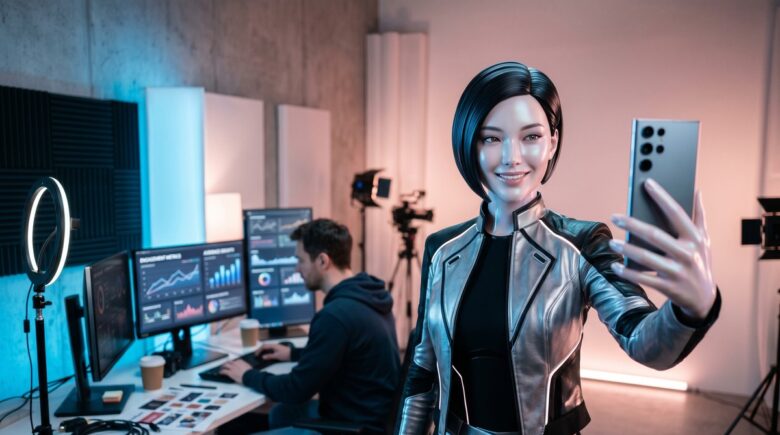
Virtual influencers are digitally created characters — built using CGI, motion capture, or AI generation tools — that post content on social platforms just like human creators. They have curated backstories, defined aesthetics, and dedicated follower bases. Unlike bots, they are managed by real teams of designers, writers, and strategists who shape every post, partnership, and public statement.
The most recognized examples include Lil Miquela (created by Brud, Los Angeles), Imma (by Aww Inc., Tokyo), and Shudu (by The Diigitals, London). Each occupies a distinct niche — music and streetwear, fashion editorial, and luxury modeling, respectively. Their content is indistinguishable in quality from that of human influencers, which is precisely the point.
How They Are Built
Modern virtual influencers are produced using a combination of Unreal Engine, Blender, and increasingly, generative AI platforms. Some studios use motion capture actors to generate realistic body movement, while others rely entirely on procedural animation. The sophistication has grown to the point where audiences routinely mistake virtual influencers for real people on first encounter — a phenomenon that Pew Research Center digital trust studies have flagged as a growing consumer awareness issue.
Key Takeaway: Virtual influencers are fully managed CGI personas — not bots — built by creative studios using tools like Unreal Engine. The market already includes hundreds of active virtual creators, with leading figures managed by agencies such as Aww Inc. generating real brand revenue.
Why Are Brands Choosing Virtual Influencers for Social Media Campaigns?
Brands choose virtual influencers because they eliminate the unpredictability of human talent while delivering measurable engagement at scale. A virtual persona cannot have a public scandal, miss a deadline, or demand renegotiated rates mid-campaign. For global brands managing complex multi-market rollouts, that reliability is worth a significant premium.
Samsung, Prada, BMW, and Dior have all used virtual influencers in documented campaigns. The appeal extends beyond risk management. Virtual personas can be localized instantly — language, skin tone, cultural references — without reshoots or travel costs. This makes them uniquely efficient for international launches.
Engagement Rates vs. Human Influencers
Data consistently shows that virtual influencers outperform humans on engagement. According to Influencer Marketing Hub’s benchmarking report, virtual influencers achieve an average Instagram engagement rate of 2.84%, compared to 1.72% for human influencers in equivalent follower tiers. Novelty, visual perfection, and consistent posting cadence all contribute to that gap.
| Metric | Virtual Influencers | Human Influencers |
|---|---|---|
| Avg. Instagram Engagement Rate | 2.84% | 1.72% |
| Scandal/PR Risk | Near zero | High (varies by talent) |
| Content Localization Cost | Low (digital editing) | High (reshoots, travel) |
| 24/7 Availability | Yes | No |
| Average Sponsored Post Cost (1M+ followers) | $5,000–$25,000 | $10,000–$100,000+ |
Key Takeaway: Virtual influencers deliver an average engagement rate of 2.84% on Instagram — 65% higher than human influencers — according to Influencer Marketing Hub, making them a cost-efficient alternative for brands prioritizing measurable ROI over authenticity.
How Are Virtual Influencers Disrupting Trust and Transparency on Social Media?
Virtual influencers social media presence raises immediate questions about disclosure and consumer deception. Regulators in multiple markets have begun treating virtual personas under the same rules as human endorsers — requiring clear disclosure that content is AI-generated or fictitious when commercial intent exists.
The Federal Trade Commission (FTC) updated its endorsement guidelines in 2023 to explicitly address AI-generated personas, requiring that material connections be disclosed regardless of whether the spokesperson is human or digital. The Advertising Standards Authority (ASA) in the UK has issued parallel guidance. Non-compliance carries real risk: brands face enforcement actions and reputational damage if audiences feel deceived.
“The rise of virtual influencers challenges our fundamental assumptions about authenticity in social media. Consumers deserve to know when they are being marketed to by a character, not a person. The technology is outpacing regulation, and that gap creates real consumer harm.”
The trust issue also intersects with digital identity and how audiences perceive online personas. When a virtual influencer builds parasocial relationships with millions of followers who believe they are engaging with a real person, the ethical stakes are significant. Research from Stanford University’s Persuasive Technology Lab suggests that audiences who discover a persona is virtual report measurable drops in brand trust.
Key Takeaway: The FTC’s 2023 endorsement guidelines now require disclosure for AI-generated influencer personas. Brands that fail to disclose virtual influencer status face regulatory action — a compliance risk that the FTC’s truth-in-advertising framework makes increasingly enforceable across all 50 U.S. states.
Which Industries Are Adopting Virtual Influencers Most Aggressively?
Fashion, beauty, gaming, and luxury goods lead adoption of virtual influencers social media strategies, driven by their visual-first nature and tolerance for aspirational, non-literal storytelling. These sectors see the smallest consumer resistance to CGI personas because their audiences already accept stylized, edited imagery as the norm.
Glossier, L’Oreal, and Burberry have all tested virtual spokesperson campaigns. In gaming, virtual influencers are native — characters like K/DA (created by Riot Games for League of Legends) blur the line between in-game IP and social media presence, amassing tens of millions of streams on Spotify and YouTube simultaneously.
The trend is also reshaping how platforms operate. Meta has invested in AI Studio tools that allow creators to build virtual versions of themselves, while TikTok has introduced AI avatar features for brand accounts. This shift connects directly to broader questions about how AI is changing the way we discover and consume content online. Separately, understanding how free versus paid platform models affect what content users actually see helps explain why brands are investing in owned virtual personas rather than renting reach from human creators.
Key Takeaway: Fashion and gaming are the dominant adopters, with platforms like Meta and TikTok building native tools for virtual persona creation. Riot Games’ K/DA virtual group generated over 300 million YouTube views, proving virtual influencer IP can achieve mainstream cultural scale. See Riot Games’ official releases for campaign data.
What Is the Future of Virtual Influencers on Social Media?
The future of virtual influencers social media is defined by three converging forces: generative AI reducing creation costs, platforms building native infrastructure, and regulators tightening disclosure rules. The barriers to entry that once made virtual influencers exclusive to well-funded studios are disappearing rapidly.
Tools like Midjourney, HeyGen, and Synthesia now allow small brands to generate consistent CGI personas at a fraction of prior costs. This democratization means the volume of virtual influencers will grow exponentially — which simultaneously increases competition and makes audience trust more fragile. Brands that invest in transparency now will hold a structural advantage as regulation tightens.
This trajectory also raises questions that go beyond marketing. As AI personas become indistinguishable from real people in short-form video, the infrastructure underpinning social platforms will face strain — a challenge directly connected to advances described in how quantum computing will reshape everyday digital systems. The authenticity crisis in social media marketing will also force brands to rethink their broader digital strategies, much like the ongoing reassessment of which digital tools actually deliver value versus quietly drain budgets.
Key Takeaway: Generative AI tools are reducing virtual influencer creation costs by an estimated 70–80% compared to 2020 studio production, according to industry analysts. As volume scales, brands that prioritize disclosure and authentic storytelling will retain consumer trust while others face increasing FTC scrutiny.
Frequently Asked Questions
What is a virtual influencer on social media?
A virtual influencer is a computer-generated digital character that posts content on social media platforms, engages with followers, and partners with brands for sponsored content — just like a human influencer. They are created using CGI, AI tools, or motion capture technology and are managed by real human teams. Unlike bots, they have coherent identities, aesthetics, and brand voices.
Are virtual influencers more effective than human influencers?
On measurable engagement metrics, virtual influencers outperform human influencers. Data from Influencer Marketing Hub shows virtual influencers average a 2.84% Instagram engagement rate versus 1.72% for humans. However, effectiveness depends on campaign goals — human influencers still outperform on authenticity-driven trust metrics.
Do I have to disclose that an influencer is virtual in ads?
Yes, in most major markets. The FTC in the United States and the ASA in the United Kingdom both require clear disclosure when a virtual or AI-generated persona promotes a product with commercial intent. Failure to disclose can result in enforcement action against the brand, not just the agency managing the virtual influencer.
Which brands use virtual influencers?
Major brands using virtual influencers include Samsung, Prada, Dior, L’Oreal, Burberry, and BMW. Lil Miquela has partnered with Calvin Klein and Louis Vuitton. Adoption spans fashion, automotive, beauty, and gaming sectors globally.
How much does it cost to hire a virtual influencer?
Sponsored post fees for established virtual influencers with over one million followers typically range from $5,000 to $25,000 per post — significantly less than comparable human talent. However, custom virtual influencer creation for a brand-owned persona can cost between $50,000 and $500,000 in initial studio production, depending on technical complexity.
Is the virtual influencer market still growing?
Yes, significantly. The market was valued at over $6.9 billion in 2024 and is projected to reach $37.8 billion by 2030, according to Business Research Insights. The expansion of generative AI tools is accelerating both supply and adoption across new industry verticals.
Sources
- Business Research Insights — Virtual Influencer Market Size and Forecast 2024–2030
- Influencer Marketing Hub — Virtual Influencers: Engagement Rates and Industry Benchmarks
- Federal Trade Commission — Truth in Advertising and Endorsement Guidelines
- Advertising Standards Authority — AI and Advertising Disclosure Guidance
- Pew Research Center — Internet and Technology Research
- Aww Inc. — Virtual Human Studio (Imma)
- Riot Games — Official News and Campaign Data