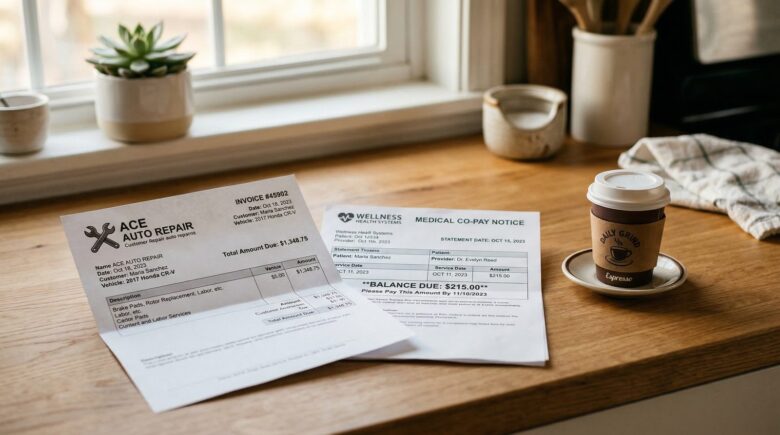
What Actually Breaks a Budget — Hint: It’s Not Coffee
You’ve heard it a thousand times: skip the daily latte, and you’ll finally afford that down payment. Personal finance gurus love pointing fingers at small indulgences. But here’s the uncomfortable truth — your $5 coffee isn’t the villain in your financial story.
While you’re busy guilt-tripping yourself over a cappuccino, much larger expenses are quietly demolishing your budget. The real budget killers are the ones you’ve normalized, automated, and possibly forgotten about entirely. Understanding what actually drains your bank account requires looking past the easy scapegoats and confronting the heavyweight expenses that rarely get the scrutiny they deserve.
📌 For more practical strategies on everyday financial decisions, explore our complete guide to managing money in real life.
The Real Budget Killers Hiding in Plain Sight
Let’s start with the biggest one: housing. Your rent or mortgage payment represents the single largest threat to your financial stability, and it’s the expense most people feel the least empowered to change.
Traditional advice suggests spending no more than 30% of your gross income on housing. Yet millions of households blow past this threshold without a second thought — not out of carelessness, but because affordable options in many cities simply don’t exist. In competitive markets like San Francisco, New York, and Seattle, that 30% guideline can feel like a historical relic from a different era entirely.
The problem intensifies when you factor in the hidden costs of housing. Property taxes climb year after year. Homeowners insurance premiums have surged nationwide, particularly in regions affected by climate-related disasters. Maintenance expenses catch first-time homeowners off guard. Renters aren’t immune either — utility costs, renter’s insurance, and parking fees add up quickly. According to the Joint Center for Housing Studies at Harvard University, more than 20 million U.S. households spend over half their income on housing costs.
This housing burden creates a domino effect throughout your entire financial life. You can’t save for retirement when rent consumes 50% of your paycheck. Emergency funds remain perpetually empty. Career opportunities in lower-cost cities get dismissed because you’ve convinced yourself you need to stay where you are. The solution isn’t always moving, but it does require an honest conversation about whether your current housing situation aligns with your broader financial goals — not just this month, but over the next five years.
Transportation: The Budget Category You’re Underestimating
The second major budget breaker is transportation — and most people significantly underestimate what it actually costs them.
Car ownership costs Americans an average of $10,728 annually, according to AAA’s 2023 Your Driving Costs study. That breaks down to nearly $900 per month. Your car payment might be $400, but you’re also paying for insurance, gas, oil changes, tires, registration, and depreciation. These costs compound in ways that aren’t immediately visible when you’re looking at just a monthly payment figure.
The lending industry has made car buying deceptively easy. You can get approved for an auto loan in minutes without fully understanding the total cost of ownership. Dealerships routinely push longer loan terms — 72 or even 84 months — that make monthly payments feel affordable while stretching interest payments across seven years. Meanwhile, the car loses value rapidly, but your loan balance stays stubbornly high. You’re paying interest on a depreciating asset for years.
There’s also the hidden cost of upgraded vehicles. Many people who “just want something reliable” end up financed into a vehicle with more features — and more cost — than they actually need. Payments that seemed manageable at signing can squeeze the rest of your budget so tightly that there’s nothing left for savings or unexpected expenses.
What to Do Instead
Before assuming you need a new (or new-to-you) vehicle, calculate your actual total transportation cost. Add up your monthly payment, insurance, average gas spending, and a reasonable estimate for maintenance and repairs. If that number is approaching or exceeding $800-$900/month, you have a significant budget problem worth addressing directly.
Some practical steps:
- Buy used, not new. A two- or three-year-old vehicle costs significantly less and avoids the steepest depreciation curve.
- Extend your current vehicle’s life. Consistent maintenance on an older, paid-off car almost always costs less than a new car payment, even factoring in occasional repairs.
- Run the math on alternatives. In some situations — particularly for households with short commutes or access to public transit — reducing or eliminating car ownership saves thousands annually.
If you’re also dealing with monthly bill stress, transportation costs are often one of the first places meaningful savings can be found without drastically changing your lifestyle.
How Subscription Creep Drains Your Bank Account
The third major budget category most people drastically underestimate is subscriptions — specifically, the cumulative total of all the small recurring charges scattered across their accounts.
Streaming services revolutionized entertainment, but they’ve also created a new form of budget erosion. Netflix, Hulu, Disney+, HBO Max, Paramount+, Apple TV+ — each costs just $10 to $20 monthly. Individually, they seem harmless. Collectively, they can rival a car payment.
But subscription creep extends far beyond entertainment. Add Spotify Premium, YouTube Premium, cloud storage, meal kit services, fitness apps, news subscriptions, and various software tools. That meditation app auto-renews annually. Your Amazon Prime membership just increased again. A 2023 study by C+R Research found that consumers underestimate their monthly subscription spending by about $133 per month — meaning most people think they’re spending significantly less than they actually are.
Why Subscriptions Are So Hard to Track
The business model of subscription services is deliberately designed to minimize your awareness of the ongoing expense. Companies make sign-up frictionless and cancellation difficult. Auto-renewal happens silently. Charges appear buried in credit card statements most people review only superficially. Price increases roll in with quiet email notifications that are easy to dismiss.
The result: you’re almost certainly paying for services you no longer actively use. The average household paying for four or five streaming services likely watches two or three of them with any regularity. The rest are inertia expenses — money leaving your account because canceling requires a few minutes you haven’t gotten around to spending.
To take control, set a quarterly subscription audit on your calendar. Go through every recurring charge on your credit cards and bank accounts. For each one, ask honestly: did I use this in the last 30 days? Did it bring enough value to justify renewing? Cancel anything that doesn’t clearly earn its place. Apps like Rocket Money and similar tools can help automate this process by surfacing all recurring charges in one view.
The Regulatory Gap That Works Against You
It’s worth understanding that subscription-based businesses have historically operated in a regulatory environment that hasn’t prioritized consumer protection. Companies can change pricing, bury terms, and make cancellation unnecessarily complex — and many do, by design.
The FTC has proposed clearer rules around cancellation processes and automatic renewal disclosures, but implementation remains uneven. Some states — California in particular — have passed stronger consumer protections requiring explicit consent and easy cancellation. If you’re in a state without strong auto-renewal laws, the burden of managing subscriptions falls heavily on you as the consumer.
A practical defense: use virtual card numbers for new subscription sign-ups. Services that provide temporary card numbers with spending limits or expiration dates can block unwanted renewals and give you more control over what gets charged automatically each month. This simple step has saved many households hundreds of dollars a year in charges they didn’t intend to keep paying.
What the Coffee Conversation Gets Wrong
The reason personal finance discourse keeps returning to coffee isn’t because lattes are actually dangerous to your financial health. It’s because small, visible indulgences are easy to talk about. They don’t require nuance. They don’t implicate housing markets, lending practices, or the deliberately opaque structure of subscription billing. They just require willpower — which conveniently places the entire burden of financial struggle on the individual.
Let’s do the math. A $5 coffee, purchased every weekday, adds up to roughly $1,300 a year. That’s real money. But compare it to:
- The difference between spending 30% vs. 45% of income on housing: potentially $6,000-$12,000+ annually depending on your income level.
- Owning a new financed vehicle vs. a reliable used one paid in cash: easily $5,000-$8,000 per year when you account for depreciation and interest.
- Unaudited subscriptions: the average household with C+R Research’s estimated $133 monthly undercount is losing $1,596 a year to services they barely use.
None of this means coffee doesn’t matter at the margins. It means addressing housing, transportation, and subscriptions first is where real leverage lives. Fix the biggest leaks before worrying about the smallest drip.
If you’re building or rebuilding a budget from scratch, it helps to understand the broader patterns that make budgets work or fail. A simple money system for people who hate budgeting can help you start without feeling overwhelmed by the complexity of the process.
Taking Control of Your Actual Budget Breakers
Here’s a practical starting point. Spend 30 minutes this week auditing your three largest expense categories:
- Housing: What percentage of your take-home pay goes to rent or mortgage, utilities, insurance, and parking or HOA fees? If it’s above 35-40%, that’s worth addressing — even if your options feel limited right now.
- Transportation: Add up every dollar you spend on your vehicle(s) each month — payment, insurance, gas, and a monthly estimate for maintenance. The total is probably higher than you expect.
- Subscriptions: Pull up the last 60 days of your bank and credit card statements. Highlight every recurring charge. Add them up. Then cancel anything you can’t immediately justify keeping.
The savings available in these three categories are almost certainly larger than anything you’d gain from cutting small daily purchases. And unlike cutting coffee — which requires ongoing daily willpower — many of these changes are one-time decisions that keep paying dividends for months or years.
For those navigating more complex situations like existing debt alongside a tight budget, these principles still apply. Understanding the order that makes sense when paying off debt helps you direct any freed-up cash as effectively as possible. And recognizing that being “bad with money” is often a systems problem, not a character flaw, can help you approach these changes without self-blame getting in the way.
Related Reading
- Irregular Income and Why Traditional Advice Fails It
- Grocery Budgeting When Prices Keep Changing
- Small Money Wins That Matter More Than Big Ones
Frequently Asked Questions
If housing is the real budget killer, what can I actually do about it?
More than most people consider. Getting a roommate can immediately cut housing costs by 30-50%. Relocating to a lower-cost neighborhood or city is a bigger decision but can yield thousands in annual savings. Refinancing a mortgage when rates improve, or negotiating rent at lease renewal, are also worth pursuing. The key is treating housing as a variable you can influence over time, not a fixed reality you simply have to accept indefinitely.
Is owning a car always a budget problem?
Not at all — it depends on your total transportation cost relative to your income and available alternatives. A paid-off reliable car used for a necessary commute can be very cost-effective. The problems arise with new financed vehicles, high insurance premiums, or situations where total transportation costs could realistically be reduced through alternatives. Run the full number before assuming car ownership is your only viable option.
How often should I audit my subscriptions?
Quarterly is a reasonable cadence for most people. Set a recurring calendar reminder, then spend 15-20 minutes reviewing every recurring charge. The landscape changes faster than most people track — services raise prices, free trials convert to paid, and your actual usage evolves over time. A quarterly audit catches the drift before it adds up to hundreds of dollars of annual waste.
Is the coffee advice completely wrong, or does it have any merit?
It has merit as a metaphor for mindful spending and at the very margins of a budget. The problem isn’t that small purchases don’t matter at all — it’s that they’re used to distract from the much larger structural expenses that actually determine your financial trajectory. Address your big three first. Then, if small indulgences still feel like they’re crowding out something important, revisit them from a position of actual data rather than generalized guilt.
Marcus Tran is a personal finance educator and former credit union advisor who spent 15 years helping working families build realistic financial plans. His writing focuses on practical, no-judgment strategies for people dealing with real-world budget challenges. He’s based in Atlanta, GA.