Fact-checked by the VisualEnews editorial team
Quick Answer
Short range wireless protocols beyond Bluetooth — including Zigbee, Z-Wave, Thread, UWB, and NFC — are quietly reshaping how devices communicate in July 2025. These technologies operate across ranges of 10 to 100 meters, consume as little as 1% of Bluetooth’s power, and are increasingly built into smart home devices, industrial sensors, and consumer electronics worldwide.
Understanding which short range wireless protocols matter for your devices, home, or workplace starts with knowing what each technology actually does — and where Bluetooth simply isn’t enough. In July 2025, the global IoT market is expected to exceed 29 billion connected devices according to Statista, and the vast majority rely on short-range radio communication that isn’t Bluetooth at all. Zigbee, Z-Wave, Thread, Ultra-Wideband (UWB), and NFC each solve specific problems that Bluetooth was never designed to address.
The urgency has never been greater. Matter, the new smart home interoperability standard launched by the Connectivity Standards Alliance, hit version 1.3 in 2024 and is built on top of Thread and Wi-Fi — not Bluetooth — signaling a clear industry shift toward mesh-capable, low-power short range wireless protocols. Developers, IT managers, and everyday consumers who rely solely on Bluetooth knowledge are increasingly left behind as these protocols become the invisible backbone of modern connected infrastructure.
This guide is written for tech-curious readers, smart home builders, IoT developers, and anyone selecting wireless hardware who wants to move beyond surface-level Bluetooth comparisons. By the end, you will know which protocol fits which use case, how to compare their real-world specs, and what pitfalls to avoid when deploying them.
Key Takeaways
- Zigbee supports mesh networks of up to 65,000 nodes, making it the leading protocol for large-scale smart home and industrial sensor deployments, according to the Connectivity Standards Alliance.
- Ultra-Wideband (UWB) achieves location accuracy within 10 centimeters, far surpassing Bluetooth’s meter-level precision, per the FiRa Consortium.
- Z-Wave operates exclusively on sub-GHz frequencies (800–900 MHz), giving it superior wall penetration and reducing interference with Wi-Fi and Zigbee, as documented by the Z-Wave Alliance.
- Thread achieved Matter standard integration in 2022, with over 2,800 Matter-certified products on the market by mid-2025, according to the Connectivity Standards Alliance.
- NFC transactions globally exceeded 1 billion per day in 2024, underpinning contactless payments, digital keys, and health device pairing, per the NFC Forum.
- Zigbee and Thread devices can operate on coin-cell batteries for 2–5 years, compared to months for typical Bluetooth devices, making them ideal for battery-constrained sensor networks.
In This Guide
- What are the main short range wireless protocols beyond Bluetooth and when should I use them?
- Should I use Zigbee or Z-Wave for my smart home — what is the real difference?
- What is Thread protocol and how does it work with the Matter smart home standard?
- What is Ultra-Wideband (UWB) used for and why is Apple and Samsung putting it in phones?
- When should I use NFC instead of Bluetooth for short-range communication?
- How do I choose the right short range wireless protocol for my IoT project or smart home?
- Frequently Asked Questions
Step 1: What Are the Main Short Range Wireless Protocols Beyond Bluetooth and When Should I Use Them?
The most important short range wireless protocols beyond Bluetooth are Zigbee, Z-Wave, Thread, Ultra-Wideband (UWB), and NFC — each designed for distinct use cases that Bluetooth handles poorly or not at all. Choosing the right one starts with understanding that no single protocol wins in every scenario.
How to Do This
Map your requirements to protocol strengths before buying or specifying hardware. Ask three questions: How many devices need to connect? How far apart are they? And how long must they run on battery? Mesh protocols like Zigbee and Thread are built for dozens to thousands of battery-powered nodes spread across a building. UWB is built for centimeter-accurate location. NFC is built for zero-setup, tap-based interactions at under 20 centimeters.
Bluetooth Low Energy (BLE) typically supports ranges of 10 to 30 meters and is optimized for point-to-point audio and health data streaming. By contrast, Zigbee’s mesh architecture lets signals hop through intermediate nodes to cover an entire warehouse or multi-story home with consistent reliability, as detailed by the Connectivity Standards Alliance’s Zigbee specification.
If you are building a smart home ecosystem, wearable integration, or industrial sensor network, understanding short range wireless protocols is now as foundational as understanding Wi-Fi. For a broader look at where wireless technology is heading, see our guide on 5G vs Wi-Fi 7 and which wireless technology you should be using.
What to Watch Out For
Avoid the assumption that “smart home compatible” means a device uses a single protocol. Many modern devices stack two or three radios — for example, an Apple HomePod mini includes both Thread and Bluetooth 5.0 silicon. Buying based on protocol name alone without checking the specific version and profile leads to interoperability failures.
The term “short range wireless” covers any radio protocol operating under 100 meters in typical indoor conditions. This includes six distinct IEEE 802.15 family standards, all of which compete directly with Bluetooth Low Energy for IoT device connectivity.
Step 2: Should I Use Zigbee or Z-Wave for My Smart Home — What Is the Real Difference?
Use Zigbee if you want a large open ecosystem with hundreds of compatible devices at lower price points. Use Z-Wave if you prioritize interference-free operation and a strictly certified, interoperable device library. Both are proven short range wireless protocols, but they serve slightly different buyers.
How to Do This
Zigbee operates on the 2.4 GHz band globally (with some regional 915 MHz and 868 MHz variants) and supports mesh networks with up to 65,000 devices per network. This makes it the dominant choice for large deployments. Leading hubs including the Amazon Echo (4th gen), Samsung SmartThings Hub, and Philips Hue Bridge all use Zigbee as their primary device radio.
Z-Wave operates exclusively in the 800–900 MHz sub-GHz band, which means its signals travel through walls and floors more effectively than 2.4 GHz protocols. It is strictly controlled by Silicon Labs under the Z-Wave Alliance, and every certified device must pass interoperability testing — a standard Zigbee lacks. Z-Wave networks support up to 232 devices per controller, which is sufficient for most residential deployments.
Cost is a real differentiator. Zigbee chips are commoditized and widely available, keeping device prices lower. Z-Wave chips are sourced almost exclusively from Silicon Labs, which adds a small but consistent premium to hardware costs, typically $5–$15 more per device compared to equivalent Zigbee hardware.
What to Watch Out For
Zigbee’s 2.4 GHz operation shares spectrum with Wi-Fi channels 1, 6, and 11. In dense Wi-Fi environments — apartments, offices — you may see interference that degrades Zigbee reliability. Configure your Wi-Fi router to use channel 1 or 11, and set your Zigbee coordinator to channels 15, 20, or 25 to minimize overlap.

If you are starting a new smart home build in mid-2025, consider a Thread-first approach using Matter-certified devices instead of committing to a Zigbee or Z-Wave ecosystem. Thread is the emerging protocol underpinning all major platforms, and it preserves your future upgrade options.
| Protocol | Frequency | Max Devices | Typical Range | Battery Life | Open Standard | Avg. Device Cost Premium |
|---|---|---|---|---|---|---|
| Zigbee | 2.4 GHz | 65,000 | 10–100 m | 2–5 years | Yes | $0 (baseline) |
| Z-Wave | 800–900 MHz | 232 | 30–100 m | 2–5 years | No (Silicon Labs) | +$5–$15 |
| Thread | 2.4 GHz | 250+ (per border router) | 10–100 m | 2–5 years | Yes (OpenThread) | +$2–$10 |
| UWB | 3.1–10.6 GHz | 16 active | Up to 200 m (line of sight) | Hours–days | Partially (FiRa) | +$10–$30 |
| NFC | 13.56 MHz | 1 (peer-to-peer) | Up to 20 cm | Passive (no battery) | Yes (NFC Forum) | $0–$2 |
| Bluetooth LE | 2.4 GHz | 7 active (piconet) | 10–30 m | Months | Yes (Bluetooth SIG) | $0 (baseline) |
Step 3: What Is Thread Protocol and How Does It Work With the Matter Smart Home Standard?
Thread is an IPv6-based, low-power mesh networking protocol designed specifically to be the wireless foundation for the Matter smart home standard. It is not an application layer — it is a transport layer that Matter runs on top of, alongside Wi-Fi and Ethernet.
How to Do This
Thread uses the same IEEE 802.15.4 radio standard as Zigbee but adds a full IPv6 stack, making every Thread device directly addressable on a home network without a proprietary hub or cloud bridge. This is its key architectural advantage: a Thread device can be controlled locally even when the internet is down, as explained by the Thread Group’s official overview.
To use Thread in your home today, you need at least one Thread Border Router — a device that bridges the Thread mesh to your IP network. Devices that currently include Thread Border Router functionality include the Apple HomePod mini, Apple HomePod (2nd gen), Google Nest Hub Max, and Amazon Echo (4th gen). Thread devices automatically form and heal their own mesh without manual configuration.
Matter version 1.0 launched in October 2022 with Thread and Wi-Fi as its two primary transport protocols. By May 2025, over 2,800 Matter-certified products were available, including devices from Eve, Nanoleaf, Aqara, and all four major platform vendors, per the CSA certified products directory.
What to Watch Out For
Thread’s mesh requires a minimum density of devices to be reliable. A single Thread bulb in a large house with no other Thread nodes will have a weak mesh. Plan to deploy at least 3–4 Thread devices per floor to maintain a robust mesh fabric. Devices that are mains-powered act as “routers” in the mesh; battery-powered devices act as “end devices” and do not route traffic.
“Thread was designed from the ground up to solve the three biggest problems in smart home networking: reliability, security, and power efficiency. When you run Matter over Thread, you get a protocol stack that doesn’t need the cloud to function — and that fundamentally changes what ‘smart home’ means for consumers.”
The rise of Thread is deeply connected to how wearable technology is transforming personal health tracking — many next-generation health wearables are expected to adopt Thread for continuous, low-power data relay to home hubs.
The Matter standard had over 2,800 certified products available by mid-2025, growing from zero at its October 2022 launch — a product library that took Zigbee over a decade to build, achieved in under three years.
Step 4: What Is Ultra-Wideband (UWB) Used for and Why Is Apple and Samsung Putting It in Phones?
Ultra-Wideband (UWB) is a radio technology that uses extremely short pulses across a wide frequency spectrum to determine the precise location of devices within 10 centimeters — an accuracy no other consumer short range wireless protocol approaches. Apple, Samsung, and BMW are embedding UWB chips because it enables spatial awareness that Bluetooth simply cannot provide.
How to Do This
UWB measures time-of-flight (ToF) of radio pulses between two devices to calculate distance and direction with centimeter-level precision. The Apple U1 chip, introduced in the iPhone 11, uses this to enable AirDrop directional handoff — pointing your phone at another iPhone to prioritize that transfer. The same chip enables Apple AirTag “Precision Finding,” which guides you within arm’s reach of a lost item using on-screen directional arrows.
Samsung Galaxy devices from the S21 Ultra onward include the UWB chip (CXD5605) for SmartTag+ integration and device-to-device sharing. Automotive applications are expanding rapidly: BMW and Hyundai both deployed UWB-based digital car keys in 2023 models, allowing a phone to unlock and start a vehicle when the user is within a defined spatial zone, per reporting from the FIDO Alliance and Car Connectivity Consortium.
Industrial uses are growing faster than consumer ones. Warehouses operated by Amazon Logistics and DHL are deploying UWB anchor networks to track pallet and worker location in real time with sub-foot precision, enabling automated inventory systems that GPS and Wi-Fi cannot support indoors.
What to Watch Out For
UWB consumes significantly more power than Zigbee or NFC when continuously ranging. Current UWB chips draw roughly 100–200 mW during active ranging sessions, which limits their use to devices with larger batteries or intermittent operation. Do not design an always-on sensor on coin-cell power around UWB — it is the wrong tool for that job.
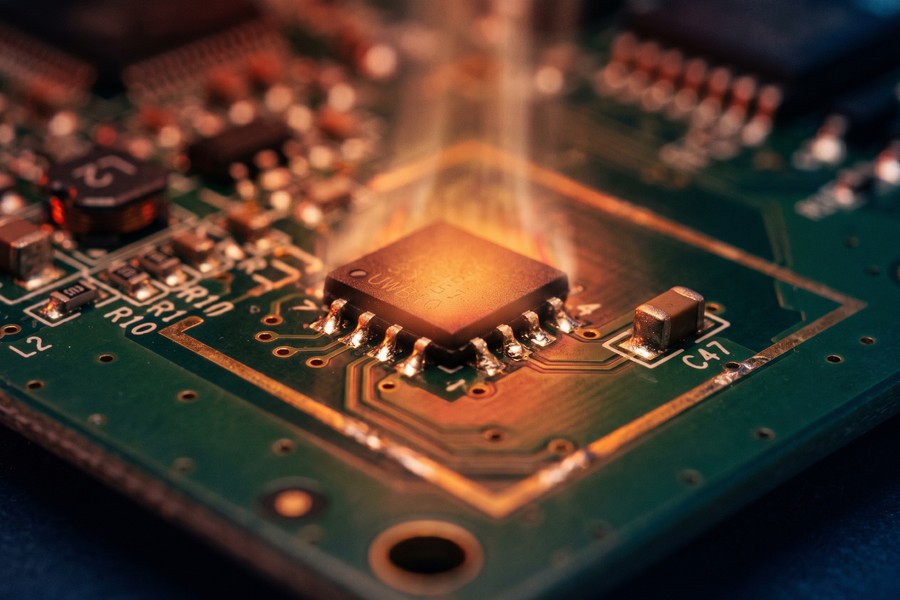
For IoT developers evaluating UWB, the Qorvo DW3000 and NXP SR040 chipsets are the most widely supported UWB modules as of 2025 and have the broadest SDK support for Android and iOS integration projects.
Step 5: When Should I Use NFC Instead of Bluetooth for Short-Range Communication?
Use NFC (Near Field Communication) when you need instant, zero-pairing data exchange at ranges under 20 centimeters, passive tags that require no battery, or tap-to-pay and tap-to-authenticate interactions. NFC is the right choice when setup friction must be zero and security from distance-based eavesdropping is a priority.
How to Do This
NFC operates at 13.56 MHz and supports three modes: card emulation (your phone acts as a contactless card), reader/writer (your phone reads an NFC tag or card), and peer-to-peer (two NFC devices exchange data). All three modes share one defining characteristic: the devices must be within 4–10 centimeters of each other to communicate, which is a security feature as much as a technical limitation.
For payments, Apple Pay, Google Pay, and Samsung Pay all use NFC card emulation mode exclusively. For smart home setup, NFC tags embedded in product packaging allow a smartphone to open setup flows without app searching — a feature used by Google Nest, Amazon Echo, and IKEA Dirigera products. For healthcare, NFC-enabled Abbott FreeStyle Libre glucose sensors allow diabetics to scan their arm with a phone to read glucose levels without a separate reader device.
NFC tags are passive — they have no battery and are powered by the reader’s electromagnetic field. A basic NFC NTAG213 tag costs under $0.10 in bulk, making NFC the lowest-cost short range wireless protocol to deploy at scale for asset tagging, authentication tokens, and smart packaging.
What to Watch Out For
NFC is not a replacement for Bluetooth in audio streaming, bulk data transfer, or multi-device mesh scenarios. Its 424 kbps maximum data rate is sufficient for authentication tokens and short URLs but completely unsuitable for transferring photos, audio, or sensor telemetry streams. Use NFC for pairing initiation and Bluetooth or Wi-Fi for the actual data transfer — this is exactly the pattern Apple uses with AirPods tap-to-pair.
NFC skimming — where a malicious reader attempts to read your contactless card from a short distance — is a real but overstated threat. Modern EMV contactless cards and phone-based wallets use dynamic cryptograms that render skimmed data useless. However, unencrypted NFC tags containing sensitive URLs or authentication tokens are genuinely vulnerable to cloning. Always use encrypted payloads on NFC tags that trigger authentication actions.
Step 6: How Do I Choose the Right Short Range Wireless Protocol for My IoT Project or Smart Home?
Choosing between short range wireless protocols comes down to five variables: device count, required range, battery life budget, latency tolerance, and ecosystem lock-in risk. Map your project against these five axes before selecting a radio stack — changing protocols mid-project is expensive and often impossible without hardware redesign.
How to Do This
Start with the device count question. If you need to connect more than 50 sensors or actuators, eliminate Bluetooth (piconet limit of 7 active devices) and NFC immediately. Zigbee and Thread both scale to hundreds of nodes. If you need fewer than 10 devices in a single residence, any protocol works and ecosystem compatibility becomes the deciding factor.
For battery life, Thread and Zigbee are the leaders. Thread end devices using the IEEE 802.15.4 radio with proper sleep scheduling can last 3–5 years on two AA batteries. BLE devices typically manage 6–18 months on equivalent cells due to more frequent radio wake cycles in most commercial implementations.
For precision location, only UWB delivers sub-meter accuracy. BLE beacons offer 1–3 meter accuracy using RSSI-based ranging — useful for room-level presence detection but not fine-grained tracking. If your application requires knowing which side of a door someone is standing on, UWB is the only viable short range wireless protocol.
For ecosystem fit, the safest long-term bet for a new smart home build in 2025 is Matter over Thread. It is supported natively by Apple HomeKit, Google Home, Amazon Alexa, and Samsung SmartThings simultaneously — the first time all four platforms have shared a common device protocol. This is a major shift from the fragmented Zigbee-vs-Z-Wave landscape that defined 2015–2022 smart home deployments. For more on how the underlying compute infrastructure supports these connected systems, our article on what edge computing is and how it works provides important context on local processing for IoT networks.
What to Watch Out For
Avoid mixing Thread and Zigbee on the same 2.4 GHz channel. Both use IEEE 802.15.4 as their physical layer, but they are not interoperable at higher stack layers. Running them on overlapping channels creates radio frequency contention that degrades both networks. Assign Zigbee to channel 15 and Thread to channel 25, or use a dedicated coordinator that manages channel assignment automatically.
“The fragmentation problem in short-range IoT connectivity is finally being solved — but not by Bluetooth. It is being solved by a combination of Thread’s mesh reliability and Matter’s application interoperability layer. Developers who understand both will build systems that actually work five years from now.”
Understanding the right protocol also has real cost implications for anyone building out a connected workspace or home office. Our guide on the best laptops for remote workers in 2026 covers which machines include native UWB and Thread radio support — increasingly important for seamless device handoff workflows.
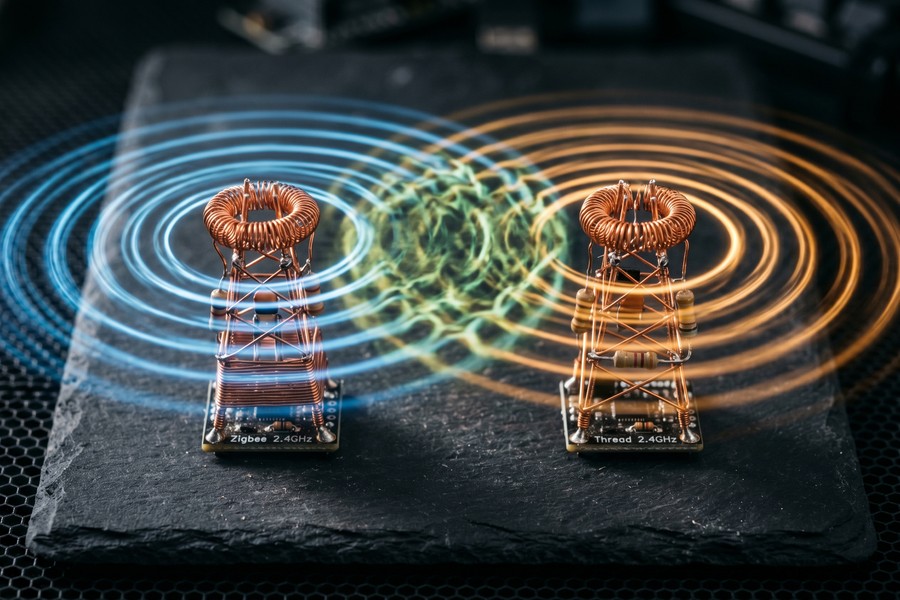
The OpenThread project, maintained by Google, provides a fully open-source implementation of the Thread networking stack. It runs on chips as small as the Nordic nRF52840, making it accessible for hobbyist developers building their own Thread-enabled sensors and actuators without vendor lock-in.
If you are deploying connected devices for health monitoring purposes specifically, the protocols covered here intersect directly with the growing wearable ecosystem — explored in our in-depth guide on how wearable technology is transforming personal health tracking.
Frequently Asked Questions
What is the difference between Zigbee and Bluetooth for smart home devices?
Zigbee is a mesh-capable protocol supporting up to 65,000 devices per network with multi-year battery life, while Bluetooth supports only 7 active devices per piconet and typically requires devices to communicate directly with a central hub rather than routing through each other. Zigbee is better for large sensor networks; Bluetooth is better for audio streaming and direct phone-to-device connections. Most smart bulbs, door locks, and sensors from brands like Philips Hue and Yale use Zigbee rather than Bluetooth for this reason.
Is Thread replacing Zigbee in smart home devices?
Thread is gradually displacing Zigbee in new product launches, but Zigbee still has a massive installed base and hundreds of active product lines as of July 2025. Thread’s advantage is native IPv6 addressing and Matter compatibility, which allows devices to work across Apple, Google, Amazon, and Samsung platforms simultaneously. Zigbee products will remain supported and functional for many years, but most major manufacturers are publishing Thread-first roadmaps for new devices.
Can Z-Wave and Zigbee work together on the same smart home hub?
Yes — many smart home hubs support both simultaneously. The Samsung SmartThings Hub, Hubitat Elevation, and Home Assistant Yellow all include both Zigbee and Z-Wave radios, allowing you to mix devices from both ecosystems under one app and automation engine. The protocols do not interfere with each other since Z-Wave operates on 800–900 MHz and Zigbee operates on 2.4 GHz. You manage them as separate radio networks within the same hub interface.
What devices currently use Ultra-Wideband and is it worth paying extra for?
UWB is built into the iPhone 11 and all later iPhone models, Samsung Galaxy S21 Ultra and newer, Apple AirTags, Samsung SmartTag+, and select BMW and Hyundai vehicle models for digital car key functionality. It is worth the premium if you need centimeter-accurate location — asset tracking, secure access control, or Precision Finding for lost items. For general smart home automation or audio use, the UWB premium is not justified since Thread and Zigbee handle those jobs at lower cost.
How does Matter work with existing Zigbee and Z-Wave devices I already own?
Existing Zigbee and Z-Wave devices do not become Matter devices natively — they require a compatible hub or bridge that translates their signals into the Matter protocol. Samsung SmartThings, Amazon Echo (4th gen), and Philips Hue Bridge v2 have all received or announced firmware updates that expose their connected Zigbee devices as Matter endpoints, allowing them to appear in Apple Home, Google Home, and Alexa simultaneously. This “bridge” approach means you do not need to replace working hardware immediately.
What is the best short range wireless protocol for a battery-powered outdoor sensor?
Thread or Zigbee are the best short range wireless protocols for battery-powered outdoor sensors that need multi-year runtime. Both achieve 2–5 year battery life on AA cells with proper sleep scheduling, and their mesh architecture means a sensor 50 meters from your hub can route its signal through intermediate devices rather than needing direct line-of-sight. Z-Wave’s sub-GHz frequency also penetrates walls and vegetation well, making it a strong alternative for garden or outbuilding deployments where 2.4 GHz signals degrade.
Why does my Zigbee network drop devices in a large apartment?
Zigbee mesh reliability requires enough mains-powered “router” devices spread throughout the coverage area — battery-powered end devices do not relay signals and create dead zones if spacing is too large. The standard recommendation is one Zigbee router device per 10–15 square meters in dense wall environments. Adding a Zigbee-capable smart plug or bulb to rooms that seem to cause drop-offs usually solves the problem immediately. Also check for Wi-Fi channel overlap on 2.4 GHz, which is the second most common cause of Zigbee reliability issues.
Is NFC safe for contactless payments and authentication?
NFC payments through Apple Pay, Google Pay, and Samsung Pay are very secure because they use dynamic transaction codes generated per-tap — a skimmed code cannot be replayed for a second transaction. The physical range limit of under 20 centimeters also makes covert interception practically impossible in normal use. The main security risk is unencrypted NFC tags in access control systems that store static credentials, which can be cloned with a $20 NFC reader app — a reason enterprise access control systems have moved to encrypted MIFARE DESFire or similar standards rather than basic NFC tags.
How do I know if my smart home hub supports Thread?
Check whether your hub appears on the Thread Group’s certified products list, which is the authoritative database of devices that have passed Thread Border Router certification. As of mid-2025, confirmed Thread Border Routers include the Apple HomePod mini, HomePod (2nd gen), Apple TV 4K (3rd gen), Google Nest Hub (2nd gen), Google Nest Hub Max, Amazon Echo (4th gen and later), and Eero Pro 6E routers. If your hub is not on this list, Thread devices will not be reachable through it.
What short range wireless protocol does Apple AirTag use?
Apple AirTag uses a combination of Bluetooth Low Energy for crowd-sourced “Find My” network reporting and the Apple U1 UWB chip for Precision Finding when you are within a few meters. The Bluetooth radio broadcasts an anonymized identifier that nearby iPhones relay to Apple’s servers to report the tag’s location. The UWB radio only activates when you are close enough for precise directional guidance, which is why the Precision Finding feature requires an iPhone 11 or later with its own U1 chip.
Sources
- Connectivity Standards Alliance — Zigbee Specification Overview
- Thread Group — What Is Thread? Technology Overview
- Z-Wave Alliance — About Z-Wave Technology
- FiRa Consortium — What Is Ultra-Wideband (UWB)?
- NFC Forum — NFC Today: Usage Statistics
- Statista — Number of IoT Connected Devices Worldwide
- Connectivity Standards Alliance — Matter Is Here (Launch Announcement)
- Connectivity Standards Alliance — Matter Certified Products Directory
- Thread Group — Thread Certified Products List
- FIDO Alliance — Partnership with Car Connectivity Consortium on UWB Digital Keys