Fact-checked by the VisualEnews editorial team
Quick Answer
The best phone nutrition tracker apps in July 2025 include MyFitnessPal, Cronometer, Lose It!, Noom, and Waterllama. Top picks offer databases of over 14 million foods and water reminders with customizable hydration goals. Free tiers cover basic logging; premium plans run $10–$20/month for macro coaching and deeper analytics.
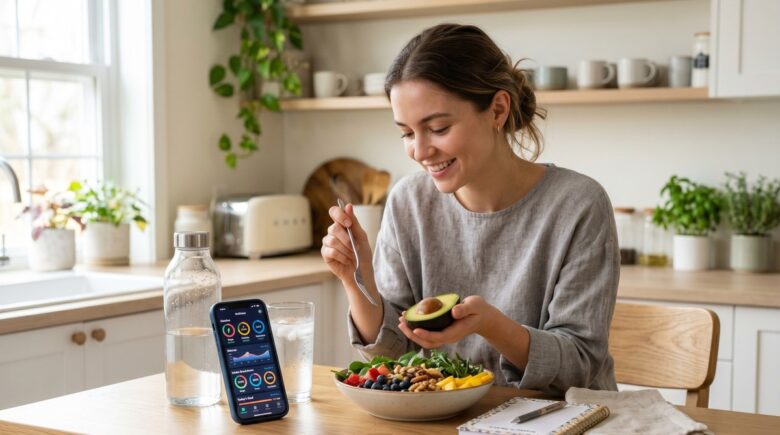
Phone nutrition tracker apps have made it possible to monitor calories, macros, micronutrients, and daily water intake entirely from a smartphone — no nutritionist required. According to Statista’s 2024 mHealth report, health and fitness apps were downloaded more than 2.6 billion times globally in a single year, with nutrition and hydration tools accounting for a significant share of that volume.
Choosing the wrong app wastes time and produces unreliable data. This guide cuts through the noise to show which tools are worth your storage space in 2025.
Which Phone Nutrition Tracker Apps Are Actually Worth Using?
The strongest phone nutrition tracker apps combine a large verified food database, an intuitive barcode scanner, and macro breakdowns that go beyond simple calorie counts. Five apps consistently lead independent rankings: MyFitnessPal, Cronometer, Lose It!, Noom, and MyPlate by Livestrong.
MyFitnessPal
MyFitnessPal remains the category benchmark with a database of over 14 million foods, a barcode scanner, restaurant meal logging, and API integrations with wearables including Apple Watch, Garmin, and Fitbit. The free tier covers calorie and macro tracking; the Premium plan ($19.99/month or $79.99/year) unlocks meal planning, nutrient timing, and deeper analytics.
Cronometer
Cronometer targets users who want granular micronutrient data — it tracks 84 nutrients including vitamins, minerals, and amino acids. The app pulls from the USDA FoodData Central database, ensuring accuracy. Its Gold tier costs $8.99/month and adds food scoring and trend charts.
Lose It!
Lose It! emphasizes visual meal logging and a clean interface. A 2023 study cited by PubMed Central found that consistent food logging using apps like Lose It! was associated with up to 15% greater weight-loss adherence over 12 weeks compared to paper-based journaling. Premium runs $39.99/year.
Key Takeaway: The top 3 phone nutrition tracker apps — MyFitnessPal, Cronometer, and Lose It! — cover databases from 14 million+ foods down to 84 individual micronutrients, letting users match the tool to their tracking depth. See PubMed Central’s 2023 adherence data for clinical context.
What Are the Best Apps to Track Daily Water Intake on a Phone?
Dedicated hydration apps outperform the water modules built into general nutrition trackers because they offer smart reminders, body-weight-based goals, and visual progress rings. The top standalone options are Waterllama, Daily Water Tracker Reminder, and Plant Nanny.
Waterllama (iOS) uses animated animal avatars to gamify hydration and lets users log custom beverages — coffee, juice, and sports drinks — with automatic water-content deductions. Plant Nanny takes a similar approach on both iOS and Android, calculating intake based on body weight and activity level. According to the CDC’s plain water guidance, most adults fall short of adequate daily fluid intake, making reminders a measurable behavioral intervention.
For users who prefer an all-in-one approach, MyFitnessPal’s water tracker logs in fluid ounces or milliliters and syncs with the nutrition diary. Cronometer also tracks hydration, though without dedicated reminder scheduling in the free tier. If you already track health data with a wearable, our guide on how wearable technology is transforming personal health tracking explains how devices like Apple Watch can auto-populate hydration data in compatible apps.
Key Takeaway: Standalone hydration apps like Waterllama use body-weight algorithms to set personalized goals, while the CDC confirms most adults chronically under-consume fluids. Pairing a reminder app with a nutrition tracker closes a gap that affects millions of users daily.
| App | Food Database Size | Water Tracking | Free Tier | Premium Cost |
|---|---|---|---|---|
| MyFitnessPal | 14 million+ foods | Yes (manual log) | Yes | $19.99/month |
| Cronometer | ~900,000 foods (USDA-verified) | Yes | Yes | $8.99/month |
| Lose It! | 7 million+ foods | Yes | Yes | $39.99/year |
| Noom | 1 million+ foods | Yes | Trial only | ~$70/month |
| Waterllama | Hydration only | Yes (dedicated) | Yes | $2.99/month |
Do You Need a Paid Plan, or Is a Free Phone Nutrition Tracker App Enough?
Free tiers on leading phone nutrition tracker apps cover the core use case — calorie counting, macro splits, and basic water logging — for most casual users. Paid plans become worth the cost when you need features like custom macro goals, meal planning, ad-free use, or detailed micronutrient reporting.
Cronometer’s free tier, for example, tracks all 84 nutrients from its USDA-verified database with no paywall. MyFitnessPal’s free version covers calories and the three macros but locks net carbs, meal timing analysis, and nutrient percentages behind Premium. Noom has no meaningful free tier — it functions as a subscription-only behavior-change program at roughly $70/month, positioning itself differently from self-serve trackers.
Before upgrading, it is worth auditing whether you actually use premium features. If you have found that unused subscriptions quietly drain your budget, the same logic applies to health apps — our article on auditing digital subscriptions to stop wasting money provides a practical framework. For a deeper breakdown of the tradeoffs, what you actually give up with free apps is directly relevant to the nutrition tracking decision.
“Self-monitoring of dietary intake is one of the most consistently supported behavior-change strategies in the obesity literature. Mobile apps lower the friction of that behavior to near zero — and lower friction means higher adherence.”
Key Takeaway: Free tiers from Cronometer and MyFitnessPal cover the basics for most users, while paid plans costing $8.99–$79.99/year add meaningful depth for athletes and clinical goals. Stanford research confirms self-monitoring via apps is among the most evidence-backed adherence strategies available.
How Accurate Are Phone Nutrition Tracker Apps?
Accuracy in phone nutrition tracker apps depends on two factors: database quality and user input discipline. Apps that rely on crowd-sourced entries — where anyone can add a food — carry a higher error rate than those anchored to government-verified databases.
A peer-reviewed analysis published in the Journal of Medical Internet Research (2022) found that crowd-sourced entries in popular apps had calorie errors exceeding 10% in roughly one-third of entries tested. Cronometer’s reliance on the USDA FoodData Central database significantly reduces this risk. MyFitnessPal has addressed the issue by flagging entries verified by its data team with a green checkmark, though unverified entries still outnumber verified ones.
How to Improve Logging Accuracy
Scanning barcodes instead of searching by name reduces errors substantially. Weighing portions in grams rather than using volume measures (cups, tablespoons) improves precision further. The Academy of Nutrition and Dietetics recommends logging immediately after eating rather than at end of day to reduce recall bias.
As AI continues to reshape how health technology interprets data, it is worth noting that some newer apps are integrating AI-driven pattern recognition to auto-suggest foods and flag nutritional gaps in real time.
Key Takeaway: Crowd-sourced food databases produce calorie errors above 10% in roughly 1 in 3 entries, per JMIR research. Using barcode scanning and USDA-verified apps like Cronometer is the single most effective way to close that accuracy gap.
Which Phone Nutrition Tracker Apps Have the Best Device and App Integrations?
The most useful phone nutrition tracker apps do not operate in isolation — they sync with wearables, fitness platforms, and health operating systems to build a complete picture of intake versus expenditure.
MyFitnessPal leads on integrations, connecting with over 50 apps and devices including Apple Health, Google Fit, Fitbit, Garmin Connect, and Withings. It also integrates with Peloton and several meal-kit platforms. Cronometer syncs with Apple Health, Fitbit, and Oura Ring, and its API allows third-party developers to build on its data. Lose It! supports Apple Health, Google Fit, and several blood-glucose monitoring devices useful for users managing diabetes.
Noom is the most closed ecosystem of the group. It focuses on behavioral coaching within its own platform and has limited third-party integrations, which may frustrate users who already have an established health data stack. For users thinking about how their broader health data strategy connects to wearable ecosystems, understanding how wearables are transforming personal health tracking provides useful context on where app-to-device sync is heading.
Key Takeaway: MyFitnessPal connects with 50+ external apps and devices — far more than any competitor — making it the strongest choice for users already embedded in a wearable or fitness ecosystem. MyFitnessPal’s integrations directory lists all compatible platforms.
Frequently Asked Questions
What is the best free phone nutrition tracker app in 2025?
Cronometer is the best free option for micronutrient depth, tracking 84 nutrients from its USDA-verified database at no cost. MyFitnessPal’s free tier is better for users who prioritize a large food database and wearable syncing over granular vitamin data.
Can phone nutrition tracker apps replace a registered dietitian?
No. Apps provide data logging and pattern visualization, but they cannot interpret results in the context of a medical history or adjust recommendations dynamically. The Academy of Nutrition and Dietetics recommends using apps as a complement to, not a substitute for, professional dietary counseling for clinical goals.
How much water should I be logging per day according to health guidelines?
The National Academies of Sciences, Engineering, and Medicine recommends approximately 3.7 liters (125 oz) of total daily water for men and 2.7 liters (91 oz) for women from all beverages and foods. Most hydration apps let you set a custom goal based on body weight and activity level.
Which nutrition app has the most accurate food database?
Cronometer is widely considered the most accurate because it draws primarily from the USDA FoodData Central database rather than crowd-sourced entries. A 2022 study in the Journal of Medical Internet Research found crowd-sourced entries in popular apps had error rates exceeding 10% in about one-third of tested foods.
Do nutrition tracker apps work offline?
Most apps — including MyFitnessPal, Cronometer, and Lose It! — allow offline logging that syncs when connectivity is restored. Barcode scanning typically requires an internet connection to query the food database in real time, so pre-logging known meals offline is the practical workaround.
Are there phone nutrition tracker apps designed for athletes or bodybuilders?
MacroFactor and Cronometer Gold are the strongest choices for performance-focused users, offering adaptive calorie targets and detailed amino acid tracking. MacroFactor uses an algorithm that adjusts your calorie goal weekly based on actual weight trend data, making it especially useful for structured bulk and cut cycles.
Sources
- Statista — Mobile Health App Downloads Worldwide 2024
- PubMed Central — Mobile App Food Logging and Weight-Loss Adherence (2023)
- Journal of Medical Internet Research — Accuracy of Nutrition Apps (2022)
- CDC — Plain Water: The Healthier Choice
- National Academies of Sciences — Dietary Reference Intakes for Water
- USDA FoodData Central — Official Nutrient Database
- Academy of Nutrition and Dietetics — Tracking Your Food Intake