Fact-checked by the VisualEnews editorial team
Quick Answer
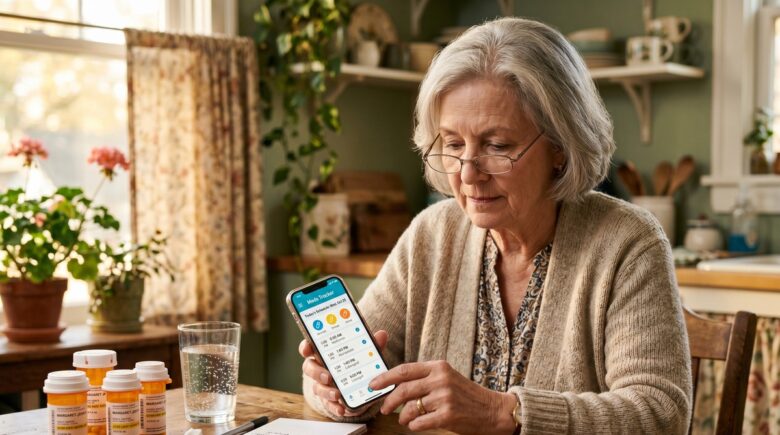
As of July 2025, caregivers are using phone medication reminder apps to manage an average of 5 or more daily prescriptions for loved ones, reducing missed doses by up to 40%. These apps centralize schedules, send caregiver alerts, and log adherence history — making complex multi-drug regimens manageable from a single smartphone screen.
Phone medication reminder apps have become essential tools for the roughly 53 million unpaid caregivers in the United States, according to AARP’s caregiving research. Managing multiple prescriptions for an elderly parent or chronically ill family member introduces serious risks — wrong doses, missed refills, and dangerous drug interactions — that a simple phone alarm cannot adequately address.
The stakes are high and rising. Medication non-adherence costs the U.S. healthcare system an estimated $300 billion annually, making technology-assisted adherence one of the most urgent problems in consumer health tech right now.
Why Do Caregivers Need Phone Medication Reminder Apps Beyond Basic Alarms?
Standard phone alarms fail caregivers managing multiple prescriptions because they carry no medication context, no logging capability, and no remote visibility. A dedicated app ties each alert to a specific drug name, dosage, and instruction — and records whether the dose was confirmed or skipped.
Caregivers overseeing five or more medications face a compounding challenge: different drugs require different timing relative to meals, other medications, or sleep cycles. Apps like Medisafe, CareZone, and MyTherapy build interaction-aware schedules that flag conflicts automatically. Medisafe, for example, cross-references its drug interaction database covering over 1 million drug pairs to warn users before a dangerous combination is taken.
Remote caregiving adds another layer of complexity. Adult children caring for aging parents from a different city rely on apps with shared dashboards so they can monitor adherence in real time without a phone call interrupting their parent’s day.
Key Takeaway: Basic alarms provide no logging, no drug context, and no remote visibility. Dedicated phone medication reminder apps like Medisafe cross-reference over 1 million drug pairs for interactions, making them far safer for managing 5 or more concurrent prescriptions.
What Features Matter Most When Caregivers Manage Multiple Prescriptions?
The most critical features for multi-prescription caregiving are caregiver alerts, refill tracking, and a shared medication list accessible across devices. These three capabilities separate a true caregiving tool from a simple reminder utility.
Caregiver Alerts and Remote Monitoring
Caregiver alert systems notify a designated family member or professional caregiver when a dose is missed past a set window — typically 30 to 60 minutes. Medisafe’s “MedFriend” feature and CareZone’s shared profiles both support this. This is especially valuable when the care recipient has cognitive decline and may not recognize a missed dose themselves.
Refill Management and Pharmacy Integration
Running out of a critical medication is as dangerous as missing a dose. Apps like GoodRx Care and MyTherapy include pill-count tracking that estimates days of supply remaining and prompts refill requests ahead of time. Some platforms integrate directly with CVS Pharmacy and Walgreens prescription systems to automate refill reminders based on actual pharmacy records.
Wearable health technology is increasingly complementing these apps. As covered in our analysis of how wearable technology is transforming personal health tracking, smartwatch integrations now allow medication confirmations directly from the wrist — a meaningful improvement for mobility-limited patients.
Key Takeaway: For caregivers, the three non-negotiable app features are caregiver alerts, refill tracking, and cross-device shared access. Apps with pharmacy integrations — such as those connecting to CVS Pharmacy or Walgreens — can automate refill prompts, reducing supply-gap emergencies by a meaningful margin.
How Do the Top Phone Medication Reminder Apps Compare for Caregivers?
Not all apps are equal in caregiver-specific functionality. The table below compares the four most widely used platforms on the features that matter most when managing multiple prescriptions for another person.
| App | Caregiver Alerts | Drug Interaction Check | Refill Tracking | Free Tier Available |
|---|---|---|---|---|
| Medisafe | Yes (MedFriend) | Yes — 1M+ drug pairs | Yes | Yes (premium: $4.99/mo) |
| MyTherapy | Yes | Limited | Yes | Yes (fully free) |
| CareZone | Yes (shared profile) | No | Yes | Yes (storage limits apply) |
| Pill Reminder by Roundhealth | No | No | No | Yes (premium: $2.99/mo) |
Medisafe leads for caregivers managing complex regimens due to its drug interaction engine and MedFriend alert system. MyTherapy is the strongest free option for straightforward schedules. CareZone excels at document storage — useful for keeping insurance cards, doctor notes, and pharmacy records alongside the medication schedule. Understanding the real trade-offs between free and paid tiers is important; our breakdown of free vs. paid apps and what you give up applies directly to this category.
“Medication adherence technology is no longer a convenience — it is a clinical safety tool. When a caregiver can see a real-time log of doses taken or missed, it changes the conversation with the physician and improves outcomes measurably.”
Key Takeaway: Among the leading phone medication reminder apps, Medisafe offers the most complete caregiver feature set — including alerts for missed doses and a database of over 1 million drug interactions — while MyTherapy remains the strongest free alternative for simpler schedules.
What Are the Privacy and HIPAA Risks Caregivers Should Know About?
Most consumer medication reminder apps are not HIPAA-covered entities, which means they are not legally required to protect health data under the same rules that govern hospitals and insurers. Caregivers should understand this distinction before entering sensitive prescription data into any app.
The U.S. Department of Health and Human Services (HHS) has published guidance clarifying that consumer health apps fall outside HIPAA’s scope unless they are contracted by a covered healthcare provider. This means the data you enter — including drug names, dosages, and health conditions — may be subject to the app developer’s own privacy policy rather than federal law.
When evaluating apps, caregivers should look for end-to-end encryption, explicit statements against selling health data to third parties, and compliance with GDPR or CCPA if applicable. Medisafe and MyTherapy both publish detailed data privacy policies and offer data deletion on request. This connects to a broader principle of protecting your digital health footprint, explored in depth in our guide on what digital identity is and why you should protect it.
Key Takeaway: Consumer phone medication reminder apps are generally not HIPAA-compliant by default, as confirmed by HHS guidance. Caregivers should verify end-to-end encryption and explicit data non-sale policies before inputting prescription details for a vulnerable family member.
How Are AI and Connectivity Improving Phone Medication Reminder Apps for Caregivers?
Artificial intelligence is shifting phone medication reminder apps from passive schedulers into predictive adherence tools. Machine learning models now analyze adherence patterns to predict when a user is likely to miss a dose — and adjust reminder timing proactively rather than reactively.
Connectivity improvements also play a major role. The FDA’s Digital Health Center of Excellence has identified remote patient monitoring as one of the fastest-growing categories in regulated digital health, with AI-driven adherence support directly within its scope. Apps are now integrating with smart pill dispensers, electronic blister packs, and connected inhalers to provide dose-confirmation data without relying on the user to self-report.
Network reliability matters for real-time caregiver alerts. The improvements brought by modern wireless standards — discussed in our comparison of 5G vs. Wi-Fi 7 for connectivity decisions — directly affect how quickly a missed-dose alert reaches a caregiver’s phone. Low-latency 5G connections reduce alert delays to under two seconds in optimal conditions.
AI-driven apps are also beginning to surface cost-optimization suggestions. If a prescribed drug has a generic equivalent available at a significantly lower price, apps connected to databases like GoodRx can surface that option at the point of refill reminder. This mirrors the way AI-powered financial apps are surfacing spending insights automatically — both categories use behavioral data to deliver timely, relevant interventions.
Key Takeaway: AI is transforming phone medication reminder apps from static schedulers into predictive systems. The FDA’s Digital Health Center of Excellence identifies AI-driven adherence monitoring as a high-growth regulated category, with alert latency now under 2 seconds on 5G-connected devices.
Frequently Asked Questions
What is the best phone medication reminder app for caregivers managing multiple prescriptions?
Medisafe is widely regarded as the best option for caregivers managing five or more prescriptions, due to its MedFriend caregiver alert system and drug interaction database covering over 1 million drug pairs. MyTherapy is the strongest free alternative for simpler schedules with fewer medications.
Are phone medication reminder apps safe to use for sensitive health data?
Most consumer apps are not HIPAA-covered entities, so data protection depends on the app’s own privacy policy. Look for end-to-end encryption and an explicit statement that health data is not sold to third parties. Medisafe and MyTherapy both offer data deletion on request.
Can a caregiver monitor medication adherence remotely using an app?
Yes. Apps like Medisafe (via MedFriend) and CareZone (via shared profiles) send real-time alerts to a designated caregiver when a dose is missed beyond a set window. This remote visibility is one of the primary reasons caregivers choose dedicated apps over basic phone alarms.
Do phone medication reminder apps work for elderly patients with cognitive decline?
Yes, with caveats. For patients with moderate cognitive decline, apps work best when paired with a caregiver alert system, since the patient may not respond to reminders independently. Smart pill dispensers that integrate with apps can add a physical confirmation layer for this population.
How much do medication reminder apps cost for caregivers?
Most leading apps offer a functional free tier. Medisafe’s premium plan is $4.99 per month, which unlocks enhanced caregiver alerts and detailed adherence reports. MyTherapy remains fully free. CareZone is free with limitations on document storage capacity.
What happens if I switch phones — will I lose my medication schedule data?
Cloud-synced apps like Medisafe, MyTherapy, and CareZone store data on remote servers, so your schedule and adherence history transfer automatically when you log in on a new device. Always verify that cloud backup is enabled before switching devices to avoid any data loss.
Sources
- AARP Public Policy Institute — Family Caregiving in the United States
- U.S. Department of Health and Human Services — Health Apps and HIPAA
- FDA Digital Health Center of Excellence — Remote Patient Monitoring
- Medisafe — Medication Management Platform
- Annals of Internal Medicine — Medication Non-Adherence and Healthcare Costs
- MyTherapy — Medication Reminder and Health Tracker
- CDC — Medication Safety Program