
Fact-checked by the VisualEnews editorial team
Quick Answer
To create polished talking head videos with auto-captions and B-roll on mobile, choose an app like CapCut, Descript, or InShot, record your footage, apply AI-generated captions, and layer in B-roll clips — all from your phone. As of July 2025, top apps can generate accurate captions in under 60 seconds and offer B-roll libraries with 500,000+ stock clips.
The fastest way to produce professional talking head video apps mobile content is to use an AI-powered editing app that handles captions, B-roll, and cuts automatically — no desktop required. As of July 2025, apps like CapCut, Descript, and OpusClip have made it possible for creators to publish broadcast-quality videos directly from a smartphone, and according to Statista’s 2024 short-form video report, more than 73% of short-form video content is now created and edited on mobile devices.
This shift matters because platforms like TikTok, Instagram Reels, and YouTube Shorts have fundamentally changed what audiences expect. Captions are no longer optional — Meta’s own research found that 85% of videos on Facebook are watched without sound, making auto-caption accuracy a competitive advantage, not a nice-to-have.
This guide is for content creators, entrepreneurs, coaches, and marketers who want to produce talking head videos with professional captions and B-roll without expensive equipment or editing software. By the end, you will know exactly which apps to use, how to set them up, and how to avoid the most common mistakes that kill video quality.
Key Takeaways
- CapCut’s AI auto-caption tool achieves up to 95% transcription accuracy in English, making it the most reliable free option for talking head video apps mobile creators, according to TechCrunch’s 2023 analysis.
- Short-form video content generates 1,200% more shares than text and images combined, per WordStream’s video marketing data, making mobile video creation a high-ROI skill.
- Descript’s Overdub and AI scene detection can cut a 10-minute talking head recording into publish-ready clips in under 5 minutes, according to Descript’s own product documentation.
- Free talking head video apps mobile tools like CapCut and InShot carry watermarks on export unless you upgrade — understanding what you trade away with free apps is essential before committing to a workflow.
- The global mobile video editing app market is projected to reach $4.3 billion by 2027, reflecting explosive demand for on-device video tools, per Grand View Research’s 2024 market report.
- Viewers retain 95% of a message delivered via video versus only 10% via text, according to Invesp’s conversion research, reinforcing why video creation skills now have direct business value.
In This Guide
- What are the best apps for talking head videos with auto-captions on mobile?
- How do I set up and record a talking head video on my phone?
- How do I add auto-captions to a talking head video on mobile?
- How do I add B-roll to a talking head video using a mobile app?
- How do I export and publish a talking head video for TikTok, Reels, or YouTube Shorts?
- Frequently Asked Questions
Step 1: What Are the Best Apps for Talking Head Videos With Auto-Captions on Mobile?
The best talking head video apps mobile creators should consider in 2025 are CapCut, Descript, InShot, OpusClip, and Captions App — each offering a different balance of features, price, and platform support. Your best choice depends on whether you prioritize captioning accuracy, B-roll access, editing speed, or export flexibility.
The Top Apps Compared
CapCut (free, made by ByteDance) leads the pack for all-in-one mobile video creation. It combines AI auto-captions, a built-in B-roll stock library, auto-cut tools, and template packs. It is available on both iOS and Android, and its AI features work entirely on-device for standard edits.
Descript is the best choice for creators who want to edit video the way you edit a document. You delete words from the transcript and the video cuts itself. Its Overdub and AI Scene Detection features are unmatched for long-form talking head content that needs to be trimmed efficiently.
Captions App (iOS only as of July 2025) is purpose-built for talking head creators. It auto-generates animated, stylized captions with zero manual formatting, and it includes an AI eye contact correction feature that adjusts your gaze to look directly into the camera even if you were reading a script.
OpusClip uses AI to automatically identify the strongest 30–90 second segments from a longer recording. It then exports them with captions and aspect ratio adjustments ready for TikTok, Reels, and Shorts. This is ideal for repurposing long interviews or podcasts into clip form.
InShot is the most beginner-friendly option and offers solid manual caption tools, B-roll layering, and music integration. It lacks the AI automation of the others but is highly reliable and has a gentler learning curve.
| App | Auto-Captions | B-Roll Library | AI Editing | Free Tier | Platform | Paid Plan (Monthly) |
|---|---|---|---|---|---|---|
| CapCut | Yes — AI, 95% accuracy | 500,000+ stock clips | Auto-cut, reframe | Yes (watermark) | iOS + Android | $7.99 |
| Descript | Yes — transcript-based | Limited (Storyblocks integration) | Scene detection, Overdub | Yes (1 hr/month) | iOS + Android | $12.00 |
| Captions App | Yes — animated, stylized | No built-in library | Eye contact fix, AI edit | Yes (limited) | iOS only | $9.99 |
| OpusClip | Yes — word-level highlight | No | Auto-clip selection | Yes (60 min/month) | iOS + Android | $9.00 |
| InShot | Manual + basic auto | Limited licensed clips | Minimal | Yes (watermark) | iOS + Android | $3.99 |
If you are just starting out, begin with CapCut’s free tier to learn the workflow. When you are ready to scale production, Descript or Captions App offer the biggest time savings per video.
If you are deciding between free and paid tiers, read our breakdown of what you actually give up with free apps before committing to any subscription. Watermarks and export resolution limits can significantly hurt your brand’s first impression.
Step 2: How Do I Set Up and Record a Talking Head Video on My Phone?
The single most impactful thing you can do before touching any app is to get your recording setup right — because even the best AI captions and B-roll cannot fix poor lighting, muddy audio, or a shaky frame. Good recording conditions take less than five minutes to achieve and make every downstream editing step faster.
How to Do This
Position your phone at eye level using a small tripod or phone stand — looking down at your face flattens features and creates unflattering angles. Face a window for natural light, or invest in a budget ring light (under $25 on Amazon) to eliminate shadows.
For audio, plug in wired earbuds with a built-in microphone. This places the mic closer to your mouth and dramatically reduces room echo compared to the phone’s built-in speaker. If you create videos regularly, a clip-on lavalier microphone like the DJI Mic Mini (around $59) is the single best upgrade available for mobile creators.
Record in your phone’s native camera app at 1080p or 4K at 30fps — not inside the editing app itself. This gives you the highest quality source file before any compression occurs. Then import the footage into your chosen editing app.
What to Watch Out For
Avoid recording with a window or bright light source directly behind you — this causes your face to appear dark while the background is overexposed. Move so the light source is in front of you or to your side. Also check your background: a clean, uncluttered space reads as professional, and most AI captioning apps use the visual space around your head to display text.
According to Pew Research Center’s 2023 news consumption study, viewers make a judgment about video credibility within the first 3 seconds — and visual quality is the number-one factor influencing that snap decision.
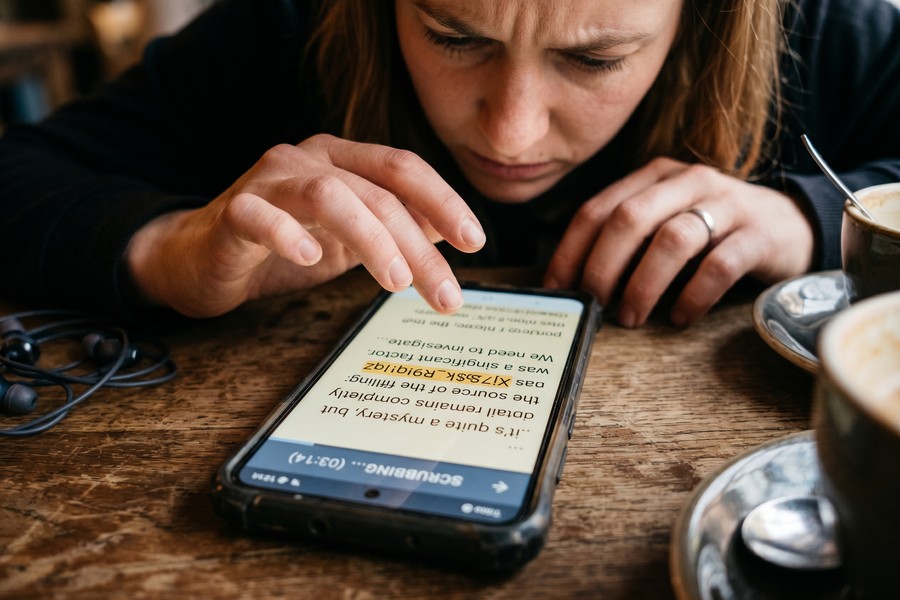
Step 3: How Do I Add Auto-Captions to a Talking Head Video on Mobile?
To add auto-captions to a talking head video on mobile, import your clip into CapCut or Captions App, tap the “Auto Captions” or “Captions” button, select your spoken language, and let the AI transcribe the audio — the entire process takes under 60 seconds for a 60-second video. You can then edit individual words, change the font style, and reposition the caption block on screen.
How to Do This in CapCut
- Open CapCut and tap “New Project.” Import your recorded video.
- Tap the “Text” menu at the bottom of the screen, then select “Auto Captions.”
- Choose your language and tap “Start.” CapCut’s AI will transcribe your audio and place word-synced captions on the timeline.
- Tap any caption block on the timeline to edit misspelled words or adjust timing.
- Use the “Style” panel to change font, color, and whether words highlight one at a time (the “karaoke” style popular on TikTok).
How to Do This in Captions App
- Open the Captions App and tap “New Video.” Import your footage or record directly inside the app.
- The app auto-transcribes within seconds and overlays animated captions on your video.
- Choose a caption style from the template library — options include word-by-word pop, full-sentence slides, and highlighted word formats.
- Review the transcript for errors and tap to correct any word manually.
What to Watch Out For
Auto-captions struggle with strong accents, technical jargon, and background noise. Always review the full transcript before publishing — one misheard word in a caption can create embarrassing or misleading content. In CapCut, you can enable “Smart Cut Silence” at the same time as captioning to automatically remove filler words like “um” and “uh.”
“Captions are no longer a feature — they are a baseline expectation. Creators who skip them are not just losing deaf or hard-of-hearing viewers; they are losing anyone watching in a loud coffee shop, a quiet office, or a bedroom where others are sleeping.”
One practical note: if you are using AI tools to streamline your entire content workflow, understanding how AI is reshaping search and content discovery can help you write caption text that also serves SEO and discoverability goals.
Videos with captions see 40% more views than uncaptioned videos on the same platform, according to 3Play Media’s captioning impact study. That single feature can double your audience reach without changing any other part of your content.
Step 4: How Do I Add B-Roll to a Talking Head Video Using a Mobile App?
To add B-roll to a talking head video on mobile, use CapCut’s built-in stock library or import your own screen recordings and secondary clips, then layer them above your primary talking head track on the timeline so they appear at the exact moments you want to illustrate your point. B-roll should cover your face during transition moments, visual references, or any time you want to break up a static shot.
How to Do This in CapCut
- After importing your talking head clip and adding captions, tap the “+” icon on the timeline to add an “Overlay” track.
- Choose “Stock” to browse CapCut’s library of over 500,000 clips, or tap “Album” to use footage you recorded separately on your phone.
- Drag the B-roll clip to the exact timestamp in your timeline where you want it to appear. Resize it to fill the full screen or keep it as a picture-in-picture overlay.
- Use the “Mask” feature to blend the B-roll with a smooth transition instead of a hard cut.
How to Source Good B-Roll on Mobile
Beyond CapCut’s built-in library, you can import free stock clips from Pexels or Pixabay directly to your camera roll, then bring them into any mobile editor. For product-based businesses, record short 5–10 second clips of your product, workspace, or process and keep them in a dedicated “B-roll folder” on your phone for fast access.
Screen recordings are also powerful B-roll for tech or tutorial content. On iPhone, swipe into Control Center and tap the screen record button. On Android, use the built-in Screen Recorder in the notification shade. Import that clip as an overlay and it instantly illustrates whatever you are explaining in your talking head segment.
What to Watch Out For
Do not over-cut to B-roll. Viewers trust talking head creators partly because they can see your face and read your expressions. A good rule is the 70/30 split: keep your face visible for at least 70% of the video and use B-roll for the remaining 30%. Heavy B-roll coverage can feel evasive or impersonal.
Not all stock footage in free app libraries is cleared for commercial use. If you are monetizing your videos or using them in paid advertising, check the licensing terms for each clip. CapCut’s stock library is licensed for personal and commercial use, but clips sourced from third-party free sites like Pixabay may have restrictions for certain ad platforms.

“The creators who grow fastest on short-form video are not the ones with the best cameras — they are the ones who understand visual rhythm. B-roll is not decoration; it is pacing. It tells your audience’s brain when to absorb information and when to look around.”
Step 5: How Do I Export and Publish a Talking Head Video for TikTok, Reels, or YouTube Shorts?
Export your finished talking head video at 1080p resolution in 9:16 aspect ratio (vertical) for TikTok, Instagram Reels, and YouTube Shorts — this is the native format for all three platforms. In CapCut, tap “Export” in the top right, select 1080p and 30fps, and the app compresses and saves the video to your camera roll in under two minutes for most clips under five minutes in length.
Platform-Specific Export Settings
- TikTok: 1080×1920 pixels, H.264 codec, MP4 format, under 287.6 MB. Keep videos under 60 seconds for maximum algorithmic reach on standard accounts.
- Instagram Reels: 1080×1920 pixels, MP4 or MOV format, under 15 minutes in length. Upload directly via the Instagram app or schedule through Meta Business Suite.
- YouTube Shorts: 1080×1920 pixels, MP4, under 60 seconds. YouTube automatically classifies vertical videos under 60 seconds as Shorts in the feed.
Publishing Directly From the App
CapCut allows you to publish directly to TikTok within the app — tap “Share to TikTok” after export and your video, caption, and hashtags transfer automatically. For Reels and Shorts, save to your camera roll and upload natively through each platform’s app for the best compression handling.
What to Watch Out For
Instagram re-compresses uploaded videos, which can reduce quality — especially in the caption text area. To minimize compression artifacts, always export your video at 1080p or higher before uploading. Never upload a pre-compressed file that has already been published on TikTok; download the version without a TikTok watermark from CapCut or use a separate export just for Instagram.
Use OpusClip’s AI after your main edit to automatically identify your strongest 45-second clip from a longer video. It adds captions, reframes your face to center, and exports three platform-ready versions at once — cutting your repurposing time from 30 minutes to under 5 minutes per video.
Managing the cost of app subscriptions across your production workflow is worth monitoring closely. If you find yourself paying for multiple video tools, a structured digital subscription audit can surface redundant costs quickly and redirect that budget toward a single best-in-class tool.
Also worth noting for remote creators: the quality of your wireless connection affects cloud-based features in apps like Descript and OpusClip. If you are working from a location with inconsistent broadband, our comparison of 5G versus Wi-Fi 7 for mobile workflows can help you choose the most stable connection type for your setup.
Frequently Asked Questions
Which app is best for talking head video apps mobile if I have no editing experience?
CapCut is the best starting point for beginners creating talking head video apps mobile content. Its interface uses drag-and-drop editing, its AI auto-captions generate with a single tap, and its template library lets you apply a complete look — including fonts, color grading, and transitions — in under two minutes. The free tier includes all core features, making it low-risk to learn.
Can I add auto-captions to a talking head video for free on Android?
Yes. CapCut on Android generates AI auto-captions for free with no time limit on caption generation. The only restriction on the free tier is a watermark on export, which can be removed by upgrading to CapCut Pro at $7.99 per month. InShot also offers basic caption tools for free on Android, though accuracy is lower than CapCut’s AI model.
How do I make my talking head video look professional without a ring light or studio?
The fastest no-cost upgrade is to face a large window during daylight hours — natural diffused window light is flattering and free. Set your phone at eye level using a stack of books or a $10 phone stand. Record against a plain wall or a tidy bookshelf. These three changes alone can produce results that rival basic studio setups, according to filming best practices shared by the YouTube Creator Academy.
Should I record my talking head video inside the editing app or in the native camera app?
Record in your phone’s native camera app for the highest quality source file. Most mobile editing apps compress footage during in-app recording to save storage, which reduces the quality ceiling for your final export. Import the native camera file afterward — this workflow gives you a clean, uncompressed master that can be edited multiple ways without generational quality loss.
How accurate are AI auto-captions on mobile apps compared to professional transcription?
CapCut’s AI auto-captions achieve approximately 95% accuracy for clear English speech in a quiet environment. Descript’s AI transcription reaches similar accuracy levels. Professional human transcription services like Rev.com advertise 99% accuracy, but at $1.50 per minute of audio, AI captions are the practical standard for most social video creators. Always review and manually correct the transcript before publishing.
What is the best way to find B-roll clips for a talking head video when I don’t have my own footage?
Use the built-in stock library in CapCut for the fastest workflow — it contains over 500,000 licensed clips searchable by keyword. For higher quality or more diverse options, download clips from Pexels (pexels.com/videos) or Pixabay, which offer free stock video with broad commercial licenses. Save downloaded clips to a dedicated album on your phone so they are always ready to import.
Will my talking head video get flagged by TikTok or Instagram if I use AI captions or stock footage?
No — AI-generated captions and properly licensed stock footage do not trigger content flags on TikTok or Instagram. Both platforms flag content for copyright violations in the audio track (usually music), not for visual overlays or text. Always use royalty-free or platform-licensed music from CapCut’s sound library, TikTok’s commercial sound library, or YouTube Audio Library to avoid strikes.
How long should a talking head video be for TikTok versus YouTube Shorts?
For TikTok, videos between 21 and 34 seconds have the highest average completion rates according to internal creator data shared by TikTok’s business blog. YouTube Shorts performs best at 50–59 seconds, as the algorithm rewards videos that use the full 60-second window without feeling rushed. Instagram Reels optimal length is 7–15 seconds for maximum reach, though educational content can perform well up to 60 seconds.
Is Captions App available on Android?
As of July 2025, the Captions App is iOS only and is not available on Android. Android users who want similar AI-powered caption styling and eye contact correction should use CapCut, which is available on both platforms and offers comparable auto-caption animation styles. Descript also has a functional Android experience for transcript-based editing.
Can I use talking head video apps on a budget tablet like an Amazon Fire tablet?
Most of the top talking head video apps mobile tools — including CapCut and InShot — are optimized for Android smartphones and standard Android tablets. They are not available on Amazon’s Fire OS through the standard app store, though some users install them via sideloading the APK files. For a smooth experience, a standard Android phone or tablet running Android 10 or later is the recommended minimum.
Sources
- Statista — Short-Form Video Creation on Mobile Devices (2024)
- Meta Business — Sound Off: The Case for Captions
- TechCrunch — CapCut AI Video Editing Analysis (2023)
- Descript — AI Video Editing Product Documentation
- Grand View Research — Video Editing Software Market Report (2024)
- 3Play Media — The Impact of Captions on Video Views
- WordStream — Video Marketing Statistics
- Invesp — Online Video Statistics and Consumer Research
- Pew Research Center — How Americans Get News on Social Video Platforms (2023)
- YouTube Creator Academy — Production and Filming Best Practices